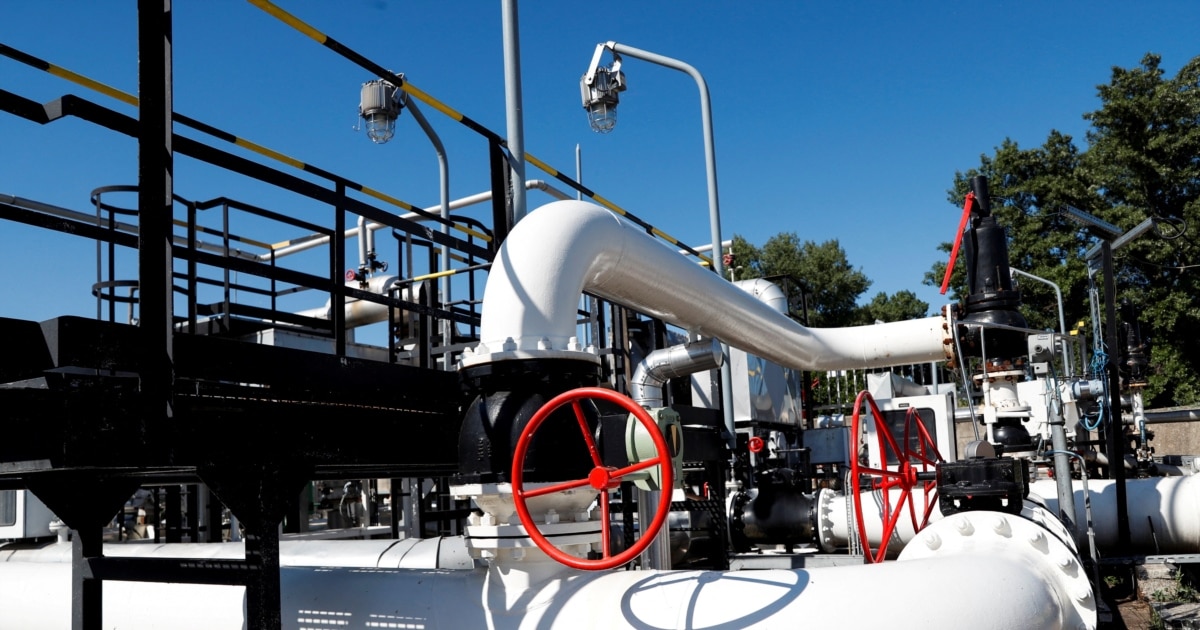
The Druzhba oil pipeline has been out of service since late January, halting Russian crude flows to landlocked Hungary and Slovakia and prompting EU discussions with Ukraine on repair timing and contingency coordination. Brussels says there is no immediate supply risk owing to ~90 days of reserves, while Hungary seeks to route seaborne Russian crude via Croatia's Adria pipeline; tensions persist as Kyiv blames a Russian drone attack and Slovak PM Robert Fico accuses Ukraine of delaying restart for political leverage. A Bulgarian think-tank argues Hungary could phase out Russian oil by 2026, intensifying the political debate over sanction exemptions and regional energy diversification.
Market structure: A short, localized supply shock favors seaborne tanker owners and routing/terminal operators (near‑term uplift in tanker timecharter rates +10–30%), refiners that can process alternative grades (PKN WSE: PKN.WA, OMV.VI) and Croatian Adria/Janaf-type pipeline capacity. Hungary/Slovakia are protected by 90‑day stocks so physical tightness is regional not global; pricing power shifts to medium-term seaborne sellers and storage arbitrageurs rather than to global Brent producers.
Risk assessment: Key tail risks include a prolonged (>60 days) outage or a retaliatory escalation that forces a broader EU enforcement of Russian oil bans, which could push regional crude differentials wider by $5–$12/bbl and widen HUN sovereign CDS by 100–300bp. In the immediate term (days) volatility and tanker rates spike; in weeks/months the decisive catalysts are Croatia’s Adria approval and the repair timeline. Hidden dependencies: many Central European refineries are optimized for Urals heavy sour crude and face throughput and conversion constraints if alternate grades arrive — ramping swaps can take 4–12 weeks.
Trade implications: Tactical: buy a 3‑month ICE Brent call spread (buy 5% OTM, sell 15% OTM) sized ~1–2% of portfolio to capture a 3–8% price move if flows stay disrupted >30 days; hedge with short dated Brent vols after Adria confirmation. Equity: overweight European refiners PKN.WA and OMV.VI (1–3% active weight each) and a 1–2% trade in tanker exposure (FRO or DHT) to play higher seaborne demand. Risk hedges: buy protection on Hungary via 1‑yr EUR/HUF forwards (size 0.5–1% NAV) or 5‑yr HUN CDS if outage extends beyond 60 days.
Contrarian angles: The consensus overstates permanence — logistics and storage mean flows are likely rerouted within 2–6 weeks unless political escalation occurs; short‑dated implied volatility appears ripe for selling after a formal Adria commitment (target unwind within 7–14 days). Longer term (6–24 months) the episode accelerates Central European pipeline diversification capex — consider selective exposure to pipeline/infrastructure engineering names (e.g., Siemens Energy SIE.DE) on pullbacks as a structural play.
AI-powered research, real-time alerts, and portfolio analytics for institutional investors.
Request DemoOverall Sentiment
moderately negative
Sentiment Score
-0.30
