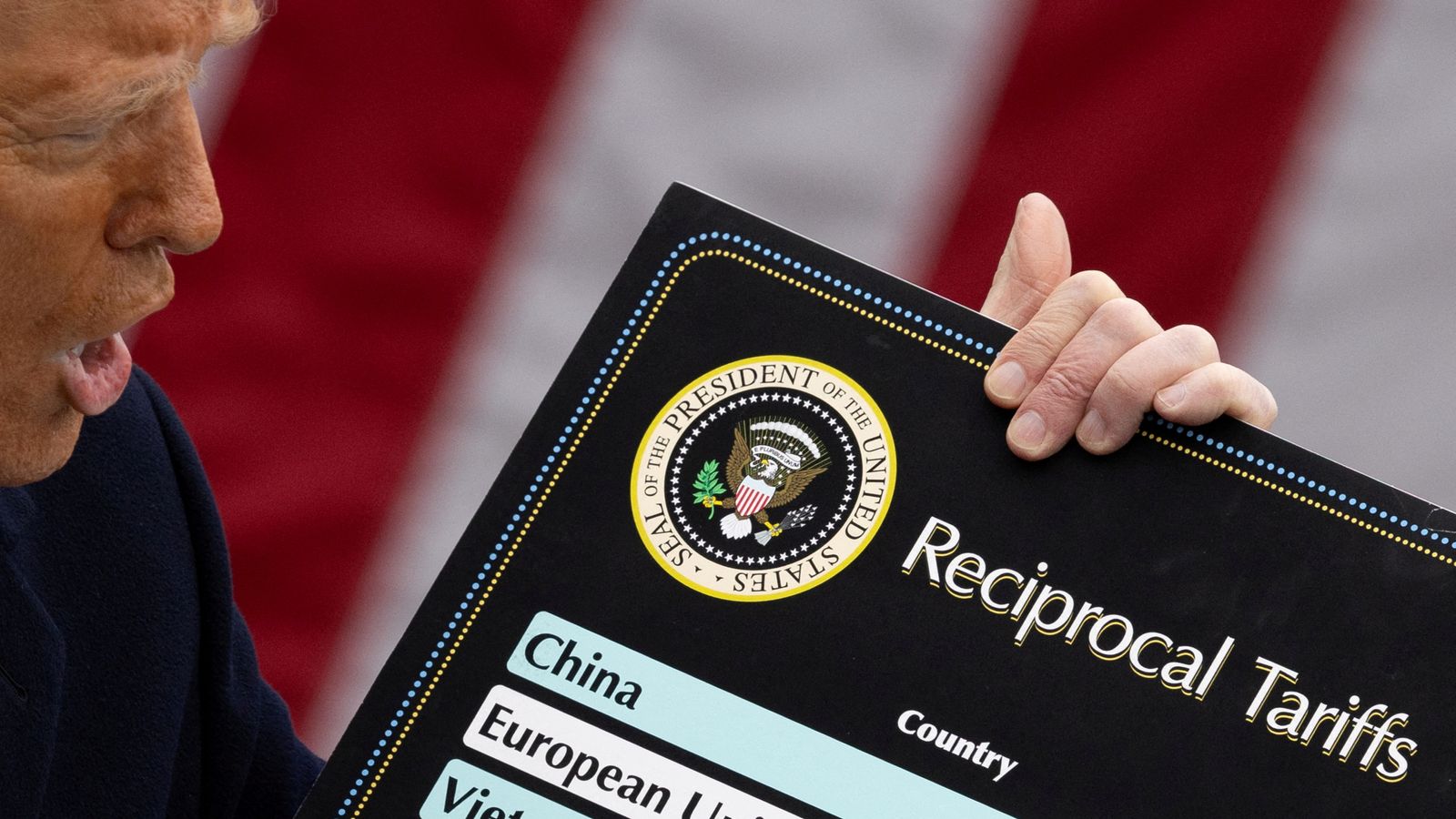
The US Supreme Court ruled that tariffs imposed under the International Emergency Economic Powers Act (IEEPA) — comprising roughly half of the Trump administration's tariffs (the so‑called 'Liberation Day' levies) — are null and void, creating the possibility of partial or full refunds of duties collected. The decision is a significant legal setback that will likely push the administration to pursue alternative statutory authorities (e.g., section 232/Trade Expansion Act) to reimpose levies, sustaining trade‑policy uncertainty and adding political risk ahead of elections.
Market structure: Voiding ~50% of IEEPA tariffs meaningfully lowers input costs for import-heavy retailers and consumer electronics, improving gross margins by a rough 1–3% for names with >30% imported COGS over 3–6 months (e.g., AMZN, WMT). Domestic-producer protection is reduced, pressuring US metals, machinery and some industrials’ pricing power; steel/aluminum under Section 232 may blunt but not offset the hit. Cross-asset: reduced tariff inflation implies downward pressure on 2–10y yields (10–50bp over 1–3 months if trend confirms) and weaker commodity price momentum for finished metals; USD should drift stronger on trade-normalization expectations, pressuring EM FX.
Risk assessment: Tail risks include (1) large-scale refund rulings costing the Treasury and sparking market liquidity strain (>$5–10bn over 6–12 months), (2) rapid retooling of tariffs under other statutes or Congressional action within 30–90 days, and (3) retaliatory measures from trade partners. Immediate volatility (days–weeks) will be policy-sensitivity-driven; medium-term (3–6 months) depends on administrative pivots; long-term (12+ months) aligns with election-cycle legislative changes. Hidden deps: supply-chain contracts, supplier hedges, and passthrough rates will delay P&L effects by 1–3 quarters.
trade implications: Tactical: overweight import-dependent retailers/consumer discretionary for 3–6 months and underweight domestic materials/steel. Construct option collars on consumer longs to cap downside and buy puts on select steel names to hedge a rapid policy reversal. Pair trades: long AMZN/WMT vs short NUE/STLD to capture relative margin reversion; prefer 3–6 month expiries and size 1–3% of portfolio.
contrarian angles: Consensus expects tariffs to die; risk is underpriced that the administration will pivot to 232 or Congress will codify new levies, which would re-tighten materials and industrials fast. Also refunds could act like a fiscal stimulus (small magnitude) supporting consumer names; a 1–2% GDP-equivalent consumption boost concentrated in Q2–Q3 could surprise markets. Historical parallels: 1980s tariff reversals saw multi-month lags in margin flows—act on fundamentals, not headlines.
AI-powered research, real-time alerts, and portfolio analytics for institutional investors.
Request DemoOverall Sentiment
moderately negative
Sentiment Score
-0.45
