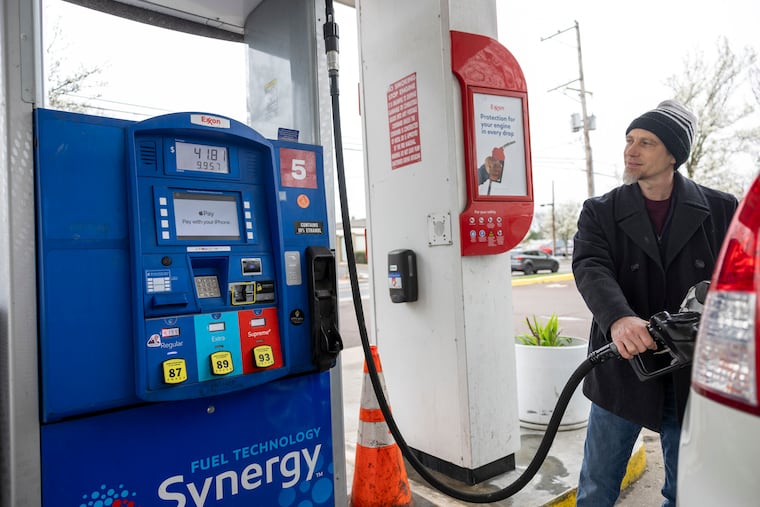
Strait of Hormuz disruptions are cited as blocking up to ~20% of global oil flows, driving retail gasoline in Bucks County to roughly $4.00+/gal (examples $3.99–$4.19). Local consumers report acute affordability pain (one driver noted losing ~$150/month to fuel), amplifying anti-administration sentiment that Democrats could use in the competitive House race where Rep. Brian Fitzpatrick must defend the last GOP suburban seat. The situation represents a material, market-wide energy risk that can pressure consumer spending and equity sentiment ahead of November.
A Middle East shipping choke translates into concentrated, front-loaded inflation that redistributes spending from discretionary categories to essentials over the next 1–3 quarters. The immediate mechanism is two-fold: higher refined product prices lift refinery and pump margins, while transportation and fertilizer cost inflation depresses small-business cash flow and consumer discretionary margins, accelerating shrink in retail sales where margins are already thin.
Winners will be entities that capture refining and distribution spreads or can pass through higher costs (refiners, pipeline tolls, select convenience retailers), while losers include fuel-intensive operators and thin-margin local services whose demand is elastic. Second-order supply effects: higher fertilizer freight raises agricultural input prices, which feeds into food CPI with a 2–4 quarter lag and compresses grocers’ real margins unless they raise prices, creating a rotation into consumer staples and away from discretionary retail and regional banks facing delinquency risk in exposed geographies.
Key catalysts and timeframes: days – military escalation or insurance premium moves can spike freight; weeks – strategic petroleum releases or diplomatic openings can deflate risk premia; months – North American shale response and refinery run-rate adjustments cap sustained upside. A fast resolution or coordinated SPR release could erase much of the risk premium within 4–8 weeks; conversely, persistent interdiction or broader escalation risks multi-quarter supply tightness.
Contrarian angle: the market tends to overshoot the persistence of price shocks because U.S. logistics, refinery flexibility, and shale reactivation normally blunt shocks within 2–4 months. Positioning that assumes protracted structural oil upside is likely overdone; tactical, spread-based exposure that monetizes near-term crack spread expansion while protecting against a diplomatic reversal is superior to unhedged outright longs.
AI-powered research, real-time alerts, and portfolio analytics for institutional investors.
Request DemoOverall Sentiment
strongly negative
Sentiment Score
-0.60
Ticker Sentiment
