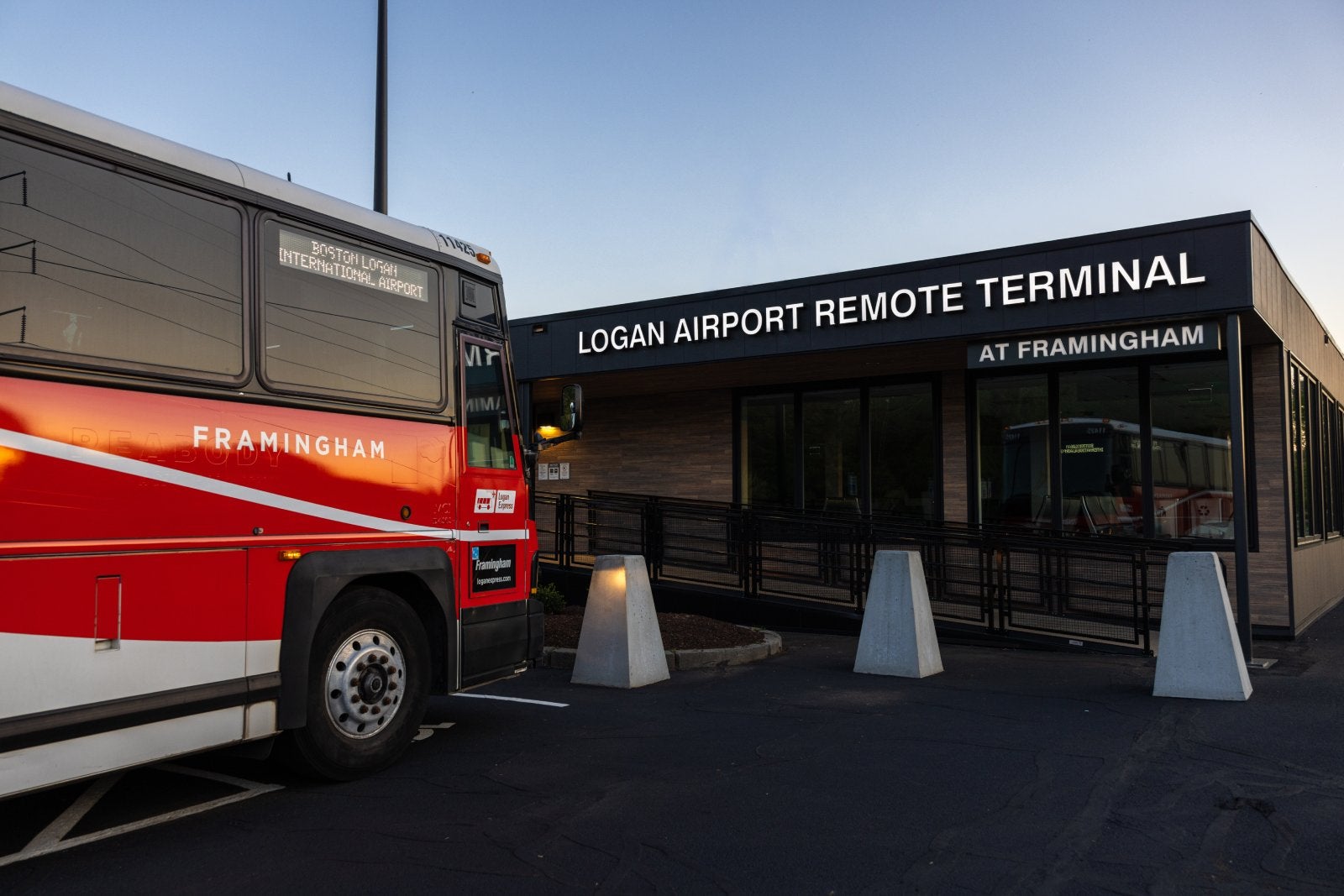
Landline and Massport will launch a remote TSA-screening terminal in Framingham on June 1, letting Delta and JetBlue passengers clear security in the suburbs before a 45- to 60-minute coach ride to Boston Logan. Seats start at $9 one-way, with kids under 17 riding free, and the service is intended to reduce airport congestion and traveler friction. The move is innovative for airport access but is likely to be more notable operationally than market-moving.
This is less about a niche airport perk and more about a new distribution model for metropolitan air access: by shifting TSA friction outward, Massport and Landline are effectively turning suburban real estate into a capacity-release valve for a constrained hub. The first-order beneficiary is the incumbent pair, but the second-order winner is any carrier that can monetize frequency out of BOS without adding terminal congestion; the loser is the private-car model, especially for travelers who currently self-drive because the airport experience is the bottleneck rather than airfare.
The strategic importance is that the service converts airport access from a fixed-infrastructure problem into a software-and-network problem. If adoption is even modest, it creates a template for other slot-constrained airports where construction timelines are measured in years and permitting friction is high; that should support a broader re-rating of ground-access innovators and airport concession operators with scalable curbside/remote-terminal assets. The risk is operational, not conceptual: one or two early service failures, missed bus-flight connections, or TSA throughput issues could quickly cap utilization because the product is only valuable if it is more reliable than driving, not just cheaper.
For the airlines, this is incremental demand stimulation more than share shift. The most underappreciated upside is that it may expand the catchment area for BOS in a way that disproportionately helps carriers with strong local share and higher-frequency schedules, while limiting the benefit to low-frequency competitors who cannot offer a resilient connection experience. Over 3-12 months, the key variable is whether Massport treats this as a pilot or as the seed of a multi-suburb network; if Braintree follows, the addressable market becomes large enough to matter to airport access economics, not just traveler convenience.
Consensus may be over-indexing on the consumer-facing novelty and underestimating the policy implication: if a suburban remote TSA checkpoint proves workable, it weakens the long-standing assumption that security screening must be co-located with the airport. That opens a path for airports to add capacity without runway expansion, which is structurally negative for parking revenues and potentially for taxi/rideshare volumes, but positive for transit-linked airport ecosystems. The key contrarian read is that the bus itself is not the asset; the asset is control over the screened passenger funnel.
AI-powered research, real-time alerts, and portfolio analytics for institutional investors.
Request DemoOverall Sentiment
mildly positive
Sentiment Score
0.20
Ticker Sentiment
