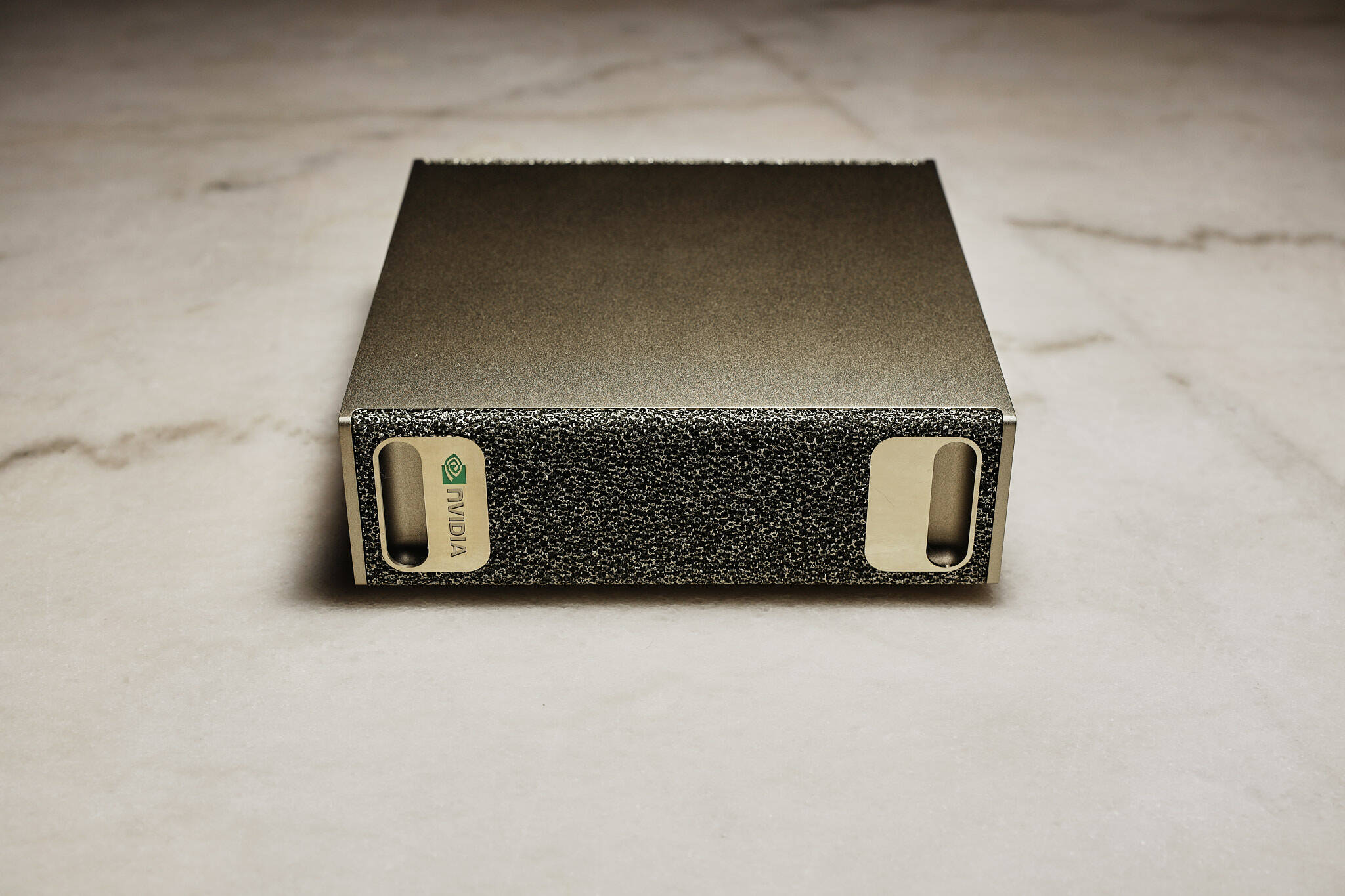
Nvidia announced software and service updates for its DGX Spark mini AI workstation that it says deliver an average 2.5x performance improvement across compute-intensive libraries (primarily improving LLM prefill, not token decode), plus access to the full AI Enterprise suite. The $3,999 Spark (GB10-based, ~RTX 5070 equivalent with 128 GB unified memory and ConnectX-7 200 Gbps NIC) will gain local Nsight CUDA assistance, RTX Remix and Hugging Face Reachy integrations, and subscription pricing options (AI Enterprise typically $4,500/yr per GPU or $1/hr in cloud) with special Spark pricing expected; Nvidia also notes ongoing DGX OS support and is exploring larger multi-node Spark clusters.
Market structure: Nvidia is the clear beneficiary — product + software updates and AI Enterprise subscriptionability increase stickiness and pricing power for NVDA hardware/software bundles, and make ConnectX-7 networking and 200Gbps optics (and HBM/unified-memory suppliers) incremental winners. AMD and small workstation OEMs are the obvious losers in the GB10/Spark niche; expect modest share reallocation in mini-AI workstations (single-digit % market shifts) rather than core datacenter CPUs/GPUs immediately.
Risk assessment: Key tails are regulatory export controls on advanced AI chips, a supply bottleneck for GB10/Grace-Blackwell dies or 128GB unified memory, or Nvidia deprioritizing third-party Linux support (accelerates churn). Near-term (days–weeks) impact is sentiment-driven; short-term (1–6 months) depends on subscription pricing roll-out and Nsight arrival; long-term (2–4 quarters) the materiality is recurring revenue and ecosystem lock-in if adoption climbs meaningfully.
Trade implications: Direct: NVDA equity benefits from product+ecosystem — tactical long 1–2% portfolio sized positions with 6–12 month horizon; hedge by pairing with a small short in AMD (ratio ~1 NVDA : 0.6 AMD) to isolate AI-software upside. Options: use 3–6 month call-spreads (buy ATM, sell 25–30% OTM) sized <=0.5% portfolio to target asymmetric upside while capping theta loss.
Contrarian angles: Market may overvalue raw performance claims — gains are prefill/compute-bound not decode-bound, so cloud inference vendors and ultra-high-throughput customers may see limited benefit; conversely, consensus may underprice subscription ARR potential if Nvidia converts even low-single-digit % of installed base. Historical parallel: DGX-1 drove long-cycle enterprise buying; Spark could be either a sticky platform or a Jetson-like orphan if DGX OS support wavers — watch support for Ubuntu 26.04 and RHEL compatibility as a binary catalyst.
AI-powered research, real-time alerts, and portfolio analytics for institutional investors.
Request DemoOverall Sentiment
mildly positive
Sentiment Score
0.35
Ticker Sentiment
