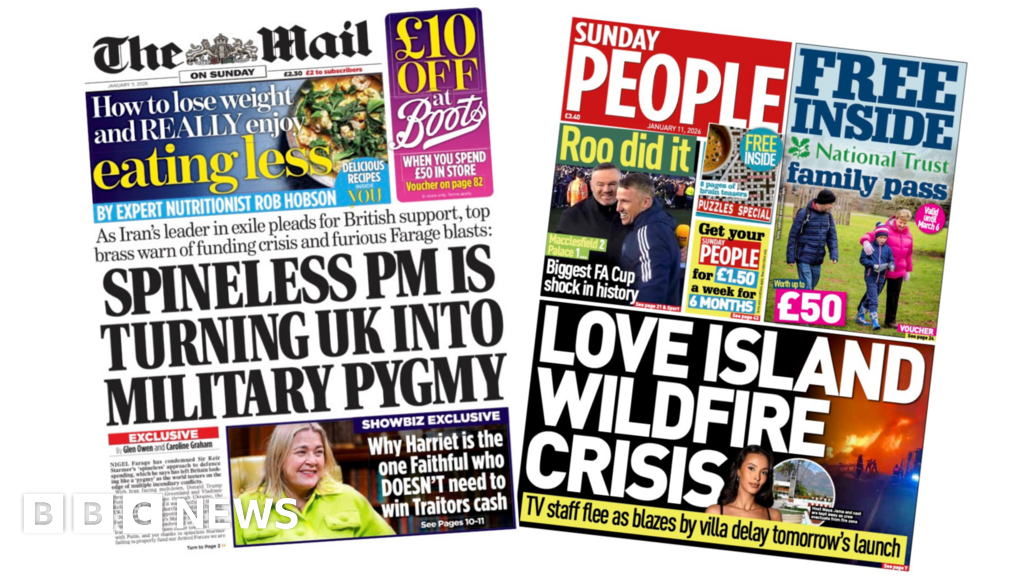
Widespread protests in Iran and reports of overwhelmed medical facilities — alongside claims of hundreds dead and speculation that the US could target IRGC arms supplies — heighten near‑term geopolitical risk. In the UK, political debate centers on a reported £28bn defence spending shortfall and discussions of deploying troops to Greenland, which could influence defense policy and related contractors, while Conservative rhetoric on cutting business rates and lowering energy bills targets small high‑street retailers and could have modest fiscal and retail demand implications.
Market structure: Geopolitical strain (Iran protests, talk of strikes, UK defence shortfall ~£28bn) structurally benefits prime defence contractors and energy producers. Expect a ~10-25% reallocation of bidding power to Tier-1 defence suppliers (Lockheed LMT, Northrop NOC, BAE Systems BAES.L) if governments plug gaps; energy majors (SHEL, BP.L) gain if oil supply risk materialises. UK small high‑street retailers and regional banks are immediate losers — pricing power and credit quality deteriorate if fiscal support is diverted.
Risk assessment: Near-term (days) risk is oil/FX volatility from Iran escalation — a 15-30% move in Brent is a low‑probability tail but high impact; short-term (weeks–months) is defence re-rating or gilt/FX stress if the UK addresses the £28bn hole via debt issuance. Hidden dependencies include sanctions, shipping insurance, and supply‑chain constraints that can amplify commodity shocks. Catalysts: confirmed strikes, parliamentary defence funding announcements (within 30–90 days), or a formal NATO Arctic deployment.
Trade implications: Direct plays — establish 2–3% long positions in LMT and NOC (12‑month horizon) and a 1–1.5% tactical long in BAES.L (UK exposure) if the UK signals additional spending within 60–120 days. Hedging — buy 1‑month 5% OTM puts on the iShares MSCI United Kingdom ETF (EWU) size 1% notional to protect GBP/UK equity exposure; buy 3‑month calls 10% OTM on XLE or a blended energy basket (size 1–2%) if Brent breaches $90/bbl. Short 2% exposure to UK SmallCap/retail ETF (FTSE SmallCap) as fiscal crowding risk materialises.
Contrarian angles: Consensus underestimates the persistency of defence budget tailwinds — a confirmed £10–30bn funding plug could lift prime contractors 15–25% over 6–12 months, not priced into many UK names. Conversely, an isolated Iranian domestic collapse would mean oil volatility mean‑reverts; avoid >3% outright oil exposure and consider selling premium if Brent IV >60% and you have 30–90 day conviction. Historical parallel: 2014 Crimea saw defence primes outperform by ~20% in 6 months, indicating repeatable asymmetric upside for selective longs.
AI-powered research, real-time alerts, and portfolio analytics for institutional investors.
Request DemoOverall Sentiment
moderately negative
Sentiment Score
-0.45
