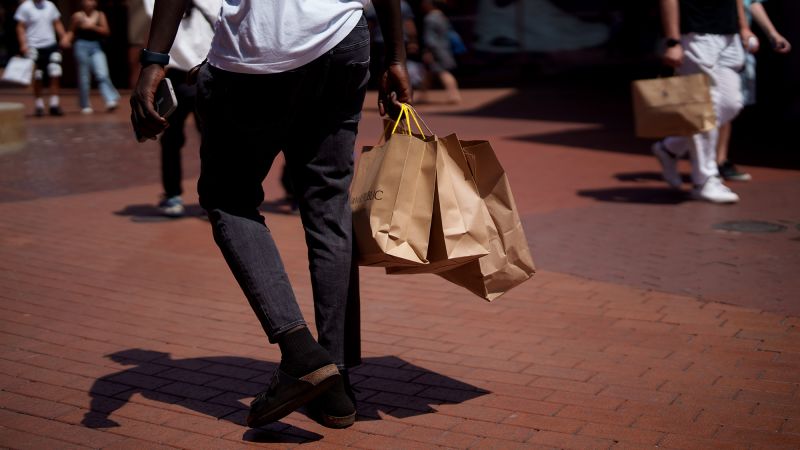
US consumer spending demonstrated resilience in July, rising 0.5% month-over-month, supported by a 0.4% increase in personal income driven by wage gains. While the headline PCE inflation rate held at 2.6% annually, the core PCE index accelerated to 2.9% year-over-year, signaling persistent underlying price pressures. This sustained consumer activity, even as spending outpaced income for the first time since March, underscores the economy's continued strength but also highlights the Federal Reserve's ongoing challenge in managing inflation.
US consumer spending demonstrated notable resilience in July, rising 0.5% month-over-month, building on the 0.4% increase from June. This strength was primarily driven by outlays on cars and financial services, rather than seasonal retail events like Amazon's Prime Day. Critically, real spending, adjusted for inflation, accelerated to a 0.3% gain from a tepid 0.1% in June, signaling robust underlying demand. This activity was supported by a 0.4% rise in personal income, an acceleration from the prior month, reflecting solid wage gains. However, the inflation landscape presents a more complex picture for policymakers. While the headline Personal Consumption Expenditures (PCE) price index held steady at a 2.6% annual rate, the core PCE index, which the Federal Reserve watches closely, accelerated to 2.9% year-over-year. This persistence in underlying inflation, coupled with the observation that July was the first month since March where spending growth exceeded income growth, highlights a key tension: a strong consumer is currently bolstering the economy, but sticky inflation and a potential reliance on non-income sources could challenge both the sustainability of this spending and the Fed's ability to pivot towards a more dovish monetary policy.
AI-powered research, real-time alerts, and portfolio analytics for institutional investors.
Overall Sentiment
moderately positive
Sentiment Score
0.50
Ticker Sentiment
