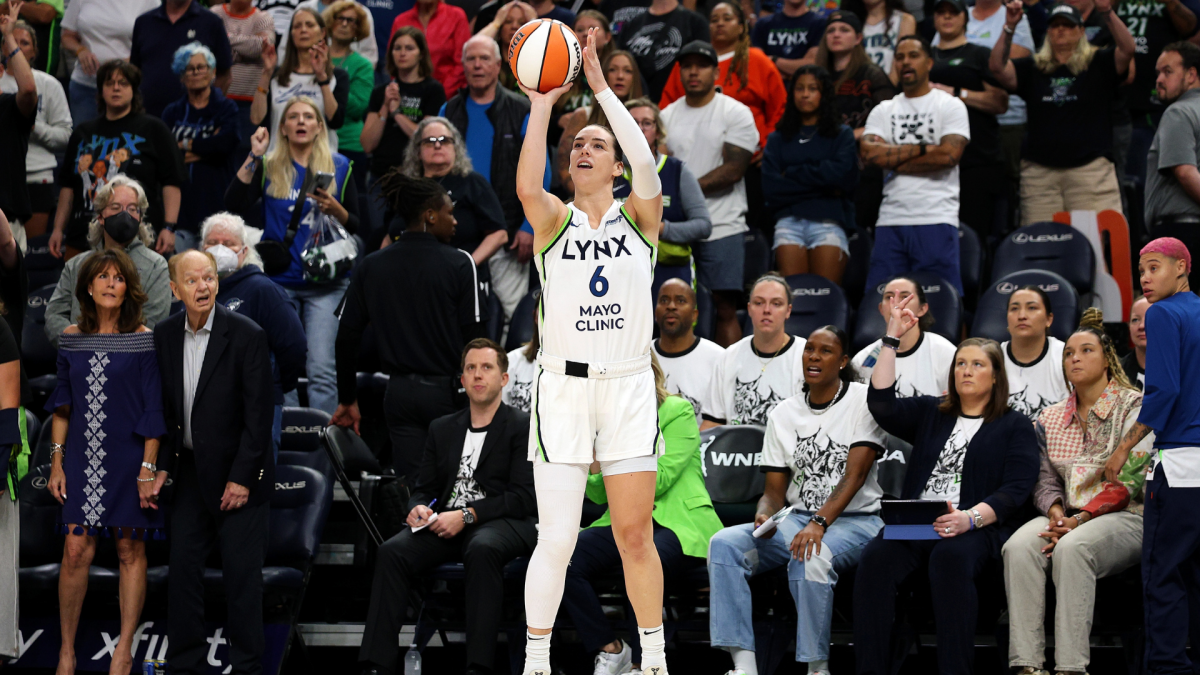
The WNBA completed its expansion draft for the new Toronto Tempo and Portland Fire, with Portland selecting Bridget Carleton first overall and Toronto selecting Julie Allemand second; each team made one unrestricted free-agent selection (Carleton and Marina Mabrey) who are expected to receive the core designation and the 2026 supermax offer of $1.4M (Carleton earned $125k and Mabrey $210k in 2025). Chicago traded 2026 draft picks (No.17 to Portland for No.21 + non-selection agreement; No.26 to Toronto for non-selection) to protect its unprotected players, sacrificing draft capital while avoiding player losses. The Minnesota Lynx (34-10) were notable losers after losing Carleton and Maria Kliundikova, while Portland’s roster skews young with upside and Toronto’s roster is veteran-leaning and more immediately competitive.
The expansion materially reassigns marginal playing-time value away from established depth charts into two new high-variance rosters, raising the expected minutes and market value for a small cohort of mid-tier players. That reallocation increases short-term competitive parity volatility: one new franchise is positioned to extract immediate wins from veteran floor while the other is a multi-year option on player development, concentrating upside in younger candidates whose true value will be revealed over the next 12–36 months.
A structural second-order effect is upward pressure on compensation tiers for guaranteed veteran contracts and bargaining leverage for role players; even modest increases in guaranteed wages compress owner margins for non-national-revenue teams and accelerate incentives for revenue-sharing, local sponsorship innovation, or accelerated media bundling. Incremental inventory of live games and marketable players creates optionality for broadcasters, apparel licensors and sports-betting operators, but monetization will lag roster stabilization — expect revenue recognition to meaningfully show up only after 2 seasons when fan engagement and local sponsorship rights mature.
Key near-term catalysts that will validate or reverse the current narrative are (1) training-camp signings and whether core designations produce holdouts or long-term deals, (2) on-court performance across the first 20–30 games that determines attendance trajectory, and (3) next CBA conversations around guaranteed compensation that could lock in higher fixed costs. Tail risks include a cluster of injuries or weak local market uptake that forces discounted ticketing/sponsorship, and political/regulatory changes to gambling frameworks that would dent one major commercial outlet for incremental content.
AI-powered research, real-time alerts, and portfolio analytics for institutional investors.
Request DemoOverall Sentiment
neutral
Sentiment Score
0.00
