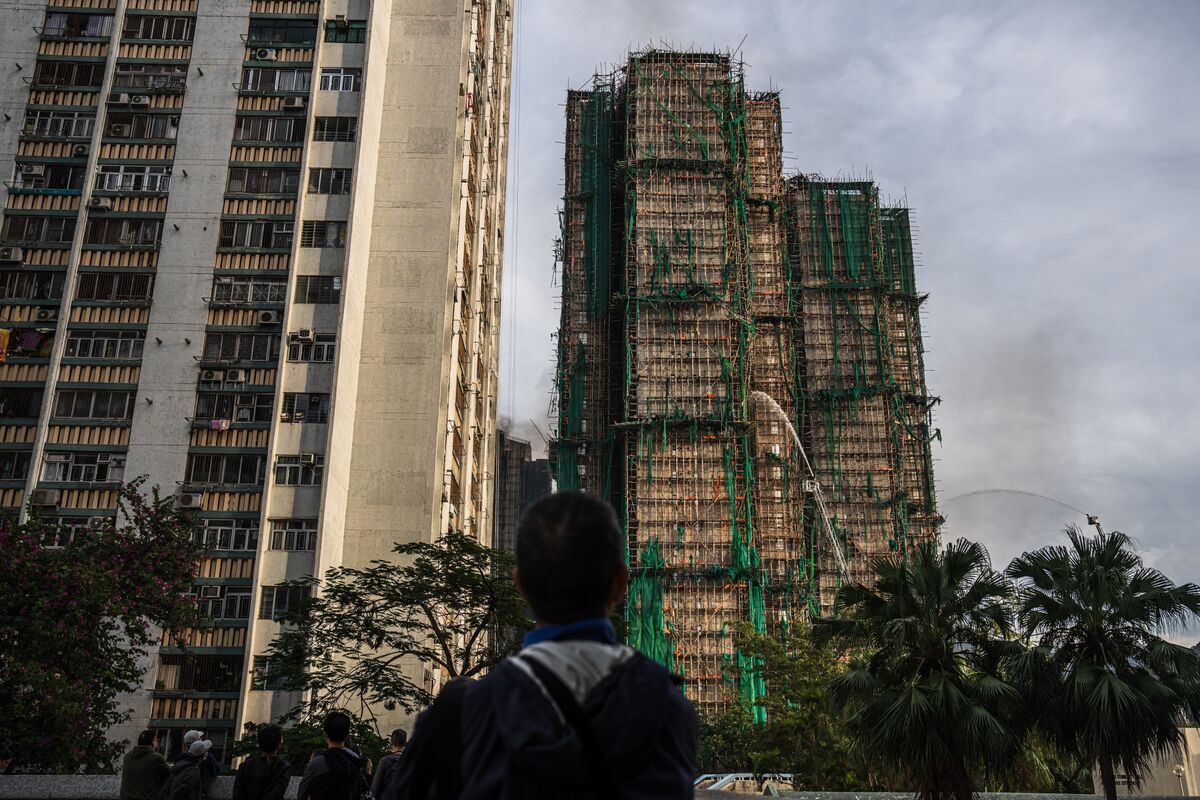
Hong Kong's Labour Department said it inspected Wang Fuk Court 16 times since renovation work began in July last year and warned renovators about fire hazards one week before a blaze wrecked the housing estate, following public complaints about scaffolding in September 2024. The episode heightens scrutiny of safety enforcement and could spur legal, insurance and regulatory consequences for renovators and increase perceived risk in the local residential property sector.
Market structure: The immediate winners are safety-equipment suppliers, compliance/inspection consultancies and insurers that can raise premiums; losers are small-to-mid cap renovation contractors, specialist scaffolding firms and tenuously financed developers who rely on quick renovation turnover. Expect near-term margin pressure for contractors with >20% revenue from retrofits and a 5–15% re-rating of small-cap contractor stocks within 2–8 weeks as projects stall and bid competition intensifies. Slower renovation activity will reduce short-cycle demand for steel, timber and labour for 1–3 months, while blue-chip developers with diversified income will see smaller direct demand hits.
Risk assessment: Tail risks include a citywide regulatory crackdown that freezes renovations for 1–3 months and forces capital expenditures equal to 2–5% of NAV for compliance, driving HK property credit spreads wider by 50–200bps and equity declines of 10–25% for highly levered names. Immediate risks (days) are reputational and liquidity squeezes for contractors; short-term (weeks/months) are increased claims and insurance-rate resets; long-term (quarters/years) are higher baseline compliance costs and margin compression for firms that cannot pass costs on. Hidden dependencies: municipal inspection backlogs could cascade to delays in residential completions and maintenance, pressuring cashflows for REITs and landlord-operating companies.
Trade implications: Tactical hedges via Hang Seng Index (HSI) put spreads make sense—buy 1-month 3–5% OTM puts and sell a lower strike to fund premium, target a 1–3% HSI move within 2–6 weeks. Reduce exposure to HK-listed mid/small-cap construction/renovation names by 30–50% over next 2 weeks; reallocate to top-tier developers with net cash buffers (e.g., consider adding CK Asset 1113.HK on >8% pullback) and to safety-equipment suppliers/inspection service providers. Credit: buy 3–6 month protection on weaker HK developer high-yield bonds if spreads move +75bps; FX: expect a short-lived risk-off that could push HK equities -1–3% without breaking the HKD peg.
AI-powered research, real-time alerts, and portfolio analytics for institutional investors.
Request DemoOverall Sentiment
moderately negative
Sentiment Score
-0.45
Contrarian angles: The market may over-assign systemic risk—historical HK safety crackdowns (2010–12) produced sharp local selloffs but normalized within 3–9 months as regulatory requirements clarified and large landlords absorbed costs. If indiscriminate selling pushes high-quality developers >8–12% lower, establish 2–4% tactical long positions sized to mean-revert over 3–6 months; avoid funding large directional bets until formal regulatory policy and estimated industry compliance costs are published (likely within 30–60 days).
