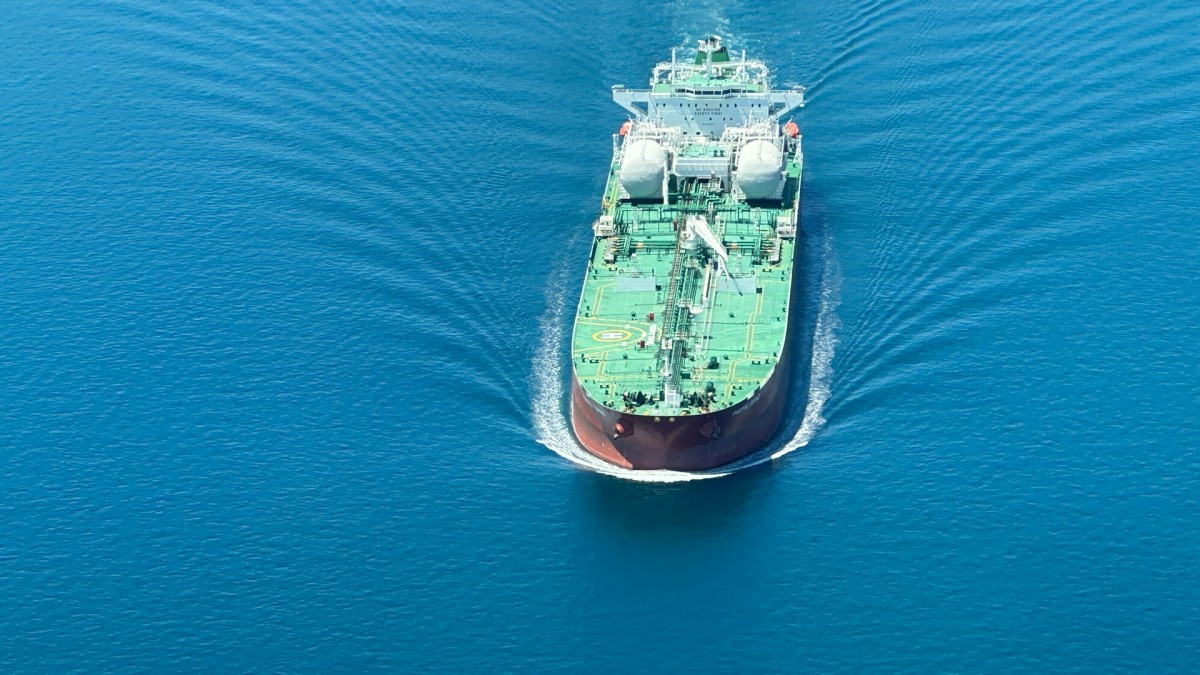
At least 6 million barrels of UAE crude reportedly moved through the Strait of Hormuz in April via AIS-darkened tankers and ship-to-ship transfers, despite the waterway being effectively blocked by the Iran-U.S.-Israel conflict. ADNOC has cut exports by more than 1 million barrels per day from 3.1 million bpd in 2025, while crude prices have reportedly pushed past $100 a barrel amid the blockade. The article underscores elevated geopolitical risk to roughly a fifth of global oil and gas supply and suggests continued volatility for crude flows and prices.
The market is underpricing the difference between a total chokepoint closure and a partially functioning but highly unreliable export lane. That distinction matters because the marginal barrel now carries a geopolitical risk premium multiple times larger than the physical disruption itself: insurers, charterers, and destination refiners will increasingly demand scarcity compensation, which lifts prompt crude and widens freight differentials even if headline export volumes look “manageable.” The bigger second-order effect is not just higher oil prices; it is a structural increase in transaction costs, creating a tax on every Gulf-origin barrel that survives the strait.
Winners are the asset-light, fast-turn exporters and the infrastructure that can bypass the chokepoint, not the Gulf complex broadly. Floating storage, STS hubs, and alternative discharge points in Oman, Fujairah, and the Red Sea become strategic bottlenecks with elevated pricing power; refiners with non-Gulf supply optionality gain relative margin stability. Losers are Asian refiners most dependent on spot Middle East grades, European refiners exposed to prompt product tightness, and shipping names without strong sanctions/war-risk pricing discipline, because the fleet risk is now operational, not theoretical.
The catalyst path is binary and near-term: the next drone or missile strike on a tanker, terminal, or STS node could force a second-order self-sanctioning response that reduces actual seaborne flows more than any formal blockade. Conversely, if the UAE can keep moving barrels for several weeks without a casualty event, the market may slowly normalize the higher-risk routing as a new steady state, compressing the initial panic premium while leaving a persistent $8-15/bbl geopolitical floor. The key thing consensus may miss is that “partial leakage” through the strait is bearish only for the most extreme shortage scenario; it is still bullish for volatility, freight, and regional basis dislocations.
AI-powered research, real-time alerts, and portfolio analytics for institutional investors.
Request DemoOverall Sentiment
strongly negative
Sentiment Score
-0.55
