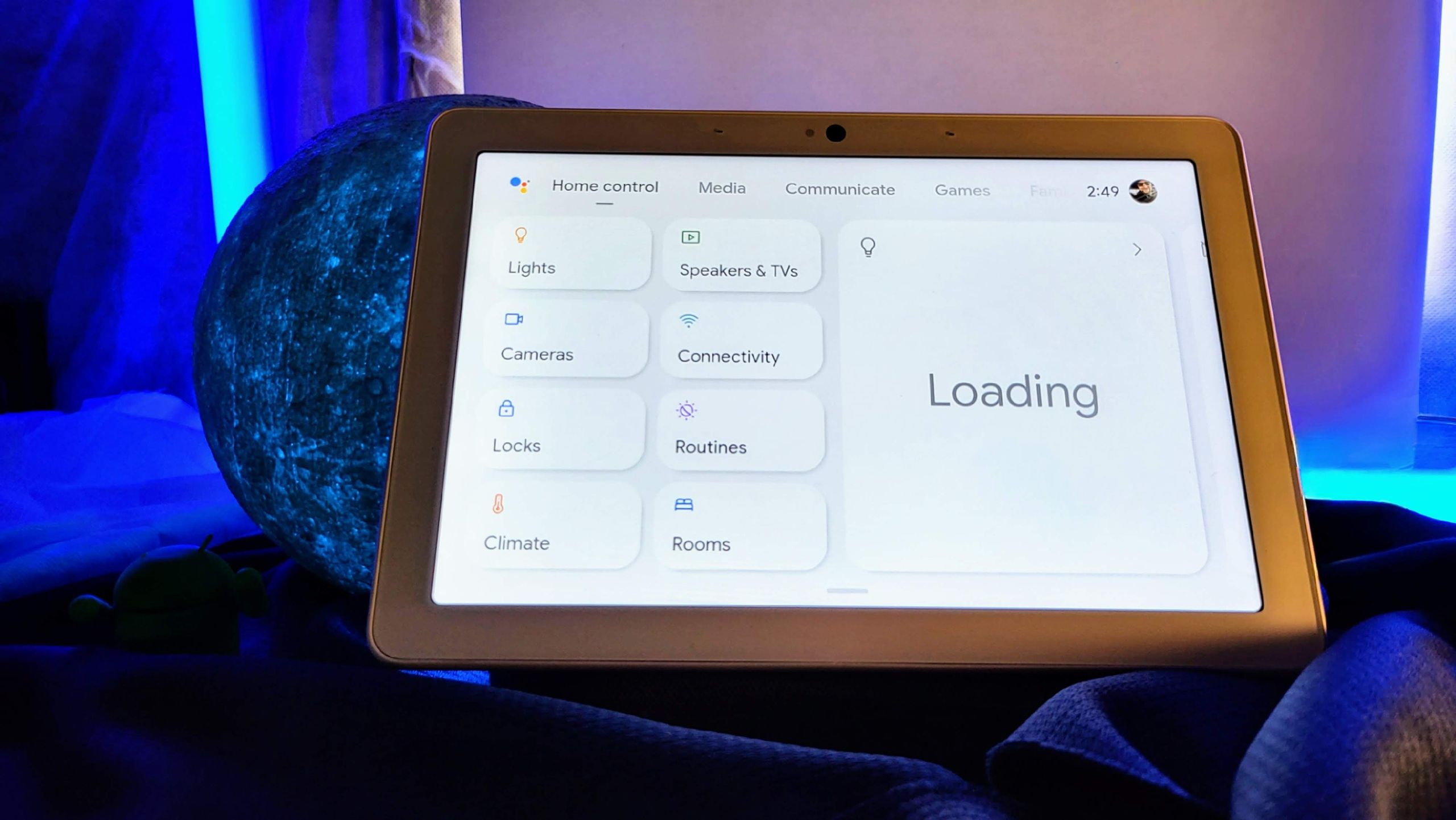
Key event: Google rolled out a Gemini for Home update in Google Home app v4.12 that improves natural-language understanding, device recognition, and adds expressive lighting (you can request colors like “the color of the ocean”) plus precision controls (e.g., “Preheat the smart oven to 350°”). The update also expands availability with early access in Mexico, Spanish support in supported countries, supervised-account access for kids, and Android 16 app improvements — notable for user experience but unlikely to materially move Google’s stock near term.
This update materially reduces friction in a low-engagement corner of Google’s ecosystem where tiny UX improvements can meaningfully change retention and hardware replacement cadence. If improved NLU and expressive lighting convert casual users to daily-interaction users, a conservative scenario of a 3–5% uplift in active Home interactions over 12–24 months would magnify incremental ad and services monetization (order-of-magnitude: low hundreds of millions annually, not billions) while raising attachment rates for Nest/Pixel devices.
The competitive fallout is asymmetric: software upgrades increase the switching cost for Amazon/Apple because user preferences become tied to Google-specific semantics (e.g., descriptive color mapping and context-aware device resolution). Downstream suppliers of smart-lighting and IoT chips stand to see higher ASPs and replacement cycles; conversely, incumbents that monetize voice failures through premium support or alternative ecosystems could see churn. Expect supply-chain tailwinds for higher-margin hardware components (sensor modules, premium mics) but greater margin pressure if Google pushes local inference onto devices to blunt regulatory scrutiny.
Key catalysts and risks are clustered by horizon: look for MAU/engagement signals and Nest device sell-through in the next 3–9 months as proof of product-market fit; broader ad/ARPU benefits will materialize over 12–24 months. Tail risks that would reverse the positive thesis include an Amazon counter-update matching semantics quickly, a high-profile privacy/regulatory incident that forces feature rollbacks, or material latency/accuracy regressions on multi-device setups. Monitor developer/partner uptake and any regulatory guidance about on-device processing as near-term risk signals.
AI-powered research, real-time alerts, and portfolio analytics for institutional investors.
Request DemoOverall Sentiment
mildly positive
Sentiment Score
0.25
Ticker Sentiment
