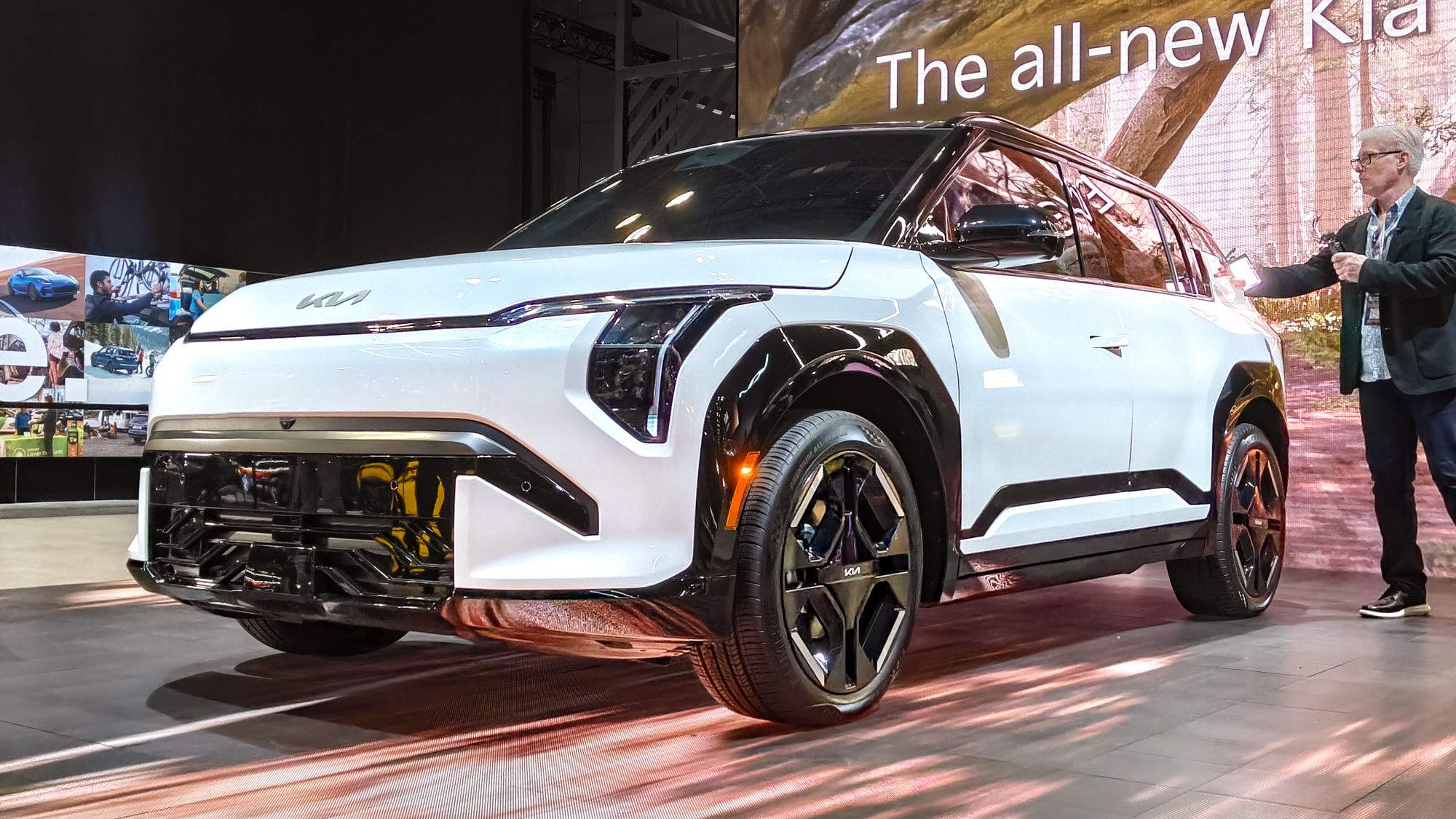
Key event: New York Auto Show 2026 highlights a renewed expansion of affordable EVs with concrete price/range entries — 2027 Chevrolet Bolt $27,600 (262 mi), 2026 Nissan Leaf $29,990 (303 mi), 2026 Toyota bZ $34,900 (314 mi), 2026 Subaru Uncharted $34,995, and 2026 Mercedes‑Benz CLA $47,250 (374 mi). Rising gasoline (~$4/gal) materially improves EV total cost of ownership: Hyundai Kona Electric vs gas example shows a single home recharge $14.26 vs $49.60 fill, yielding ~$5,657.50 savings over 5 years (60,000 miles), supporting stronger consumer adoption and positive sector demand for EV OEMs and suppliers.
The New York show’s broadening of sub-premium EV SKUs is altering unit economics: lower sticker prices plus improving efficiency compress payback thresholds and expand the addressable market in the 1–3 year window. That shift favors scale players and low-cost cell chemistries; it also forces OEMs to trade margin per unit for share, creating a volume-versus-margin restructuring that will show up in OEM gross margins over the next 2–4 quarters.
Expect material second-order effects across the supply chain. Large-scale adoption of cheaper EVs accelerates demand for battery cells and lithium while simultaneously pushing OEMs toward standardized platforms and supplier consolidation — a win for integrated cell makers and processors, a structural headwind for high-cost tier-1 parts suppliers and legacy captive-finance units vulnerable to residual-value risk within 6–18 months. Concurrently, faster fleet electrification increases public charging utilization, creating operating leverage for charger networks and utilities but stressing local distribution assets.
Key catalysts that can re-rate this thematic are volatile fuel prices, renewed purchase incentives, and consumer credit availability; any of these can move penetration +/- materially in 3–12 months. Tail risks include a sudden collapse in used-EV residuals or a regulatory cap on public charging margins, either of which would depress OEM profitability and slow rollout for charging operators over 6–24 months.
AI-powered research, real-time alerts, and portfolio analytics for institutional investors.
Overall Sentiment
moderately positive
Sentiment Score
0.60
Ticker Sentiment
