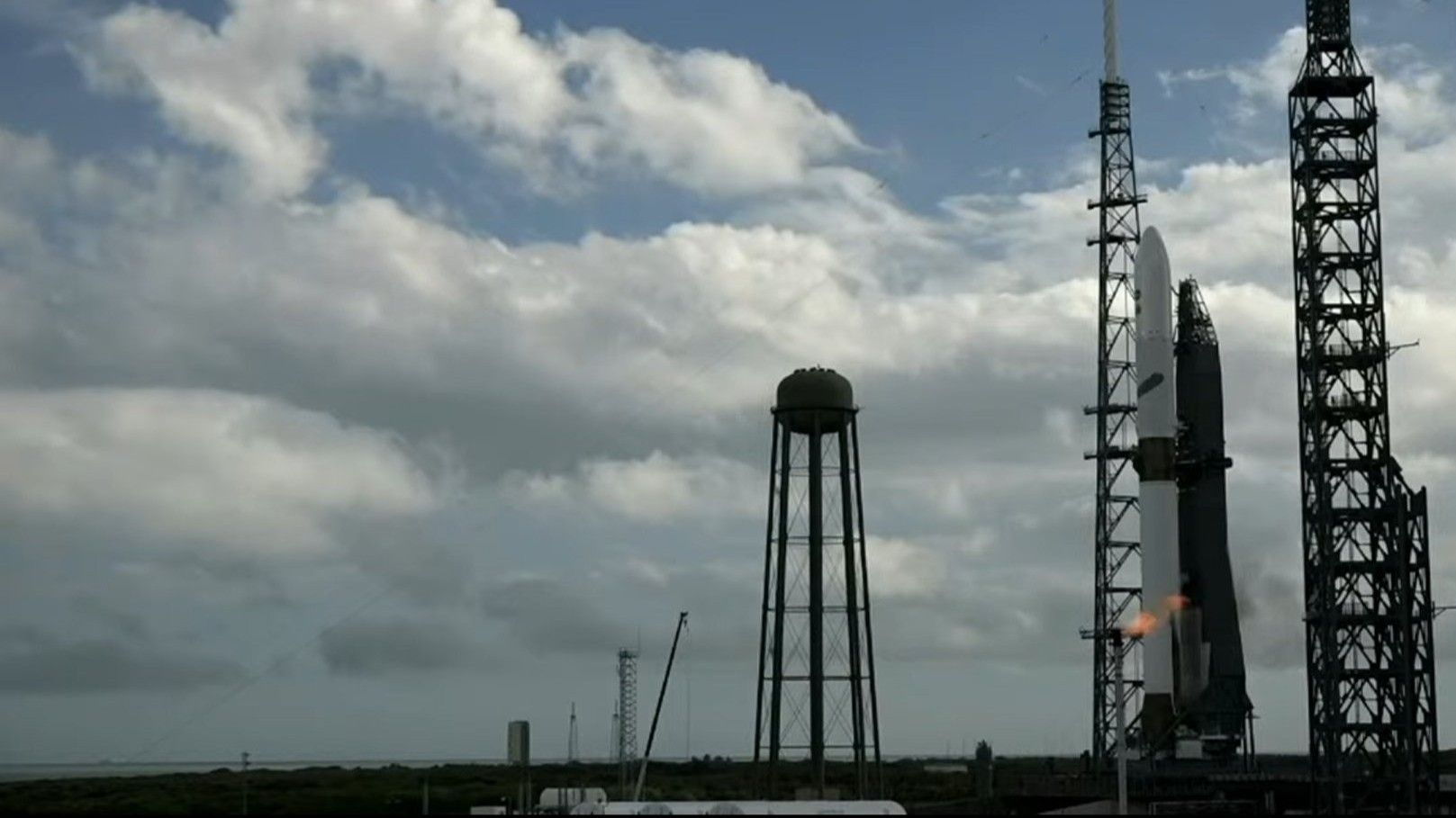
Blue Origin's New Glenn rocket launch, carrying NASA's $80 million Mars ESCAPADE mission, was delayed from November 9th due to adverse weather conditions. The launch, which marks the second flight for the New Glenn rocket and is crucial for Blue Origin's reusability and commercial heavy-lift aspirations, was further complicated by new FAA restrictions on daytime commercial launches stemming from a government shutdown. Blue Origin secured an exception, rescheduling the launch for November 12th, underscoring the operational challenges and regulatory complexities impacting commercial space ventures.
Blue Origin's New Glenn rocket launch (NG-2), carrying NASA's $80 million Mars ESCAPADE mission, was scrubbed on November 9th due to adverse weather conditions, specifically the "cumulus cloud rule." This delay pushed the second flight of the New Glenn rocket to November 12th, marking a setback for NASA's first Mars mission in five years. The initial launch attempt faced an 88-minute window, which was ultimately thwarted by foul weather.
The rescheduling was complicated by new Federal Aviation Administration (FAA) restrictions, effective November 10th, halting daytime commercial launches due to a government shutdown impacting air traffic controllers. Blue Origin successfully secured an exception from the FAA for the November 12th launch window, highlighting the operational complexities and regulatory hurdles facing commercial space ventures during federal disruptions. This demonstrates the critical interplay between private space operations and government agencies.
This NG-2 flight is significant for Blue Origin, aiming to demonstrate the reusability of the New Glenn's first stage via a barge landing, a capability crucial for its commercial heavy-lift and satellite launch aspirations. The mission also involves Rocket Lab (RKLB), which built the ESCAPADE orbiters, and ViaSat (VSAT), providing a telemetry communications experiment, both of whom are indirectly impacted by the launch timeline. Despite the overall mildly negative sentiment surrounding the delay, the per-ticker sentiment for RKLB and VSAT remains mildly positive, suggesting their involvement in a high-profile NASA mission is viewed favorably.
AI-powered research, real-time alerts, and portfolio analytics for institutional investors.
Request DemoOverall Sentiment
mildly negative
Sentiment Score
-0.25
Ticker Sentiment
