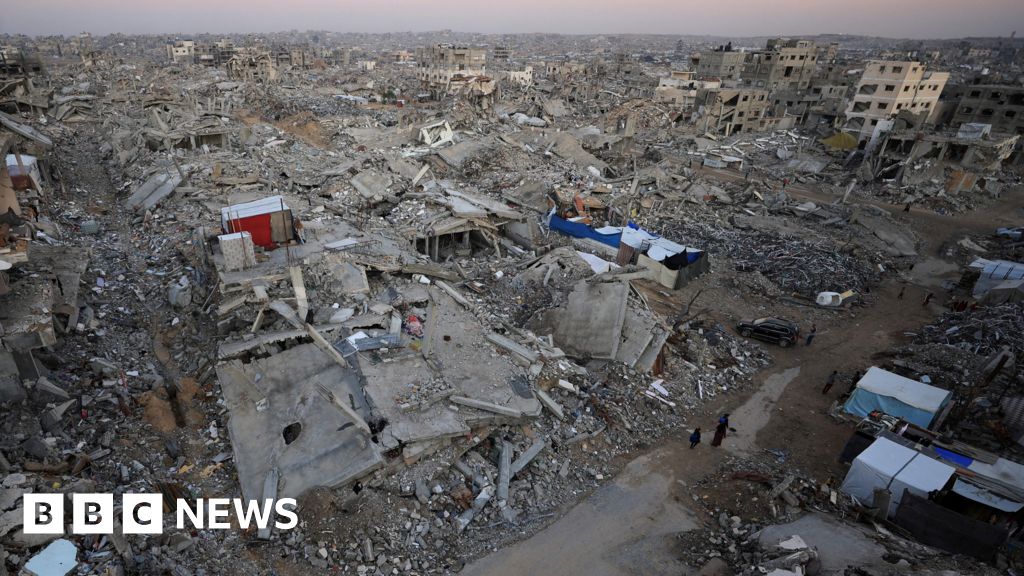
The UN Security Council approved a US-drafted resolution endorsing President Trump’s 20-point Gaza plan by a 13-0-2 vote (Russia and China abstained), authorising an International Stabilisation Force (ISF) to work with Israel, Egypt and a newly vetted Palestinian police force to demilitarise Gaza, and creating a transitional Board of Peace (BoP) to oversee governance and reconstruction funded via a World Bank-backed trust. Hamas rejected the plan, citing loss of neutrality and sovereignty, while the US says multiple countries have offered ISF contributions; Trump is expected to chair the BoP. The move reduces some short-term political uncertainty by establishing institutional frameworks for disarmament and reconstruction but leaves major implementation, participation and legitimacy risks that could affect regional security, reconstruction flows and related sectors (defense, reconstruction/infra, and energy).
Market structure shifts favor defense primes (LMT/RTX/GD) and global engineering/materials suppliers as institutionalized reconstruction raises multi-year contracted revenue potential; energy exporters and traded oil (XLE, OIL) see higher tail volatility but potential for reopened export corridors over 12–36 months. Pricing power concentrates with large-cap contractors able to absorb reputational and vetting burdens; smaller regional firms face bid exclusion, widening margin dispersion by 300–500bps across peers over 1–2 years.
Tail risks include a kinetic escalation (Iran/Hezbollah or failed ISF engagement) that could spike Brent +25–40% in days and widen regional credit spreads by 200–600bps; conversely, politicized fund paralysis could create multi-year capex delays, stranding contractor inventories and pushing impairments. Hidden dependencies: World Bank trust scale (> $2–5bn) and timely donor disbursement are binary catalysts for supply-chain recovery and contractor revenue recognition.
Trade implications: favor convex exposure to defense via 3–9 month call spreads and buy materials names with direct civil-construction exposure (VMC, CRH) for 6–18 months; underweight travel/airlines (AAL, LUV) and regional EM credit. Use relative-value pairs (long LMT, short AAL) to harvest risk-off skew while sizing total portfolio risk 3–6% and using 8–12% stop-losses.
Consensus misses the probability that politicized governance will delay flows 12–24 months, creating a two-year arbitrage between defense/order-enforcement wins and reconstruction lag. Historical parallels (Iraq 2003) show contractors rallied on headline deals but delivered cash flows only after lengthy delays; reputational/AML obstacles may re-rate some contractors downward before revenues materialize.
AI-powered research, real-time alerts, and portfolio analytics for institutional investors.
Request DemoOverall Sentiment
moderately negative
Sentiment Score
-0.35
