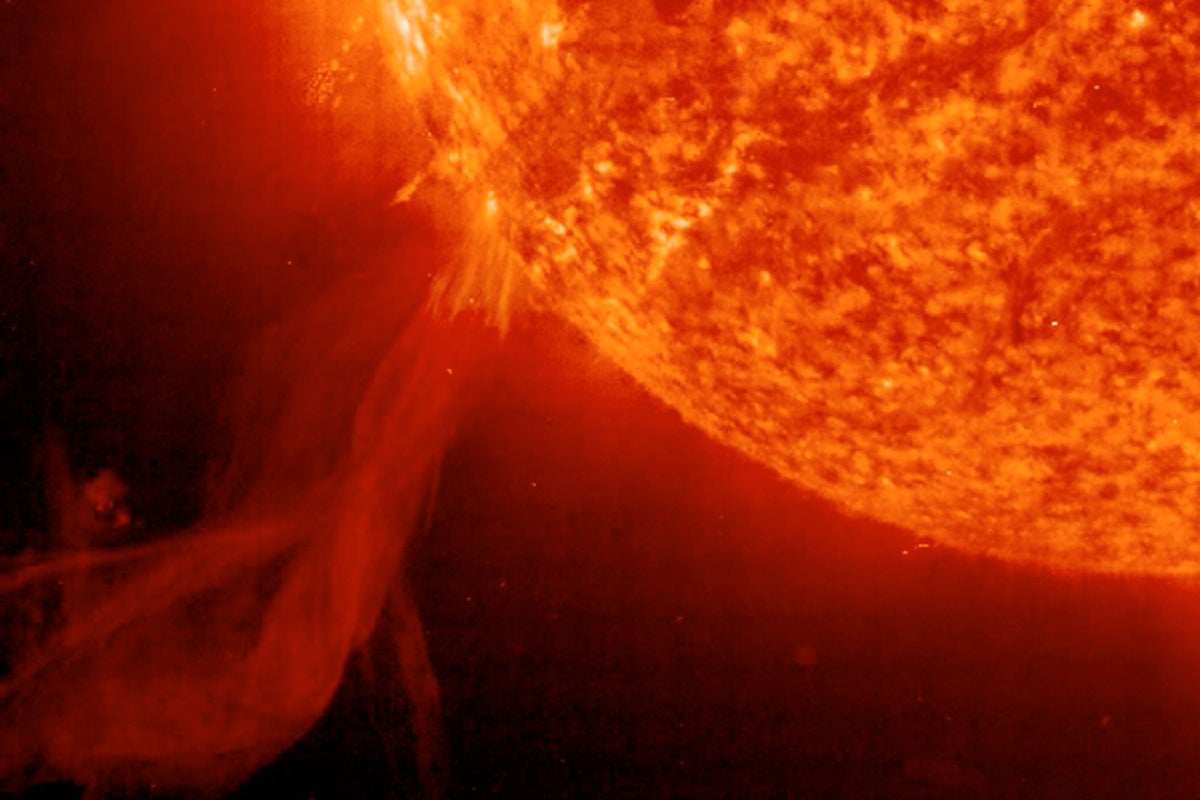
A strong M5.8 solar flare triggered a moderate radio blackout over the Atlantic Ocean and parts of eastern Africa, disrupting high-frequency communications for aviators and mariners. A coronal mass ejection is expected to pass near Earth late on 12 May into 13 May UTC, with potential aurora visibility across parts of the UK and northern US. The main market relevance is operational risk for aviation, marine, and communications infrastructure rather than broad financial market impact.
The market impact is not the aurora headline; it is the asymmetric vulnerability of systems that still depend on HF radio, satellite timing, and geomagnetic stability. The immediate losers are aviation, marine logistics, and any defense/industrial workflows that rely on high-latitude comms or GPS integrity, but the second-order effect is more important: even a non-catastrophic glancing CME forces operators to pay for redundancy, which supports procurement across resilient navigation, satcom backup, and grid-hardening vendors. The probability-weighted downside is concentrated in the next 24-72 hours, while the broader capex signal can persist for quarters if this event reminds operators how thin their resiliency stack is.
The event also creates a short-lived volatility window in electricity, telecom, and transportation names with fragile operating margins. Utilities in geomagnetically exposed regions are the cleanest place to look for defensive behavior because they can benefit from a renewed reliability narrative without direct earnings sensitivity to the storm itself; by contrast, airlines and shipping are more exposed to operational friction than to obvious P&L line items, so the selloff/hedge opportunity is likely better than a fundamental short. The bigger tail risk is not today's aurora but a stronger follow-on CME within days or weeks: the Sun is near an active rotation phase, so the market is underpricing sequence risk more than single-event risk.
Consensus is likely overfocusing on spectacle and underpricing infrastructure durability spending. If the event lands softly, the tradable move may reverse quickly, but the better contrarian setup is that even a modest miss on comms/GPS can validate latent demand for redundant systems. That favors a basket approach: own the picks-and-shovels of resilience, fade the most operationally exposed transport names on strength, and treat the geomagnetic window as a catalyst rather than a thesis.
AI-powered research, real-time alerts, and portfolio analytics for institutional investors.
Request DemoOverall Sentiment
neutral
Sentiment Score
-0.05
