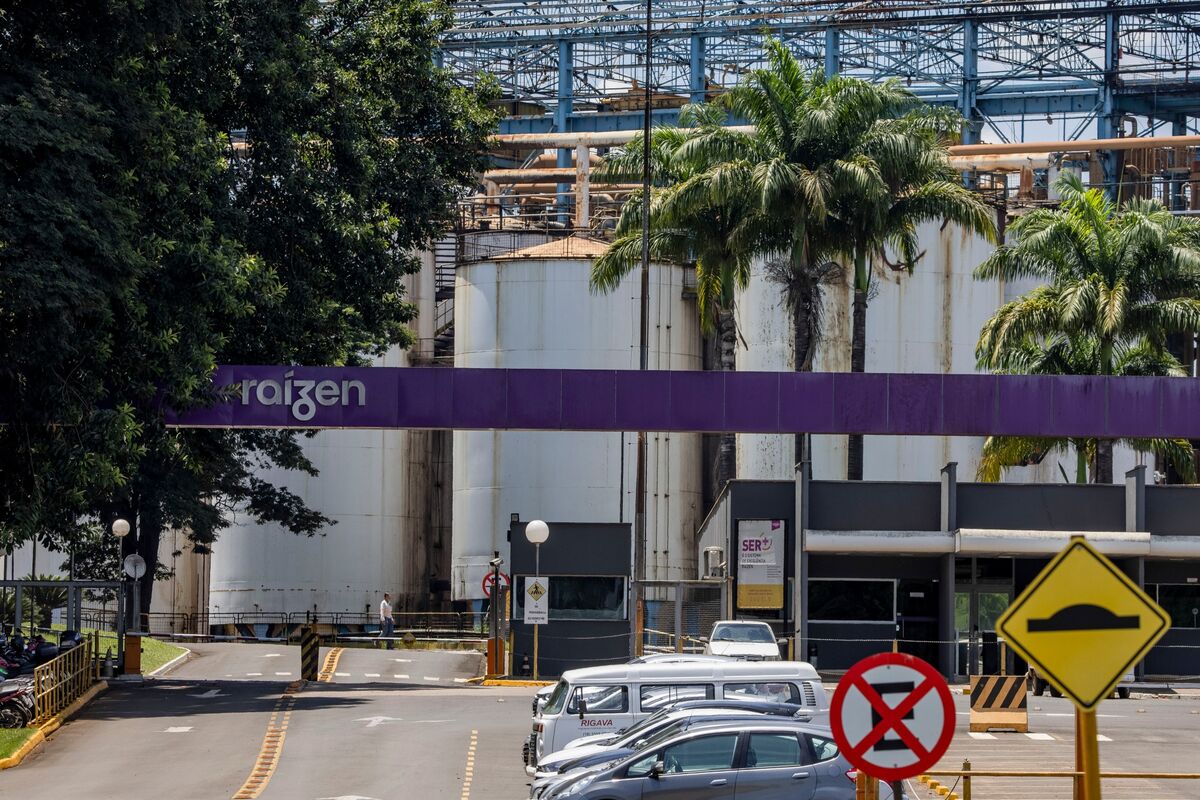
Moody’s downgraded Raízen SA one notch to Ba1 from Baa3, moving Brazil’s largest ethanol producer into junk territory after citing a deterioration in the company’s debt metrics. The move raises refinancing costs and heightens default risk for Raízen, likely pressuring its bonds and equity and increasing scrutiny from lenders and commodity counterparties.
Market structure: The Moody’s downgrade to Ba1 pushes Raízen into junk status, which will directly hurt holders of its corporate bonds and increase borrowing costs for ethanol processors in Brazil; lenders and short‑dated USD bond holders are immediate losers while commodity producers with stronger balance sheets (e.g., Ultrapar UGPA3.SA, national refiners) and commodity traders could gain pricing power if Raízen curtails supply. Competitive dynamics: a weaker Raízen raises the probability of market share loss in fuel distribution and ethanol offtake to regional players over 3–12 months and compresses margins industrywide as smaller players face higher rollover costs. Cross‑asset: expect Raízen credit spreads to widen by several 100bp, single‑name CDS to rerate, BRL to weaken vs USD by 2–5% on sentiment, Brazilian equity indexes (EWZ) to underperform, and sugar/ethanol futures to spike on any production disruption.
Risk assessment: Tail risks include covenant breach or cross‑default triggering a fire sale of assets, a parent non‑support decision, or policy intervention (price controls/subsidies) — each could move recovery expectations from 40% to <20% within 3–6 months. Time horizons: immediate (days) — bond/CDS repricing and equity gap down; short (weeks–months) — covenant talks, refinancing or asset sales; long (quarters) — restructuring or recovery value crystallization. Hidden dependencies: large share of dollar‑linked debt and seasonal cane harvests tie credit risk to FX and weather; a 10% BRL depreciation materially increases USD‑debt stress. Catalysts to watch: Moody’s follow‑up review (30 days), 2Q EBITDA releases, FX moves >5%, and sugar/ethanol price swings.
Trade implications: Direct plays include buying single‑name CDS on Raízen (establish 1–2% notional portfolio hedge) or short Raízen USD paper if spread >400–500bp over Brazil sovereign; equity strategy: buy puts on EWZ (1–2% allocation) or put spreads to cap cost (1–3 month tenors). Pair trades: long ICE sugar futures (1–2% notional) vs short Brazilian ethanol processor equities (e.g., CSAN3/RAÍZEN‑linked names) to capture squeeze if production falls. Options strategies: buy put spreads on CSAN3/UGPA3 (if available) or buy out‑of‑the‑money BRL puts (30–60 day) to hedge FX risk.
Contrarian angles: The market may overshoot if investors price default despite substantial tangible asset backing (land, mills, fuel stations); if spreads widen >600bp, bond recovery could become attractive for a 12–24 month distressed debt play. Historical parallels: 2015–2016 Brazilian commodity restructurings show parent/strategic buyer rescues are possible — monitor parent Cosan liquidity and Shell strategic posture over 90 days. Unintended consequences: forced asset sales could tighten ethanol supply and lift prices, benefiting sugar/ethanol longs and higher‑quality refiners (XOM, CVX) — keep position sizing tight until catalysts clarify.
AI-powered research, real-time alerts, and portfolio analytics for institutional investors.
Request DemoOverall Sentiment
strongly negative
Sentiment Score
-0.60
