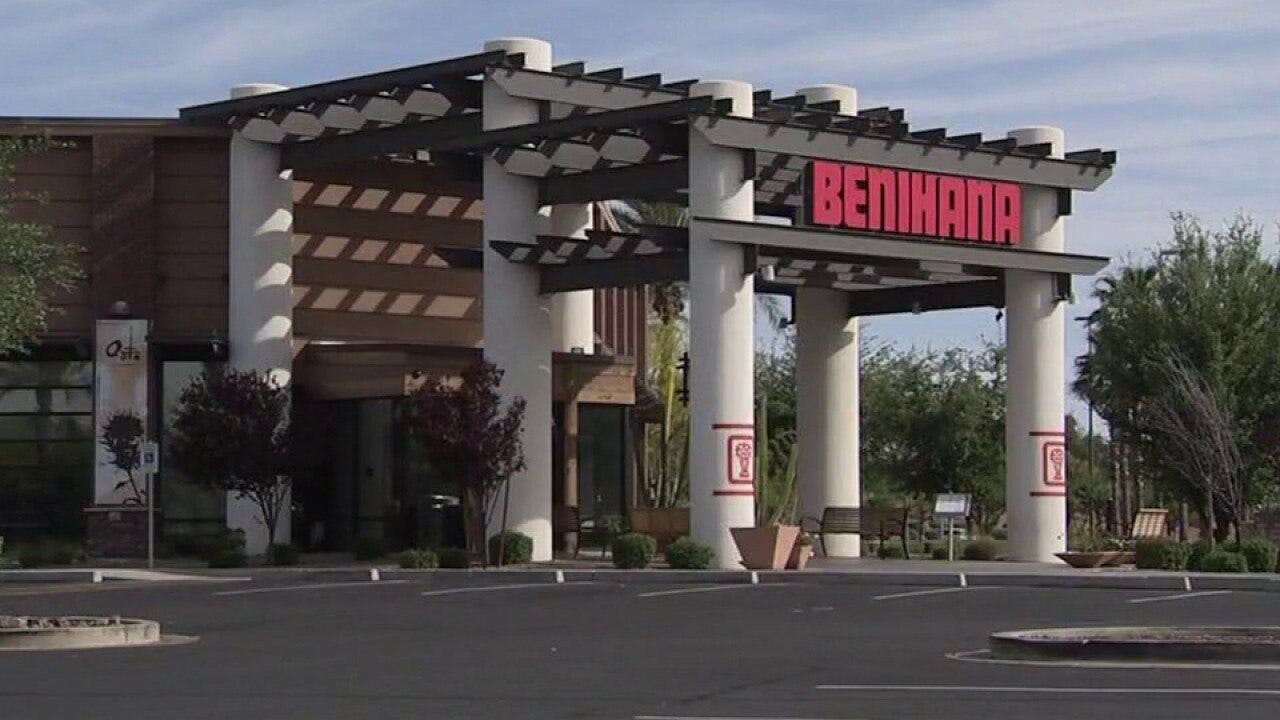
One Group Hospitality, which acquired Benihana last year, announced an agreement to open 10 new Benihana restaurants across the San Francisco Bay Area: three franchised units, two joint-venture locations and five licensed Benihana Express outlets. The two joint-venture sites are expected to open next year, with the remaining restaurants phased in over the next seven years; specific locations and financial details were not disclosed. The plan signals asset-light growth via franchising/licensing and selective JVs that could expand local revenue and brand presence, but lacks immediate scale or financial metrics to materially move markets.
Market structure: One Group (STKS) and its franchise partners are the direct winners — 10 Bay Area units signal confidence in AUVs for higher-income, urban dining and should support local market share versus independents; pricing power is limited, so gains come from volume and footprint, not margin expansion. Supply/demand: the plan implies steady consumer dining demand in the Bay Area over 1–7 years and incremental demand for beef/protein suppliers (modest upward pressure on cattle spot/forward prices). Cross-asset: equity impact should be idiosyncratic (small-cap STKS volatility up); negligible sovereign bond impact, slight rise in short-dated options IV for STKS, and marginal commodity sensitivity to beef prices over months.
Risk assessment: Tail risks include California zoning/permit delays, union/labor actions, and sharp beef-cost inflation (25–40% YoY moves would compress margins); franchisee credit stress could amplify losses. Time horizons split: immediate (days) — muted; short-term (3–12 months) — share moves on JV openings and local approvals; long-term (1–7 years) — revenue lift if roll-out hits pace. Hidden dependencies: lease economics, cannibalization of existing Bay Area units, and CA minimum-wage increases; catalysts include first two JV openings (next 12 months) and quarterly same-store-sales prints.
Trade implications: Direct play is a small-cap, event-driven long in STKS sized to execution risk; defined-risk option structures preferred given small-float volatility. Relative trades: long STKS vs larger national casual-dining names if Bay Area outperformance persists. Sector rotation: favor Travel & Leisure and select small-cap restaurants with urban concentration; trim capital allocation to broad QSRs if wage inflation re-accelerates.
Contrarian angles: Consensus under-weights execution risk — 10-unit plan spread over seven years can dilute near-term margins and brand if Express outlets lower AUVs; historical parallels (rollouts post-acquisition) show equity reratings only after demonstrable unit-level economics, not press releases. The market may be underpricing downside from CA-specific regulatory/legal shocks, so use size limits and option hedges rather than naked exposure.
AI-powered research, real-time alerts, and portfolio analytics for institutional investors.
Request DemoOverall Sentiment
mildly positive
Sentiment Score
0.28
Ticker Sentiment
