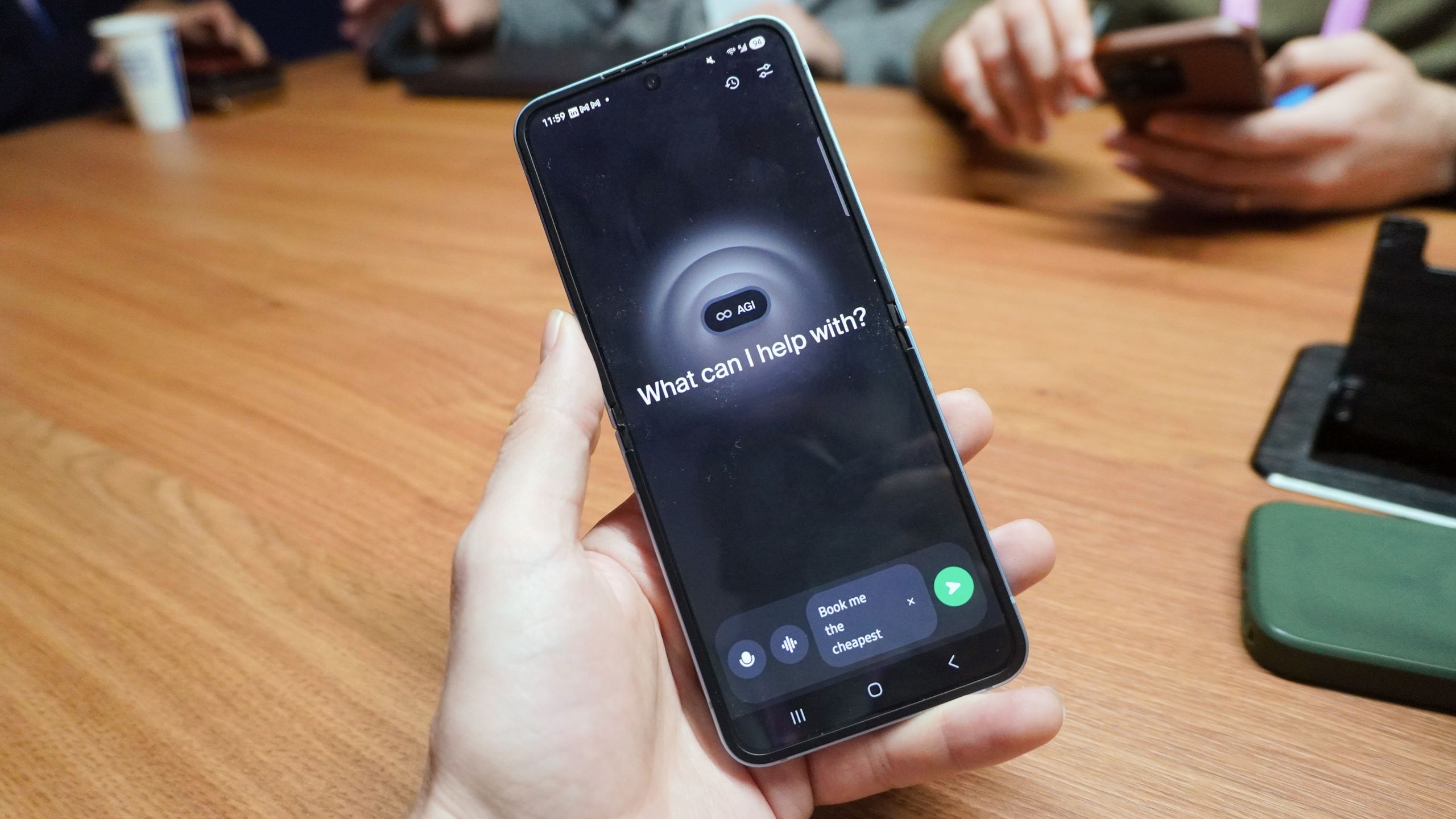
AGI Inc.'s agentic on-device AI app (private beta) can navigate phone UIs and complete tasks—booking an Uber in about 15 seconds—and is partnered with Qualcomm to run local NPU models within the next six months. The startup currently uses cloud GPUs but plans on-device processing for improved privacy and has a Visa partnership for secure transaction authentication. The technology is positioned as a template for a next-gen Siri ahead of Apple's WWDC, with potential strategic implications for Apple, Qualcomm and payments/security integrations.
A practical, on-device agent that can navigate UIs changes the demand map: the immediate revenue pool shifts from cloud LLM providers toward silicon vendors, NPUs, and authentication infrastructure. Expect incremental silicon/contention for high-performance NPU cycles to show up in Qualcomm’s bookings and OEM BOMs within 6–12 months, and in memory/ISP demand on a similar cadence as model quantization levels are relaxed.
Apple sits at a fork: either match rapidly with its vertical stack (hardware+OS+store control) or cede voice/agent relevance to an ecosystem that can deploy cross-device agents faster across hundreds of OEMs. That means two plausible near-term outcomes — Apple accelerates on-device model pipelines (benefitting AAPL supply chain tiers) within 12–24 months, or Android/Qualcomm captures the lead and forces Apple into a defensive product sprint.
Key frictions will cap adoption and monetization in the near term: reversible action defaults, payment authentication UX, battery/thermal constraints of real-time VLMs, and imminent regulatory scrutiny around autonomous transactions. Any of these can halve expected transaction uplift versus a bullish base case; a major mis-authorization event or regulatory intervention would compress valuations for companies monetizing agent-driven commerce.
The consensus is over-optimistic on cadence and TAM capture by consumer apps. Early benefits accrue to platform and silicon owners (who control execution and privacy guardrails), not to every app that the agent touches. That implies concentrated winners (QCOM, Visa infrastructure) and a multi-quarter runway before app-level revenue moves show up in GAAP results.
AI-powered research, real-time alerts, and portfolio analytics for institutional investors.
Request DemoOverall Sentiment
moderately positive
Sentiment Score
0.40
Ticker Sentiment
