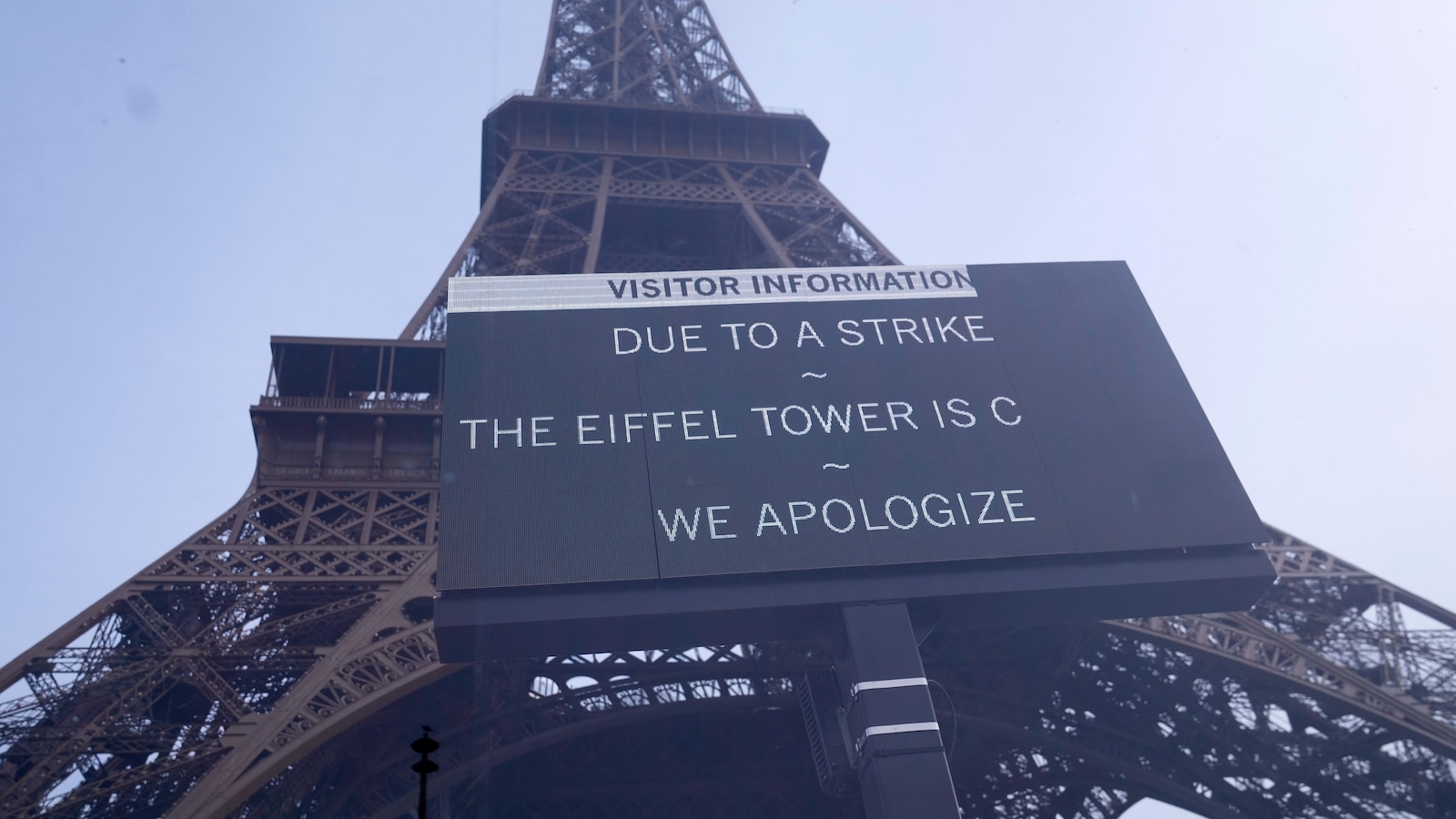
France is experiencing widespread strikes across over 200 locations, including the closure of the Eiffel Tower, as unions protest proposed austerity measures and demand higher taxes on the wealthy. This social unrest targets new Prime Minister Sébastien Lecornu, urging him to abandon draft budget cuts ahead of his detailed fiscal plan and ministerial appointments, signaling significant political instability and uncertainty regarding future French fiscal policy as a deeply divided parliament prepares to debate the budget by year-end. While widespread, the immediate disruption to public services appears somewhat contained compared to previous actions, yet the high level of social anger persists.
Significant social unrest is unfolding across France, with nationwide strikes in over 200 locations protesting proposed austerity measures and demanding higher taxes on the wealthy. This action, which has forced the closure of the Eiffel Tower, creates a challenging environment for new Prime Minister Sébastien Lecornu, who has yet to detail his fiscal policy or appoint his government. The protests are a preemptive effort by major unions to influence the forthcoming budget, which will be debated by a deeply divided parliament. While the disruption to national infrastructure like high-speed rail appears contained for now, regional transport and specific sectors like tourism are directly impacted. Importantly, early figures suggest lower protestor turnout compared to the previous month's demonstrations, which saw over 500,000 participants, potentially indicating a slight decrease in momentum. However, the situation underscores a high degree of political instability and uncertainty regarding France's future fiscal direction, which carries implications for sovereign risk and the domestic economic climate.
AI-powered research, real-time alerts, and portfolio analytics for institutional investors.
Overall Sentiment
moderately negative
Sentiment Score
-0.60
