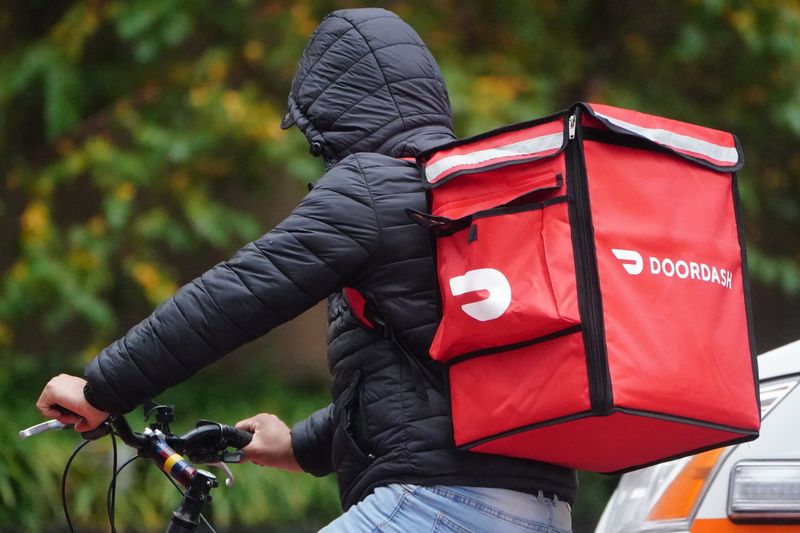
DoorDash trades at $151.96 (near its 52-week low of $149.22) while sell-side targets range from $224 (DA Davidson) to $272 (BofA), with Citizens reiterating Market Outperform and a $250 target (cut from $285). Q4 results slightly beat estimates—gross order value and adjusted EBITDA roughly +1% vs. expectations—and DoorDash announced a Foot Locker retail partnership adding ~1,300 locations and highlighted AI initiatives to reduce costs and improve retention.
DoorDash’s push to automate last-mile tasks (routing, curb-finding, customer-service triage) functions like a variable-cost lever: every $0.30–$0.75 saved per order compounds quickly because it flows straight to adjusted EBITDA once order growth normalizes. If automation reduces cost-to-serve by ~5–10% over 18–36 months, that’s equivalent to adding mid-single-digit percentage points to operating margin without unit price changes, widening the gap versus incumbents that rely on legacy routing stacks.
Second-order winners include dense urban retailers and mall-based chains that can monetize same-day demand without building dark-store footprints; losers are local courier subcontractors and parking-reliant small restaurants whose throughput falls if Dashers spend less time finding parking or handling customer friction. There’s also an underappreciated insurance/claims vector: as non-food assortments expand (shoes, apparel), return/reverse logistics rates and shrink risk could rise 2–4x versus hot-food, pressuring unit economics unless DoorDash internalizes warehousing or return-routing costs.
Key catalysts and risks are bifurcated by timeframe. In the next 1–3 quarters, expect volatility tied to measured KPIs — grocery basket size, non-food order mix, and reactivation/retention lifts; over 12–36 months the real test is sustained driver-supply elasticity and regulatory shifts on gig-worker status. A governance or labor shock (new local wage floors, insurance mandates) could wipe out automated savings within weeks, while successful rollouts of automation and retail partnerships can unlock durable, compounding margin expansion.
Consensus is optimistic on “AI doing the heavy lifting,” but underestimates operational ceilings and reinvestment drag: incremental automation often requires spending on sensors, mapping, and customer-experience tests that front-load cash burn for backloaded margin gains. That asymmetry favors nimble option-based exposure or pair trades isolating product optionality versus raw network/ride exposure rather than outright long-levered equity bets.
AI-powered research, real-time alerts, and portfolio analytics for institutional investors.
Request DemoOverall Sentiment
mildly positive
Sentiment Score
0.30
Ticker Sentiment
