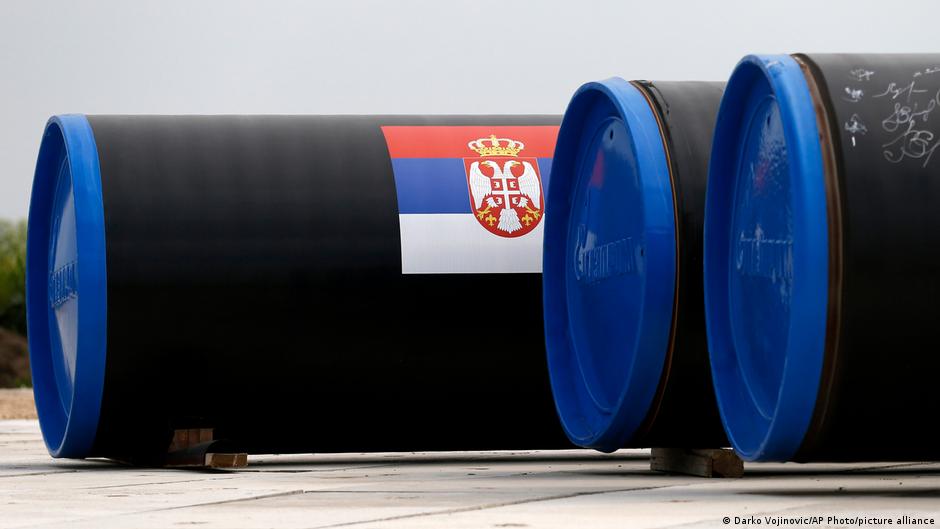
Two large explosive packages with detonators were found a few hundred metres from the Balkan Stream/Turkstream pipeline in Serbia, which carries Russian gas to Hungary. Serbian and Hungarian leaders treated the discovery as a likely sabotage, prompting security meetings; Ukraine denied involvement and suggested a Russian false-flag, while Hungarian opposition accused the government of politicizing the timing a week before national elections. The incident raises short-term political risk and the potential for regional gas supply disruption, creating upside pressure on regional energy prices and heightened geopolitical uncertainty.
This event crystallizes a persistent but underpriced risk premium on Central European gas delivery corridors: market pricing has assumed physical routes are either immune to disruption or can be rapidly substituted by LNG. In reality, a multi-week outage in a single corridor can force marginal demand onto the European spot LNG market, producing mid-winter TTF spikes of 20–50% and leaving shorter-dated contracts re–priced for 3–6 months while regas capacity and shipping are reallocated.
Politically, incumbents that trade on ‘energy reliability’ will see asymmetric short-term benefits while credit spreads for small open-economy sovereigns widen; conversely, regional gas retailers and merchant utilities face margin compression as wholesale-forward curves decouple from locked-in retail tariffs. Over 6–18 months the measurable impacts will be higher insurance and financing costs for cross-border pipeline projects (adding 5–15% to capex hurdles) and accelerated contracting for flexible LNG supply and floating storage/regas capacity.
Near-term catalysts that would amplify price moves are (1) credible attribution and subsequent retaliatory actions, (2) announcements of prolonged outages or denial of access to alternative transit routes, and (3) accelerated political moves toward long-term re-contracting with LNG suppliers. Reversal scenarios include rapid on-site repair, deployment of alternative pipeline flows, or diplomatic détente leading to 30–60% normalization in the risk premium within 1–3 months; structural normalization (back to pre-event spreads) would take 6–18 months as new capacity and contracts are put in place.
AI-powered research, real-time alerts, and portfolio analytics for institutional investors.
Overall Sentiment
mildly negative
Sentiment Score
-0.40
