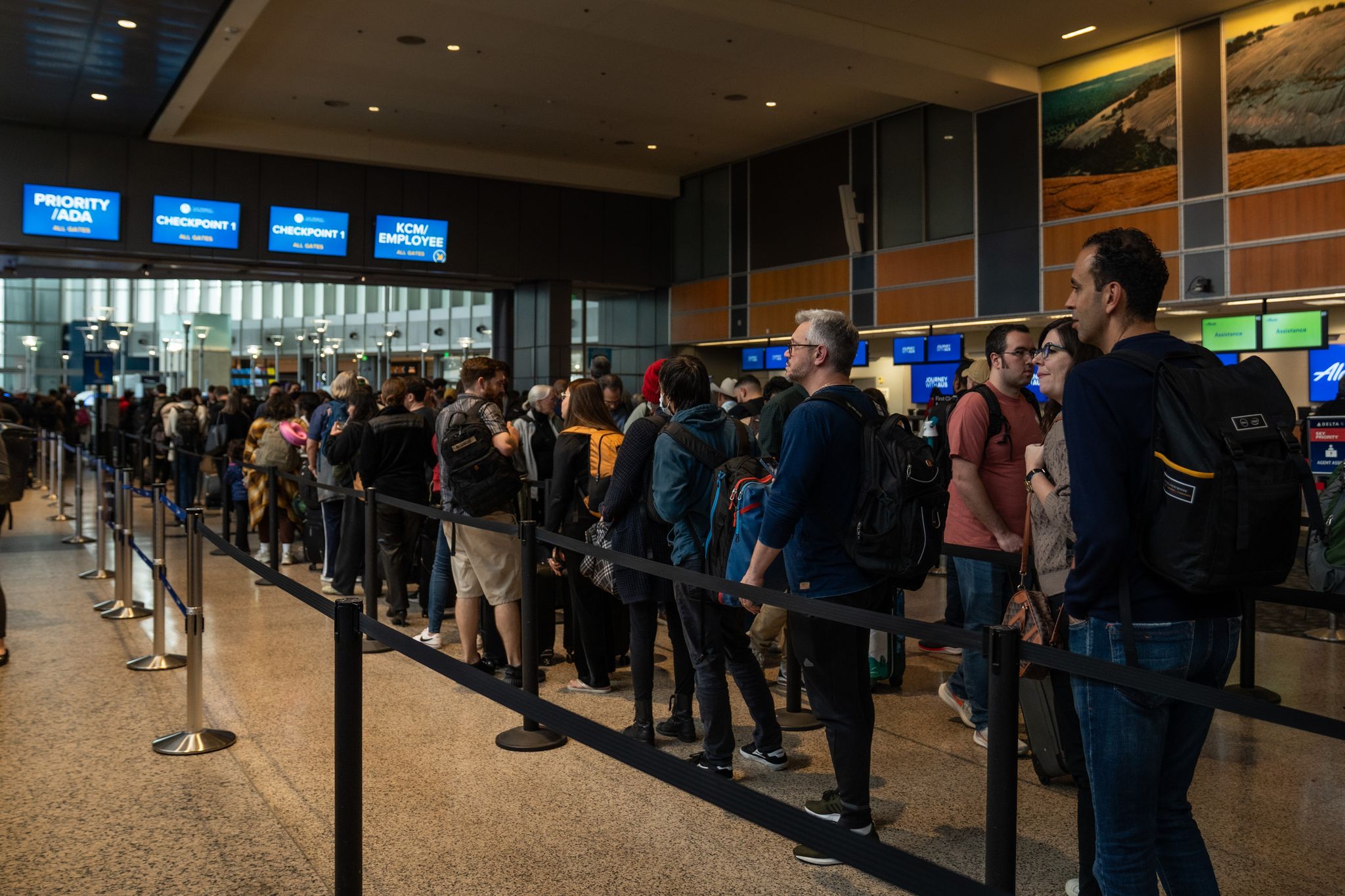
55% TSA absence rate was recorded at Houston Hobby on March 14 and wait times at George Bush Intercontinental have exceeded four hours; Dallas-Fort Worth reported ~50-minute standard waits on March 22 with some travelers taking 3–4 hours through security. The disruptions are driven by a mid-February DHS funding lapse leaving TSA staff unpaid, causing checkpoint closures, staffing shortages and impacts to TSA PreCheck and CLEAR lanes, increasing the risk of missed flights; airports advise arriving 2.5–3 hours early and checking live wait-time feeds.
Operational friction at Texas hubs is creating asymmetric, short-duration revenue leakage along the air travel value chain: high-variance waits disproportionately punish carriers with tight-turn schedules and heavy point-to-point leisure exposure, while benefiting modal substitutes. If disruptions persist for 2–6 weeks, a 1–2 percentage-point effective reduction in passengers on affected routes can translate to a mid-single-digit million-dollar EBITDA drag per large carrier hub (ballpark: $5–50m depending on route mix and unit costs), amplified by rebook, crew and ground-handling costs.
Second-order winners will be last-mile and surface mobility providers (ride-hail, rental cars) and firms that can monetize or automate flows (checkpoint tech contractors, mobile boarding/priority security services). Conversely, airport concessionaires and OTAs face nonlinear demand risk: average transaction values fall when travelers skip dwell-time in terminals and lodging/night-stay bookings decline among stranded passengers.
Key catalysts are binary and time-sensitive: a funding patch or emergency overtime authorization can normalize staffing in days; conversely, sustained attrition (if hiring/retention costs rise) would structurally raise baseline screening headcounts and permanently increase operating expense for airports and carriers over 3–12 months. Monitor DHS funding bills, TSA overtime guidance, and daily checkpoint capacity metrics for true inflection signals.
The consensus treats this as a short-lived operational headline; the contrarian angle is mixed—some equities (ride-hail, tech contractors) underprice quick normalization, while several airlines with concentrated Texas exposure may be over-discounted if the outage is resolved within weeks. Positioning should therefore be tactical and asymmetric, priced to political funding timelines rather than to seasonal travel noise.
AI-powered research, real-time alerts, and portfolio analytics for institutional investors.
Request DemoOverall Sentiment
mildly negative
Sentiment Score
-0.25
