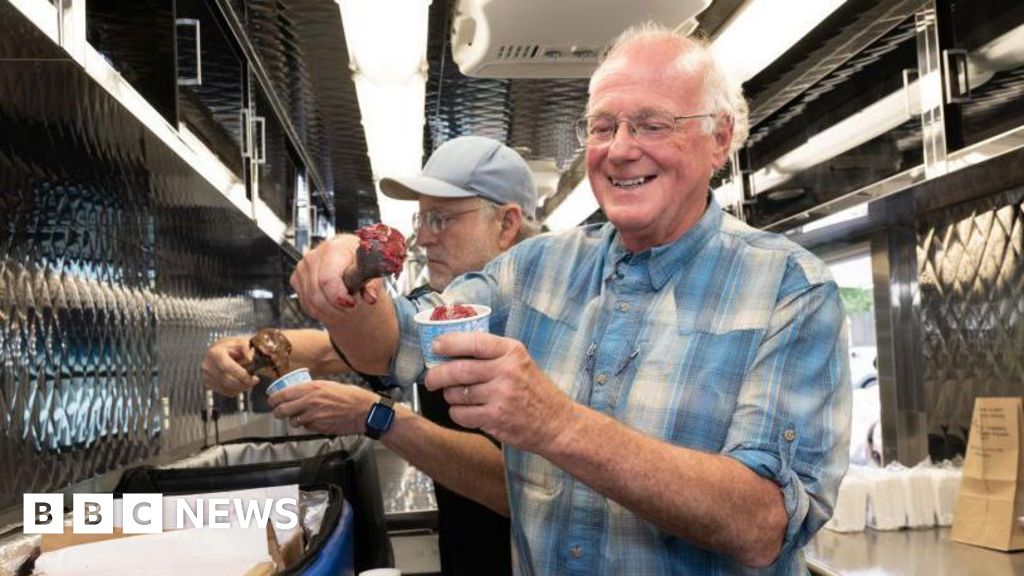
Ben & Jerry's co-founder Ben Cohen is independently launching a Palestine-themed, watermelon-flavored sorbet under his personal brand, Ben's Best, claiming parent company Unilever blocked Ben & Jerry's from pursuing the initiative. This action deepens the ongoing governance dispute between the activist ice cream brand's founders and Unilever regarding its social mission and independence, following previous controversies such as Ben & Jerry's refusal to sell in Israeli-occupied territories and co-founder Jerry Greenfield's recent departure over similar concerns. The development underscores Unilever's challenges in managing its acquired brands' social activism and the potential for co-founders to pursue independent, politically charged initiatives that could impact corporate control and brand messaging.
Ben & Jerry's co-founder Ben Cohen is independently launching a Palestine-themed, watermelon-flavored sorbet under his "Ben's Best" brand, alleging parent company Unilever blocked Ben & Jerry's from pursuing this initiative. This action escalates the long-standing governance dispute between the activist ice cream brand's founders and Unilever regarding its social mission and independence. Ben & Jerry's has a history of activism, including its 2021 refusal to sell products in Israeli-occupied territories, which led to Unilever selling its Israeli operation to a local licensee.
The incident reflects a significant challenge for Unilever (UL) in managing its portfolio of acquired brands, particularly those with strong social activism mandates. The per-ticker sentiment for UL is notably negative at -0.7, indicating investor concern over this ongoing internal conflict. Co-founder Jerry Greenfield's recent departure, citing compromised independence due to Unilever curbing social activism, underscores the persistent friction.
This independent product launch, leveraging geopolitical themes, could further complicate Unilever's brand messaging and corporate control over its subsidiaries. While the market impact score is moderate at 0.35, the situation highlights potential reputational risks and the difficulty of integrating brands with distinct social missions. Investors should monitor how Unilever addresses these governance and brand autonomy issues, especially given the co-founder's stated intent to develop more such independent products.
AI-powered research, real-time alerts, and portfolio analytics for institutional investors.
Request DemoOverall Sentiment
moderately negative
Sentiment Score
-0.50
Ticker Sentiment
