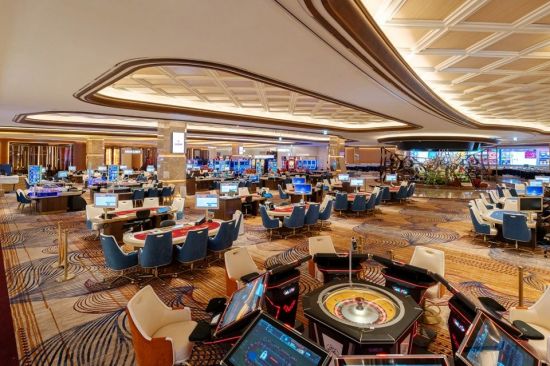
Inspire Entertainment Resort's foreigners-only casino revenue surged to 267.2 billion won for the 2025 fiscal year (Oct 2024–Sep 2025), a 147.6% increase from 107.9 billion won, outpacing its non-casino hotel (56.2bn), F&B (51.7bn) and entertainment (32.1bn) segments. The gain is attributed to an inbound tourism rebound, targeted promotions and tech/partnership initiatives (WeChat Mini Program, Hilton points link), and appears to have captured share from incumbents; by comparison Paradise and GKL posted casino revenues of 900.5bn and 425.3bn won with modest growth of 9.9% and 8%. Jeju Dream Tower (Lotte) also climbed to second place with casino revenue of 476.6 billion won, up 61.8%, underscoring intensifying competition in Korea’s foreigners-only casino market as Chinese and Japanese tourist inflows recover.
Market structure: Winners are operators capturing inbound China/Japan tourists and tech-enabled convenience (Inspire, Jeju Dream Tower/Lotte), while legacy inland players (Paradise, GKL) face share erosion unless they match distribution/partnership plays. Inspire’s casino +147.6% YoY and Dream Tower +61.8% YoY imply a reallocation of at least 5–15% share among the top four operators within 12 months; pricing power on F&B/hospitality can rise 10–30% seasonally where capacity is tight. Cross-asset: stronger inbound tourism should support KRW (downside for USDKRW), lift Korean consumer discretionary ETFs (EWY) and monetarily steepen KR 10y yields by ~10–30bps if sustained for two quarters; small impact on commodities but positive for regional jet fuel demand.
Risk assessment: Tail risks include abrupt reversal of China visa-free/group policies or Korean regulatory limits on foreigners-only casino expansion — a single-policy change could wipe 20–40% of incremental EBITDA for exposed resorts within 30–90 days. Short-term (days–weeks) reactions hinge on visa-policy headlines; medium-term (3–6 months) depends on repeat visitation metrics and partnerships (WeChat, Hilton) remaining live; long-term (12+ months) depends on new capacity and cannibalization. Hidden dependencies: reliance on Chinese tech stacks (WeChat) and Hilton loyalty creates counterparty and GDPR-like operational risk.
Trade implications: Direct plays: overweight Korea travel & leisure exposure (EWY) and hospitality-related large caps that can scale ROI from partnerships; underweight small-cap, single-property casino names with >50% China revenue. Pair trade: long Paradise (defensive leader) vs short GKL (loser on growth/marketing) for 3–6 months; target relative alpha of 8–15%. Options: buy 3–6 month call spreads on EWY or PARADISE-equivalent to cap premium and leverage upside around Q1 inbound-tourism prints; consider put protection on small-cap casino longs.
Contrarian angles: Consensus likely overweights headline growth—a base-effect boost will fade, so multiple expansion is limited unless monthly revenues stay +25% YoY for 3 consecutive months. Historical parallel: post-pandemic Macau reopenings saw rapid share shifts then normalization over 12–18 months; expect similar reversion risk of 30–50% of initial share shifts. Unintended consequence: aggressive promotional pricing to capture share could compress margins by 200–500bps over the next 2–4 quarters.
AI-powered research, real-time alerts, and portfolio analytics for institutional investors.
Request DemoOverall Sentiment
moderately positive
Sentiment Score
0.55
