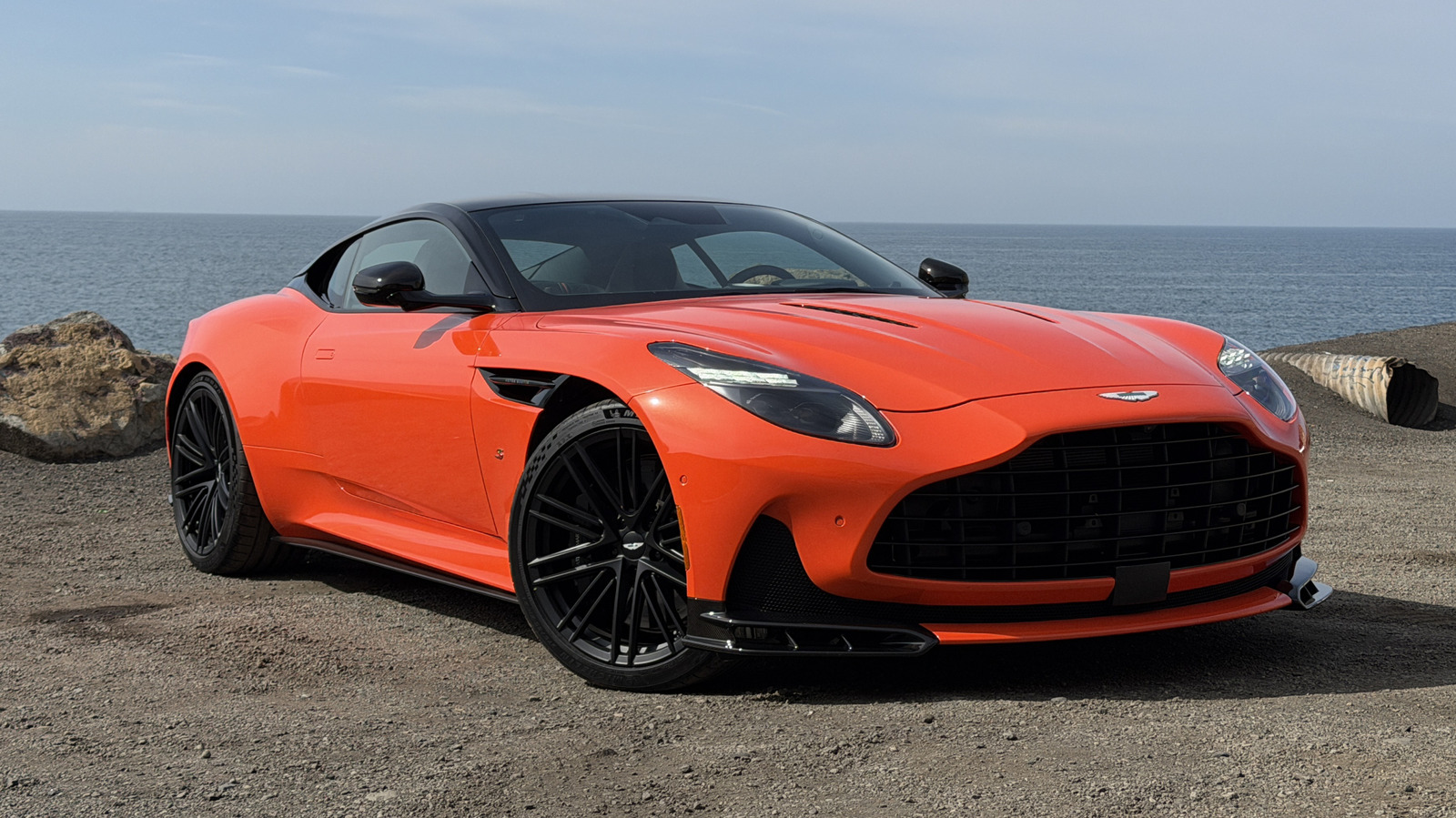
Aston Martin’s new DB12 S starts at $272,000, or $10,000 above the base DB12, with 690 horsepower, 3.4-second 0-60 mph acceleration, and standard carbon-ceramic brakes. The article frames it as a more engaging, better-sounding, and more visually striking grand tourer, though the fully optioned test car reached $400,300. Overall, it is favorable product commentary for Aston Martin but not material enough to likely move the stock.
This reads as a signal that Aston is optimizing for margin-rich personalization rather than volume. The product change is small enough to preserve platform economics, but the option stack is doing the heavy lifting: that matters because luxury OEMs increasingly earn more from bespoke content than from incremental unit growth. The second-order winner is the supplier ecosystem around high-ASP trim, carbon fiber, brakes, and paint—mix shift toward expensive options can lift gross margin even if unit demand stays flat. The competitive implication is less about beating Porsche on dynamics and more about defending share against Bentley in the ultra-premium GT bucket. If the market accepts the S as the default “desirable” spec, Aston can use halo pricing to pull the transaction average higher without needing a new architecture. The risk is that this only works while affluent buyers remain insensitive to macro tightening; in a 6-12 month window, a softer wealth effect or weaker bonus pool would hit order conversion quickly because this cohort is discretionary and highly sentiment-driven. Contrarian read: the car’s real value proposition is not performance delta, it is status compression—buyers are paying for perceived distinction, not engineering separation. That suggests the move may be underrated by investors if they focus on unit volume and miss mix, but over-rated if they extrapolate enthusiasm into sustained demand. The most likely failure mode is not bad reviews; it is that the product lands as a nice-to-have in an already crowded luxury garage, making reorder velocity and option uptake the key leading indicators over the next 2-3 quarters.
AI-powered research, real-time alerts, and portfolio analytics for institutional investors.
Request DemoOverall Sentiment
mildly positive
Sentiment Score
0.35
