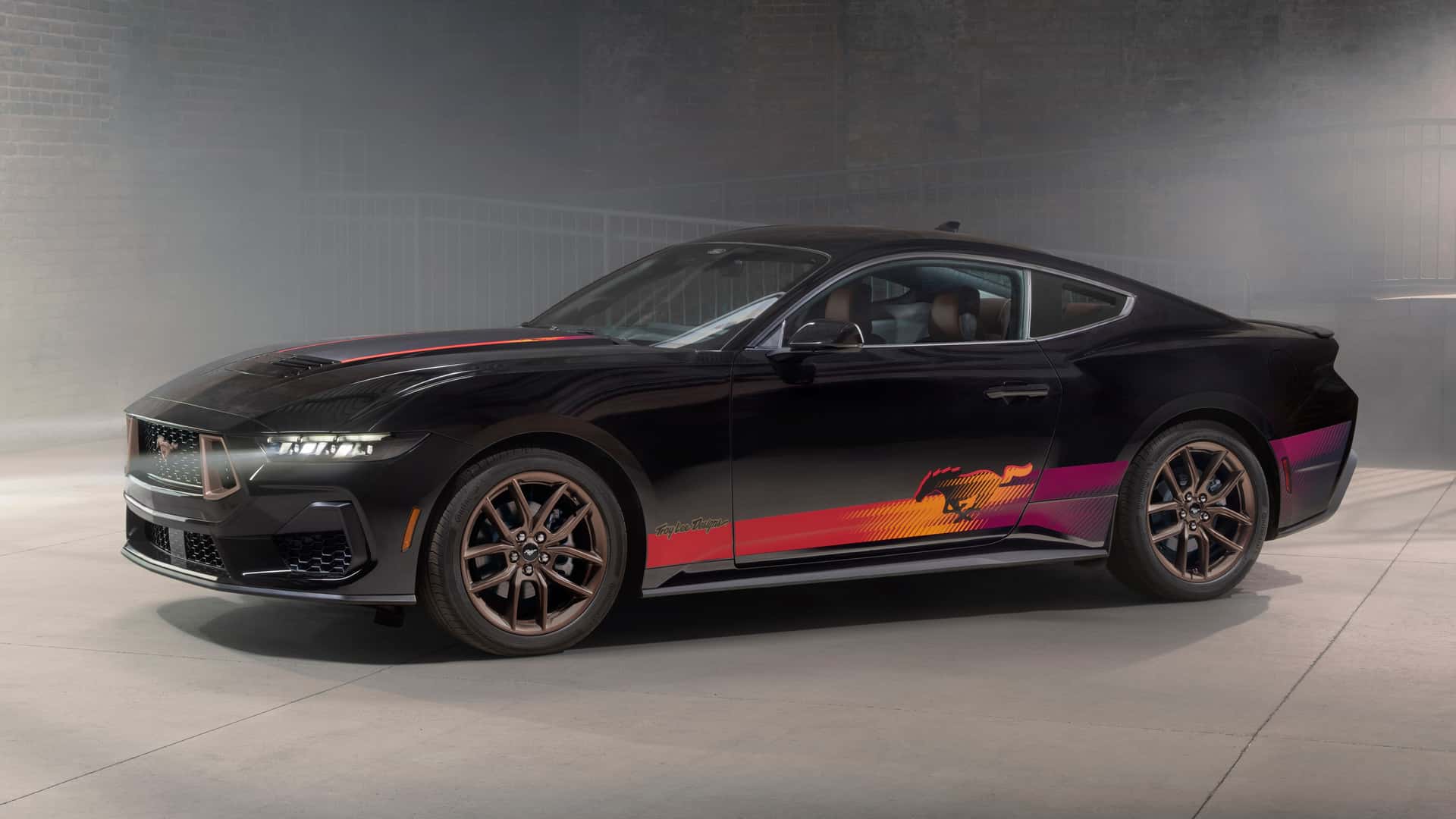
Ford is launching the TLD Signature Edition package for the 2026 Mustang EcoBoost, limited to 550 units and priced at $3,000; with the required 201A equipment group (+$3,000) and $1,995 destination, an EcoBoost Premium example totals $44,340 (base $38,340). The cosmetic package adds GT front fascia, multi-color side and hood graphics, 19-inch Satin Bronze wheels, Satin Bronze badges and a serialized Carmine Red interior badge; order books are open now. Commercial impact is likely minimal given the cosmetic nature and very limited production run.
Special-edition styling programs operate as low-capex, high-margin levers: they convert retail foot traffic into higher-trim penetration and accessory revenue without changing core engineering or production planning. If even a small share of buyers accept a mid-single-thousand-dollar upsell, the incremental gross margin per vehicle is large (low overhead, high parts margin), implying a measurable uplift to model-line ASPs and dealership F&I economics over the next 1–4 quarters.
Competitively, these programs are defensive marketing rather than volume strategies. They blunt attrition of enthusiast buyers to independents or aftermarket tuners and preserve parts & service revenue tail; rivals that lack the same dealership density or parts channel scale will struggle to monetize equivalent halo programs at similar margins. Supply-chain impact is negligible at the SKU level, but the tactic signals Ford will continue to extract aftermarket-like margins from ICE platforms while EV scaling pressure persists.
Key risks are demand sensitivity and secondary-market dynamics: if macro softness forces dealers to discount serialized extras, the nominal margin improvement can evaporate quickly, creating an overhang on used-vehicle residuals for that niche subsegment. Near-term catalysts to watch are manufacturer order-book cadence and dealer-level inventory/incentive prints over the next 1–3 quarters — positive surprise there magnifies the upside, negative surprise compresses realized uplift.
This is a micro leverage story inside a larger fundamental — it’s not a volume driver but a margin- and mix-optimisation. The highest-probability path to value is through modest, persistent ASP improvement and healthier dealership economics rather than a single hit product; accordingly, capital should be allocated to capture gradual re-rating rather than binary event bets.
AI-powered research, real-time alerts, and portfolio analytics for institutional investors.
Request DemoOverall Sentiment
mildly positive
Sentiment Score
0.20
Ticker Sentiment
