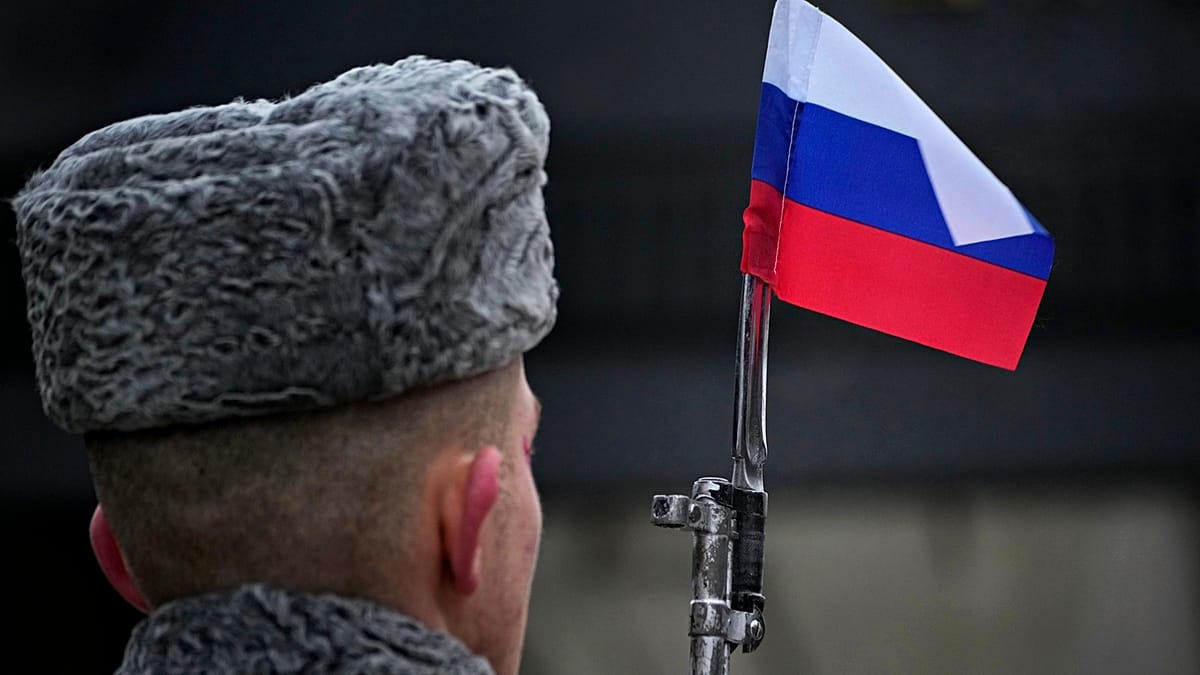
Estonia has proposed an EU-wide entry ban on Russian soldiers who fought in Ukraine, arguing that up to hundreds of thousands of combatants could pose a security risk to Europe; Estonia already imposed permanent bans on 261 Russian soldiers. The European Commission controls visa policy and the proposal — supported by multiple member states according to EU officials — would require a qualified majority and faces logistical challenges given estimates ranging from 700,000 to nearly one million potential veterans. Policymakers flagged the issue as a post-ceasefire contingency, underscoring potential migration, security and administrative implications for EU visa rules rather than an immediate market shock.
Market structure: An EU-wide ban on Russian combatants raises demand for border-security, identity/biometrics and defense suppliers while pressuring cross-border travel and low-cost EU carriers. Expect a 3–7% incremental procurement uplift for land-border and biometric solutions across the Schengen area over 12–24 months; prime beneficiaries are large defense primes and integrators with EU contracts. Airlines with Russia-facing traffic (IAG, LHA.DE, AIR.PA) face reduced inbound demand and higher compliance costs, compressing margins by an estimated 50–200 bps in the near term.
Risk assessment: Tail risks include Russian retaliation (energy cuts, cyberattacks) and intra-EU political fragmentation that could delay implementation; probability medium (20–30%) within 6–12 months with high impact. Short-term (days–weeks) volatility will track ministerial headlines; medium-term (3–12 months) depends on Commission policy drafts and a potential ceasefire; longer-term (1–3 years) could normalize as vetting systems scale but impose recurring O&M costs. Hidden dependencies: Schengen visa rule changes create operational burdens for EU consulates and private security contractors and could force increased EU fiscal transfers to border states.
Trade implications: Prefer selective longs in defense/security (LMT, NOC, LHX, LDO.MI, HO.PA) and cybersecurity (PANW) with 6–18 month horizons; rotate out of Russia-exposed carriers (IAG, LHA.DE, AIR.PA) via short or put overlays. Use pair trades: long LMT vs short IAG to express security upside vs travel downside. Options: buy 9–12 month calls on LMT/LHX (delta ~0.35) and 3–6 month puts on IAG/AIR.PA to asymmetrically capture policy shock volatility.
Contrarian angles: Consensus overstates feasibility of blacklisting 700k individuals; administrative logjams could blunt procurement upside and keep airline losses concentrated. If EU fails to agree (probability ~30% within 90 days), defense rallies may be overdone — consider waiting for confirmed Commission text (watch for Q1 policy memo) before adding >3% position sizes. Historical parallel: 2014 sanctions produced uneven, multi-year defense spend increases but only incremental commercial travel impact after initial shock.
AI-powered research, real-time alerts, and portfolio analytics for institutional investors.
Request DemoOverall Sentiment
moderately negative
Sentiment Score
-0.35
