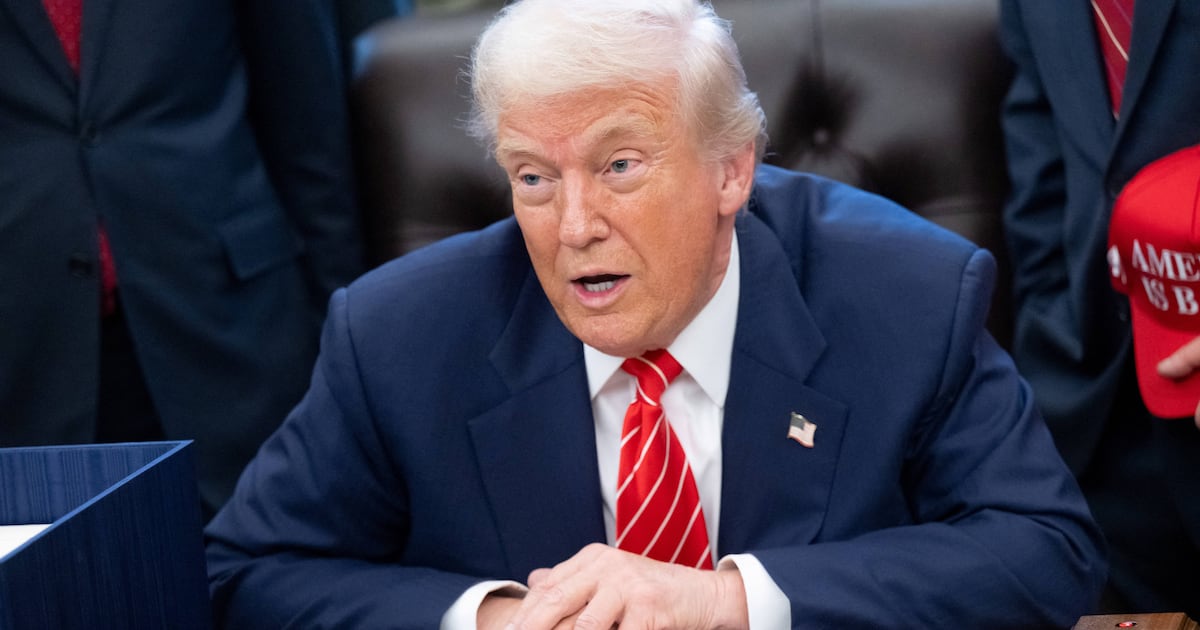
Gallup announced it will stop tracking presidential approval and favorability ratings—ending an 88-year practice—citing a strategic shift toward other long-term research priorities while continuing products like the Gallup Quarterly Business Review and the World Poll. The move follows recent Gallup results showing President Trump's approval at 36% (with a Gallup low of 31% in January 2021) and comes amid tensions between the administration and some pollsters; Gallup says the decision was not influenced by the President. For investors, the change removes one long-standing, widely cited political sentiment series but is unlikely to materially alter market dynamics or political-risk pricing by itself.
Market structure: Gallup exiting routine presidential approval polling immediately reallocates credibility and recurring-revenue opportunities to alternative pollsters and analytics vendors (e.g., YouGov plc (LSE:YOU), private Morning Consult, Dynata) and to data/AI providers (e.g., Palantir PLTR) who monetize bespoke political intelligence. Expect pricing power for high-quality, recurring national-level tracking to rise 10–30% as newsrooms and campaigns pay for continuity and brandable indices; legacy media that licensed Gallup will incur near-term replacement costs.
Risk assessment: Tail risks include reputation or litigation contagion (campaign lawsuits against pollsters) and regulatory limits on survey data/targeting that could raise collection costs 20–50%; operationally, poor alternative survey quality could increase election-period information asymmetry and market volatility. Time horizons: immediate (days) — negligible market move; short-term (1–3 months) — media contract reallocation; medium-term (6–18 months) — consolidation and pricing realization.
Trade implications: Expect increased dispersion in policy-sensitive sectors (defense LMT/NOC, healthcare UNH/PFE, energy XLE constituents) around policy-event windows as political signal quality degrades, raising option-implied volatility by +5–15% in those names. Providers of proprietary polling/analytics should outperfom: favor equities/call exposure to firms with recurring B2B data contracts and scalable AI analytics over ad-dependent publishers.
Contrarian angles: The market may underprice the value of institutional-grade, auditable tracking — a structural niche Gallup vacates — creating durable subscribers and sticky revenue for winners; conversely, if AI synthetic polling scales quickly, margins could compress. Historical parallel: when legacy rating benchmarks fade, specialized vendors capture outsized returns over 6–24 months before incumbents adapt.
AI-powered research, real-time alerts, and portfolio analytics for institutional investors.
Request DemoOverall Sentiment
neutral
Sentiment Score
0.00
