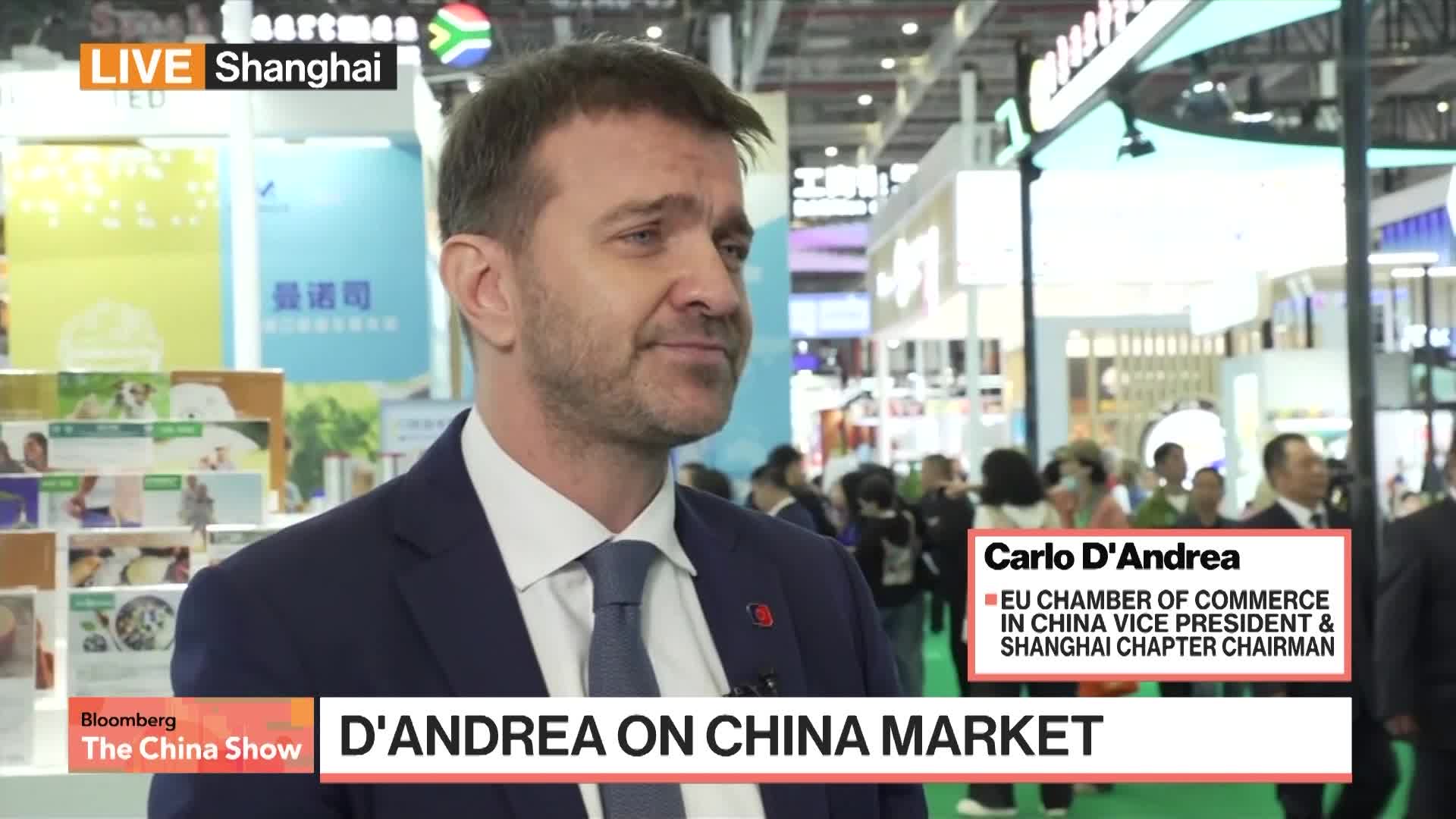
Carlo D’Andrea, Vice President of the EU Chamber of Commerce in China, addressed key challenges in China-EU trade relations during a Bloomberg interview on the sidelines of the China International Import Expo. This discussion underscores persistent concerns and potential friction points impacting the bilateral economic relationship.
Carlo D’Andrea, Vice President of the EU Chamber of Commerce in China, highlighted "key challenges" in China-EU trade relations during a recent Bloomberg interview at the China International Import Expo. This discussion signals persistent concerns and potential friction points within the bilateral economic relationship, with the overall sentiment assessed as moderately negative.
While specific details of these challenges were not provided, the context of the EU Chamber of Commerce's leadership underscores the official European business community's perspective on trade dynamics with China. This reinforces an ongoing narrative of complex trade policy and supply chain considerations between the two major economic blocs, further characterized by a tone of uncertainty.
The market impact score of 0.3 indicates that this news, while negative, is not an immediate market mover but rather contributes to a broader, evolving macro picture. Investors should view this as a reiteration of existing trade policy risks affecting emerging markets, particularly China, given the systemic nature of these concerns rather than idiosyncratic company-specific issues.
AI-powered research, real-time alerts, and portfolio analytics for institutional investors.
Request DemoOverall Sentiment
moderately negative
Sentiment Score
-0.40
