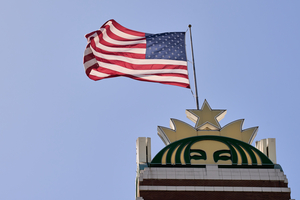
Starbucks Korea’s licensing deal gives Starbucks Coffee International the right to repurchase Emart’s 67.5% stake at a 35% discount if the agreement is terminated due to Emart’s liability, raising a potential financial risk after the controversial 'Tank Day' campaign. The issue matters because Starbucks Korea generated 3.24 trillion won in sales, 173 billion won in operating profit and paid 106.2 billion won in dividends last year, with Emart receiving about 71.7 billion won. Shinsegae has already dismissed the local CEO and apologized, but management says the incident may not meet the contract’s liability threshold.
The market is likely underpricing the asymmetry in the governance clause: the economic damage to Emart is not just a potential loss of dividends, but a forced exit from a high-quality cash-generating asset at a punitive valuation if the dispute is ever framed as “liability.” That creates a convexity problem for Shinsegae Group — the downside is a sudden deconsolidation of a cash engine at a discount, while the upside from keeping the asset is only the continuation of status quo cash flows. The immediate damage is reputational, but the more important second-order effect is bargaining power: even a low-probability liability trigger gives Starbucks leverage over future fee renewals, marketing oversight, and control rights. For SBUX, this is less about direct earnings exposure and more about precedent. If headquarters is seen as able to reclaim economics from a partner at a discount, it materially changes franchisee/licensee behavior across other markets: local operators will demand narrower liability definitions, more explicit cure periods, and better indemnity caps. That can raise global contract friction and slow expansion economics over time, even if Korea itself remains intact. The near-term catalyst is not court action but contract review and public signaling; the medium-term risk is a chilled relationship that forces both sides into a tighter operating structure with lower strategic flexibility. The contrarian angle is that the most probable outcome may be messy but economically contained: management can absorb the public relations hit, keep the license in place, and preserve the dividend stream. In that base case, the selloff in the local equity complex could overshoot because investors may be extrapolating a one-off governance incident into a terminal contract event. The key is that a liability-triggered repurchase is a high bar and likely requires persistent, material brand harm or legal breach; absent that, this is more a negotiation over optics and controls than a balance-sheet event. Still, even a 10-20% haircut in perceived fair value of the Korea asset would matter meaningfully if it ever became a transaction rather than a headline.
AI-powered research, real-time alerts, and portfolio analytics for institutional investors.
Request DemoOverall Sentiment
moderately negative
Sentiment Score
-0.45
Ticker Sentiment
