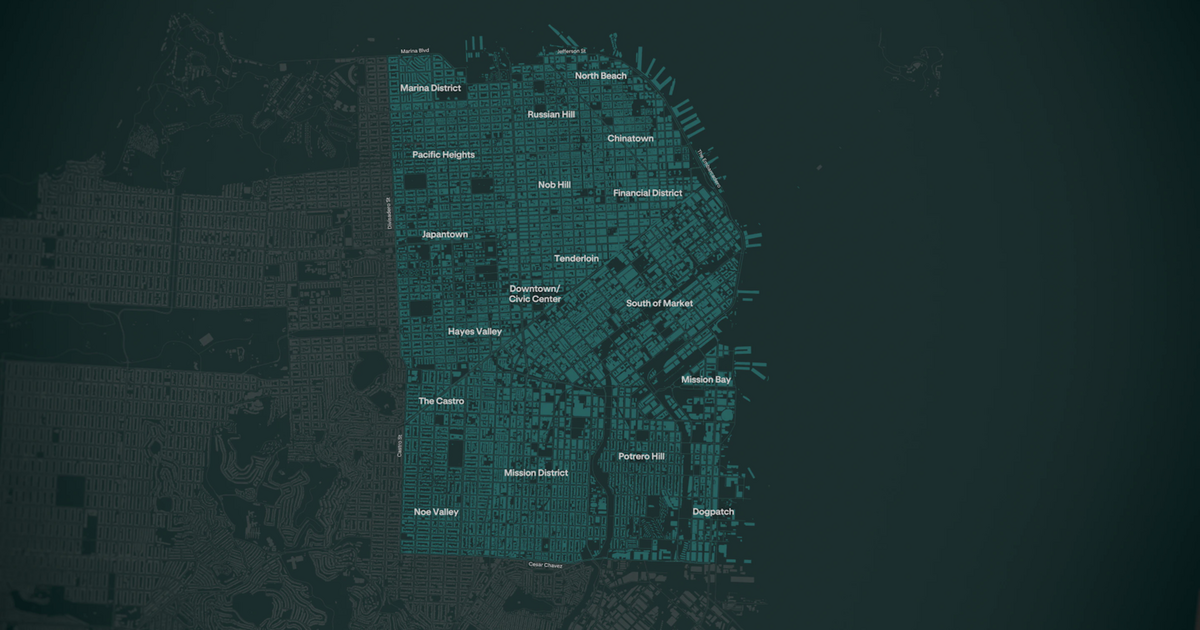
Zoox is quadrupling its San Francisco service area for select riders, initially opening service to employees, their friends and family, and later waitlist users. The Amazon-owned robotaxi has driven nearly 2 million autonomous miles and carried over 350,000 riders since going live in Las Vegas last September, and is expanding testing to Austin and Miami while increasing SF coverage focused on high-demand corridors. Expansion remains limited to select neighborhoods and riders, signaling growth momentum but with limited near-term commercial scale compared with peers (Waymo: >1M autonomous rides per month).
Zoox’s selective densification strategy implicitly targets the economics of scale that matter most: higher trip density per square mile and faster closed-loop learning. A concentrated urban footprint compresses empty miles and increases sensor/mapping data overlap, which should reduce marginal labeling and simulation costs by an estimated 20–40% versus diffuse deployments, accelerating time-to-positive unit economics for a given fleet size. Competitive implications favor component and stack specialists that sell to multiple AV operators rather than OEMs tied to one vehicle program. Compute and perception suppliers stand to capture recurring fleet spend (software updates, mapping subscriptions, compute cycles) while long-cycle hardware suppliers (high-capacity battery cells, long-range drivetrain suppliers) are less exposed because these purpose-built urban vehicles prioritize reliability, redundancy, and sensor suites over range. Key risks are regulatory or reputational shocks that can reset trust and force fleet drawdowns, and the skewed scale advantage of incumbents that have already amassed concentrated urban data. Near-term operational metrics — daily rides per vehicle, empty-mile percentage, and MTBF for perception hardware — are the best 3–12 month leading indicators; absence of continued improvement on those three within a year materially lowers the probability of profitable commercial rollouts in 2–5 years.
AI-powered research, real-time alerts, and portfolio analytics for institutional investors.
Overall Sentiment
mildly positive
Sentiment Score
0.30
Ticker Sentiment
