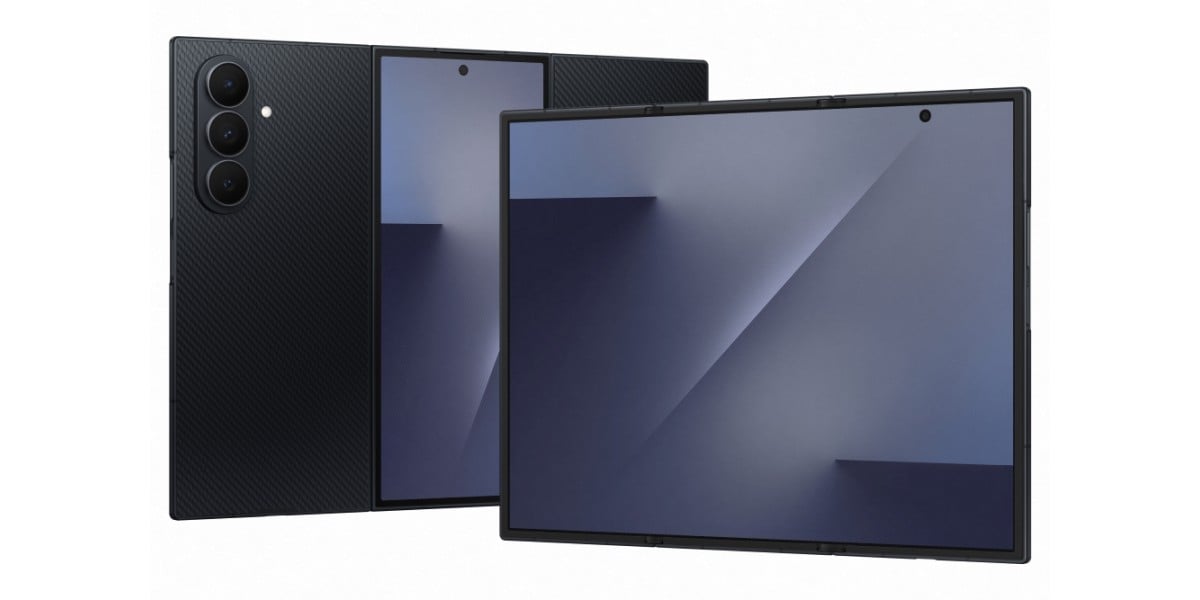
Samsung unveiled the Galaxy Z TriFold, a 3‑screen foldable that runs DeX natively and combines a 6.5-inch cover display (2520x1080) with a 10.0-inch main display (2160x1584). The device is powered by a Snapdragon 8 Elite, 16GB RAM, a 5,600 mAh three-cell battery, weighs 309g, and features a 200MP wide, 12MP ultra-wide and 10MP telephoto (30x digital) camera system plus 10MP front cameras; it will launch in South Korea on Dec. 12 priced around $2,400 with other markets to follow. Samsung highlights multitasking via DeX (up to four workspaces running five apps each) and offers a one-time 50% display repair discount; the product represents a niche, premium hardware play with limited near-term market-moving implications.
Market structure: Samsung’s tri-fold is a niche, premium ($~2,400) play that benefits Samsung Electronics (SSNLF/005930.KS) and component suppliers—Qualcomm (QCOM) for Snapdragon, Sony (SNE) or Samsung ISOCELL for sensors, and battery/hinge suppliers—without immediately threatening Apple (AAPL) unit volumes. Pricing power will be concentrated at the high end; expect limited volume uplift (low single-digit % of Samsung’s phone shipments next 4 quarters) but higher ASP and component pull-through if sell-through is healthy.
Risk assessment: Key tail risks are product reliability (hinge/display failures) or poor DeX adoption; a recall or >5% early repair/return rate within 90 days could trigger a 10–20% downside in SSNLF and supplier rerates. Near-term (days–weeks) risk is sentiment from reviews and initial preorders; medium-term (1–3 months) is sell-through and repair metrics; long-term (3–12 months) depends on DeX ecosystem uptake and pricing elasticity.
Trade implications: Favor selective exposure to suppliers: initiate a tactical 1–2% long in SSNLF ahead of US launch, funded by reducing cash, with a 10% stop; paired with a 1% notional buy of QCOM 3-month call spread (5%/15% OTM) to capture higher SoC demand. Use a protective collar on SSNLF (buy 6‑month 5% OTM put, sell 10% OTM call) to cap drawdown while collecting premium.
Contrarian angles: The market may underprice durability risk—Samsung’s one-time 50% display repair discount signals expected failures and warranty costs; if early repair incidence >3–5% the product becomes a loss-leading niche. Historical parallel: Galaxy Fold’s rocky start then recovery suggests wait for 60–90 day repair/sell-through data before scaling position to >3–5% of portfolio; monitor KRW strength and implied vol movements as leading indicators.
AI-powered research, real-time alerts, and portfolio analytics for institutional investors.
Request DemoOverall Sentiment
neutral
Sentiment Score
0.05
Ticker Sentiment
