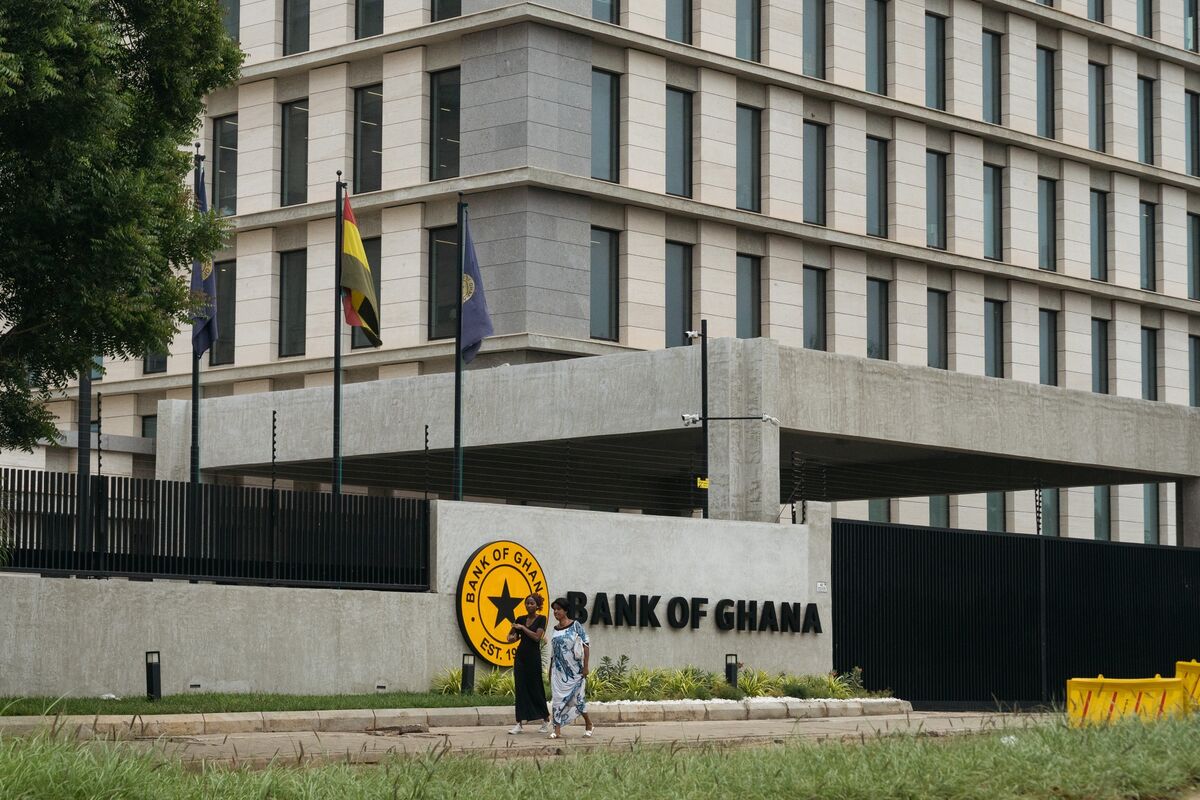
Ghana’s central bank is widely expected to deliver a third consecutive large policy easing, cutting the benchmark rate by about 350 basis points to 18% at the monetary policy announcement on Wednesday, according to a Bloomberg economist poll. The anticipated move follows projections that inflation will fall below the lower bound of the target range by year-end, signaling a dovish shift with direct implications for Ghanaian bond yields, FX dynamics and domestic liquidity conditions.
Market structure: A 350bp cut to 18% materially re-prices Ghana local-currency rates — local GC bond yields should fall sharply (price gain for existing holders) while lending rates compress. Winners: local-currency sovereign and fixed-income holders, consumer-facing sectors that benefit from cheaper credit; losers: short-duration USD sovereign holders and banks with slow loan-rate re-pricing. Expect modest portfolio flows into Ghana LC debt over 3–12 months if inflation falls below the lower target bound as signalled.
Risk assessment: Key tail risks are a cedi sell-off (FX depreciation >10% in 3 months) if cuts trigger capital flight, and fiscal stress if the sovereign cannot roll USD debt; both would blow out spreads on Ghana USD bonds and CDS. Immediate (days) effects: bond yields and local rates move; short-term (weeks–months): FX and credit spreads react; long-term (quarters) depends on fiscal path and credit-rating actions. Hidden dependency: monetary easing only helps if fiscal consolidation continues; absent that, rate cuts can accelerate FX weakness and inflation expectations.
Trade implications: Direct plays: long Ghana LC bonds or EM local-currency ETFs to capture price gains; hedge FX. Relative trades: long Ghana LC (or Ghana bank equities) vs short Ghana USD sovereigns or EMB exposure to guard against fiscal/FX reversal. Use options to define risk—buy protection on cedi or buy puts on Ghana USD bonds if available; target 3–12 month horizons and size positions small (1–3% NAV) until FX path clarifies.
Contrarian angles: Consensus assumes cuts equal improvement — missing is rollover/fiscal risk and deposit flight. If fiscal policy weakens, cuts will be followed by >300bp spread widening on Ghana USD debt and >10% cedi depreciation — an asymmetry investors underprice. Historical parallel: past EM easing cycles without fiscal anchors led to sharp later currency crashes; therefore size trades to benefit from initial rally but keep disciplined hedges.
AI-powered research, real-time alerts, and portfolio analytics for institutional investors.
Request DemoOverall Sentiment
mildly positive
Sentiment Score
0.25
