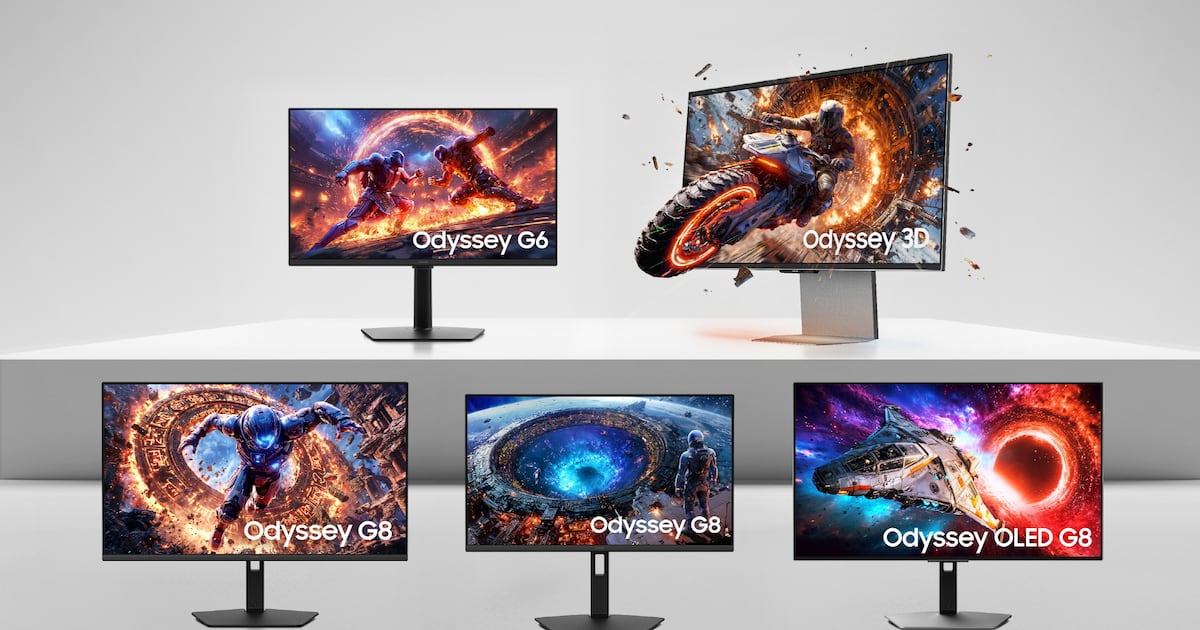
At CES 2026 Samsung unveiled the world's first 6K Odyssey gaming monitors, marking a push into the premium gaming-display segment. The launch reinforces Samsung's leadership in display innovation, could support higher ASPs in its monitor business and strengthen demand for high-end components among suppliers, and represents a competitive move against other premium display makers in the gaming market.
Market structure: Samsung (Samsung Electronics 005930.KS / ADR SSNLF and Samsung Display implicitly) is the clear early beneficiary — first‑mover premium pricing on 6K can support ASPs +10–20% in the high‑end monitor segment vs current 4K/1440p lines, and should lift adjacent demand for high‑end GPUs (NVDA, AMD) and VRAM (MU, 000660.KS). Losers are low‑end panel/ODM players (e.g., select Taiwan OEMs such as 2353.TW) as channel mix shifts to premium; retailers with tight inventories may see margin upside but channel stuffing risk exists. Supply constraints initially (limited 6K panel capacity) imply positive pricing power for quarters before capex-driven supply expansion normalizes ASPs.
Risk assessment: Tail risks include weak consumer upgrade elasticity if gamers delay upgrades because GPUs needed to drive 6K are expensive, an export/regulatory hit to Samsung Display, or rapid capacity additions by rivals (BOE, LGD) collapsing premiums; each has >5% probability but would be high impact. Timeframes: immediate CES buzz (days–weeks), channel stocking and early sell‑through (1–3 months), supply ramp and ASP normalization (3–18 months). Hidden dependency: GPU refresh cadence and game dev adoption; monitor demand is second‑order to PC upgrade cycles. Catalysts: NVDA/AMD product launches, Q1 FY26 sell‑through and Samsung earnings guidance.
Trade implications: Tactical longs: consider establishing 2–3% long in 005930.KS or 0.5–1% long SSNLF with a 6–12 month horizon, target +15–25% if Samsung reports >70% channel sell‑through in next 60 days; stop if sell‑through <50% or ASPs fall >10%. Pair trade: long Samsung/SM Display exposure (005930.KS or AMAT/GLW suppliers) and short Acer (2353.TW) or other low‑margin monitor OEMs 1–2% to capture premium vs commoditized segments. Options: buy a 3–6 month NVDA call spread (size 0.5–1% of portfolio) ahead of GPU refresh; only if 30‑day IV <80% and delta risk is capped.
Contrarian angles: The market may underappreciate adoption friction — 6K could follow 4K’s slow penetration (multi‑year curve) rather than instant replacement; historical parallel: 4K premium cycle (2016–2019) showed ASPs spiking then normalizing over 12–24 months. Reaction could be overdone in Samsung suppliers' equities; downside if used/older‑monitor markets discount new sales by >15%. Strategy: size positions conservatively, hedge GPU exposure, and watch retail sell‑through and secondary market prices (monitor used listings decline >15% as a sell signal).
AI-powered research, real-time alerts, and portfolio analytics for institutional investors.
Request DemoOverall Sentiment
mildly positive
Sentiment Score
0.25
