
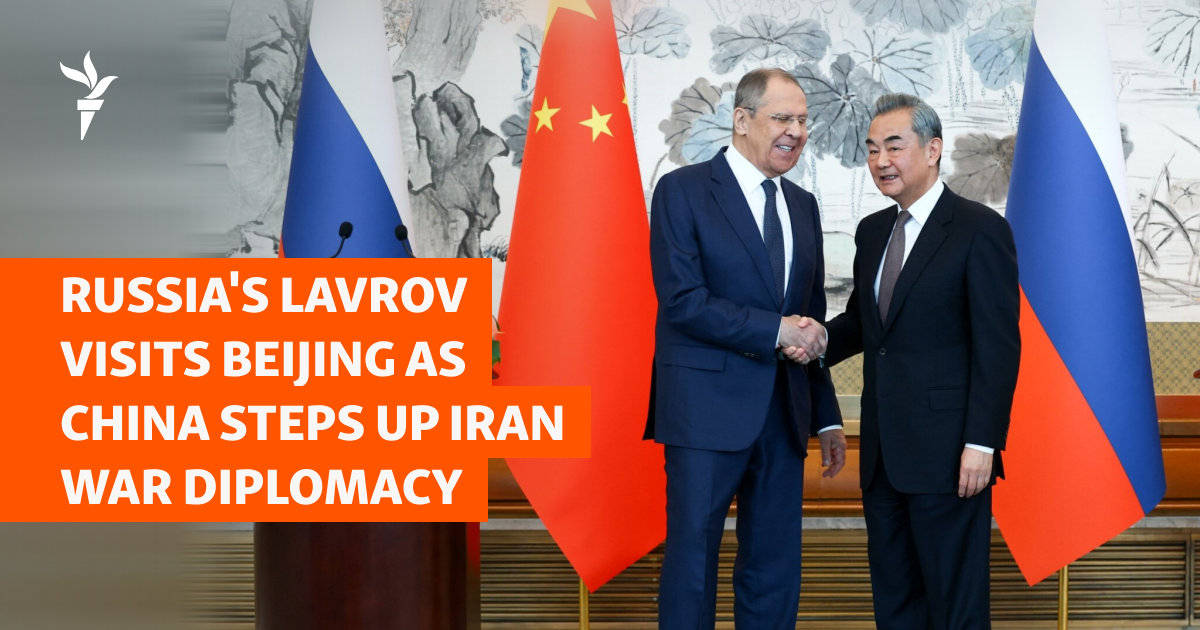
China is warning that a US blockade on vessels calling at Iranian ports is 'dangerous and irresponsible' as Beijing and Moscow coordinate diplomacy around the Iran war. The article highlights elevated risk to the Strait of Hormuz, a critical chokepoint for global fertilizer and energy supplies, with potential spillovers into commodity prices, shipping, and broader global growth. China's export growth also slowed to 2.5% in March versus 22% in January-February, underscoring already-weakening external demand.
The market implication is not just “higher Middle East risk,” but a more persistent inflation-of-inputs regime that is hardest on cyclical manufacturers with thin gross margins and long lead times. If shipping insurance, rerouting, and inventory buffers all rise at once, the first-order winner is upstream energy, but the second-order winner is any business with pricing power and domestic logistics optionality; the loser set is global industrials, chemicals, and retailers that depend on just-in-time freight and imported feedstocks.
The bigger tradable signal is that Beijing is trying to cap the escalation while preserving leverage over Washington. That makes the path asymmetric: rhetoric can cool quickly, but actual de-risking of supply chains is much slower, so market relief rallies may be fleeting unless there is a verifiable maritime de-escalation. In other words, the tail risk is a short-duration spike in crude and freight, but the base case is a multi-week repricing of energy, fertilizer, and shipping inputs even if headlines stabilize.
For China, this is also a growth-negative terms-of-trade shock disguised as geopolitics. Rising oil and freight costs act like a tax on export margins precisely when external demand is already softening, so the more defensive trade is not a simple China long or short; it is long domestic policy beneficiaries and short export-exposed cyclicals. If commodity prices stay elevated for 1-2 quarters, the pressure will likely show up first in margin guidance rather than in macro prints, which means equity earnings revisions are the cleaner catalyst than headline CPI.
The contrarian point is that the market may be underestimating how much off-ramp diplomacy exists before physical supply is truly impaired. A blockade threat can be politically loud without becoming economically binding, and that distinction matters because the premium embedded in energy and shipping can mean-revert fast if inspection regimes, exemptions, or backchannel talks emerge. The best risk/reward is therefore in structures that monetize upside volatility while limiting carry if the situation de-escalates.
AI-powered research, real-time alerts, and portfolio analytics for institutional investors.
Request TrialOverall Sentiment
moderately negative
Sentiment Score
-0.35
Ticker Sentiment
