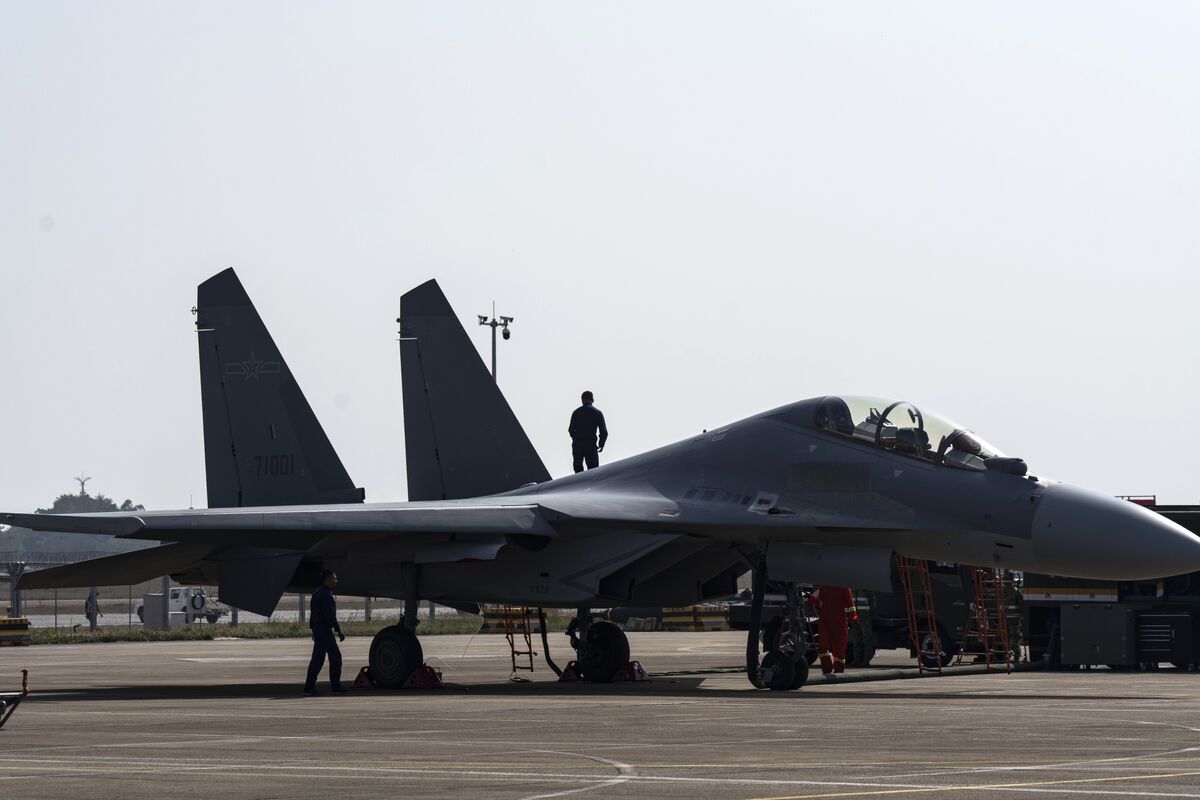
A Chinese J-15 fighter jet twice directed its radar at Japanese military aircraft on Saturday over international waters southeast of Okinawa, Japan’s defense ministry said, with the radar locks exceeding ranges necessary for safe operation. The ministry disclosed the incidents in a Sunday statement; the encounters elevate regional security tensions and could prompt defensive or diplomatic responses from Tokyo. Absent further escalation, the near-term market impact is likely limited, though defense-related equities and risk-sensitive Asian assets could see short-lived volatility.
Market structure: Near-term winners are aerospace & defense primes and ISR/sensor suppliers as governments re-price security risk; modest procurement upside of 1–3% revenue for large primes (LMT, RTX, NOC) is plausible within 12–24 months as governments accelerate RFPs. Losers are regional airlines and tourism-facing travel chains in Japan/SE Asia (sensitivity window 0–3 months) and short-duration Asian EM sovereign credit on risk-off flows. Cross-asset: expect a 25–75bps downward move in JGB yields (price up) and a 1–3% JPY appreciation on heightened incidents; oil and gold are likely to tick +1–3% on risk premium and potential supply disruption narratives.
Risk assessment: Tail risks include a military engagement disrupting key shipping lanes (low probability, high impact — >2% global GDP shock to trade for concentrated commodities/electronics supply chains) or sanctions cascades that hit semiconductors; probability baseline <5% in next 90 days but warrants scenario hedges. Time horizons separate into immediate volatility (days), procurement & budget reallocation (3–12 months), and structural rearmament cycles (1–3 years). Hidden dependencies: semiconductor, shipbuilding, and export-credit channels tie defense orders to civil industrial output — delays or FX moves can erode contract margins.
Trade implications: Direct plays — tactical longs in defense ETFs/pri mes (ITA; LMT/RTX/NOC) via cash or buy-call spreads with 3–12 month horizons; short high-beta Japan travel names (9202.T, 9201.T) for 1–3 month mean-reversion. Use options to size tail protection: buy 3-month JPY call spreads vs USD (target 2–4% move) and 6–12 month call spreads on ITA to cap premium; target position sizing 1–3% per idea with 6–8% stop-loss thresholds.
Contrarian angles: Consensus may overreact to single incidents; defense names often price long procurement timing risk — contracts take 12–36 months to convert, so upside is lumpy. Mispricing opportunity: buy small/mid-cap ISR suppliers with sub-15x earnings that the market ignores while avoiding the prime names if they trade >10% premium to peers. Unintended consequence: stronger JPY from safe-haven flows could hurt Japanese OEM exporters, offsetting local defense budget increases.
AI-powered research, real-time alerts, and portfolio analytics for institutional investors.
Request DemoOverall Sentiment
moderately negative
Sentiment Score
-0.30
