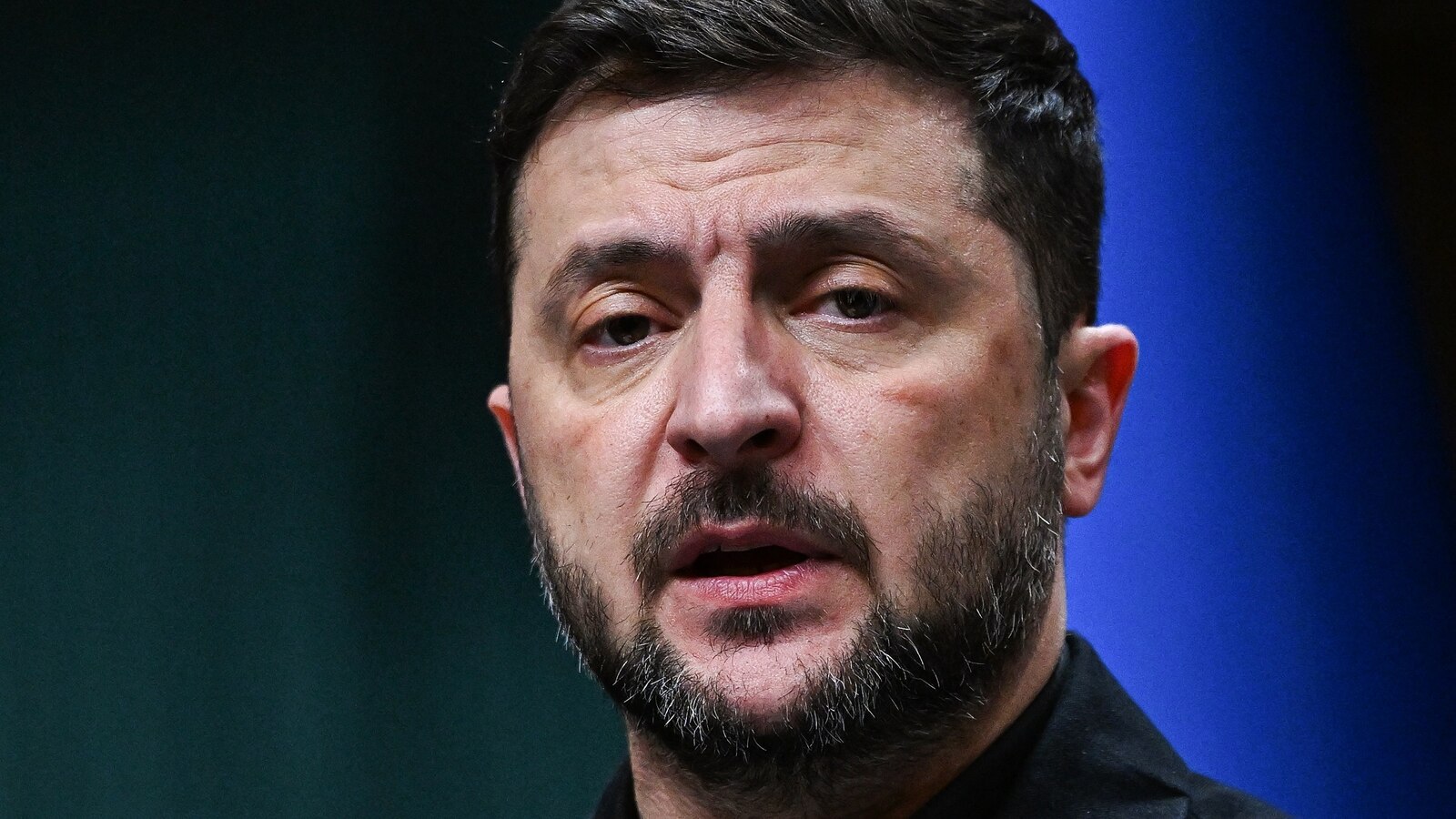
Ukraine has sent a high-level delegation led by Rustem Umerov, including military intelligence chief Kyrylo Budanov, to the United States for follow-up talks with U.S. officials — including Secretary of State Marco Rubio, special envoy Steve Witkoff and Jared Kushner — to finalize revisions to the Trump administration's peace plan agreed in Geneva last week. The delegation aims to translate Geneva outcomes into concrete steps to end the war, but a major overnight attack on Kyiv and Kyiv’s calls for stronger sanctions and use of frozen Russian assets underscore ongoing military risk and political uncertainty that could affect sanction policy and defense support decisions.
Market structure: Peace talks plus ongoing attacks creates a two-track outcome — sustained fighting supports defense contractors (LMT, NOC, RTX, ITA ETF) and energy suppliers (XOM, CVX) through higher procurement and supply-risk premia, while Russian assets and Europe-linked cyclicals remain vulnerable. Expect defense order flows and margin tailwinds to lift aerospace & defense revenues by a plausible incremental 5–15% over 12 months if hostilities persist; oil/nat gas prices could see a $5–15/bbl shock range on episodic escalation.
Risk assessment: Immediate (days) risks are volatility spikes in oil, FX (RUB down 5–15%), and 1–2% moves in US/European equity indices around headlines; short-term (weeks–months) risks include new sanctions or frozen-asset deployment that materially hit banks or commodities trading; long-term (quarters) risk is sustained higher defense budgets or prolonged damage to Ukrainian infrastructure. Tail scenarios include full escalation (energy embargoes → Brent >$120) or a rapid negotiated ceasefire (defense order cancellations >10%), each with >5% probability and outsized portfolio impact.
Trade implications: Favor selective long exposure to US defense (2–3% portfolio via LMT or ITA) funded by short Europe-exposed cyclicals (VGK) or cash. Use 3–6 month call spreads on LMT/RTX to cap cost and buy 3–6 month Brent call spreads (USO/BNO) if Brent breaches $95 for two consecutive weeks. In risk-off, rotate 1–2% into 2–5y Treasuries (SHY/IEF) as a tactical hedge.
Contrarian angles: Consensus underprices the chance of a negotiated pause that forces order deferrals — if a credible ceasefire emerges within 90 days, defense equities could retrace 10–20%; implied vol on defense names may be rich and sellable via short-dated strangles funded by long-dated call exposure. Also consider legal/operational fallout from using frozen Russian assets (counterparty litigation risk) as an overlooked second-order credit risk for European banks.
AI-powered research, real-time alerts, and portfolio analytics for institutional investors.
Request DemoOverall Sentiment
neutral
Sentiment Score
0.00
