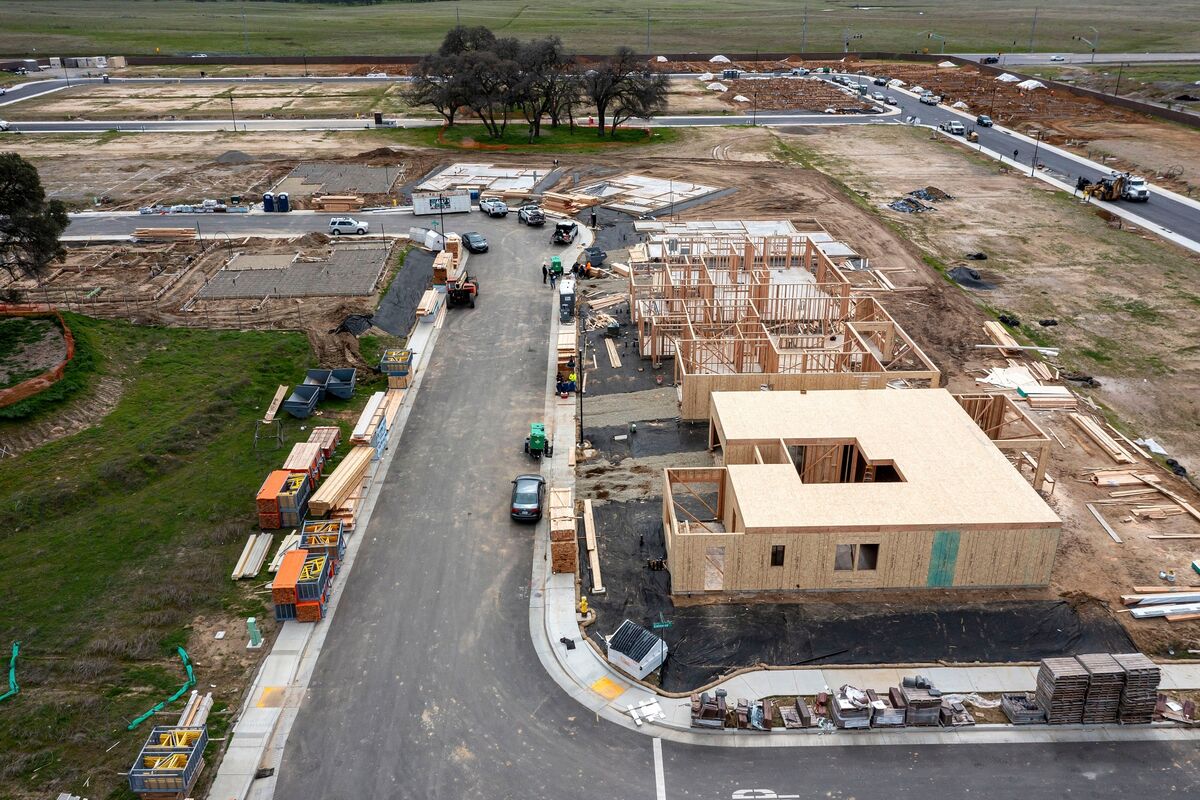
US housing starts in July climbed to a five-month high, increasing 5.2% to an annualized rate of 1.43 million homes, significantly exceeding all economist forecasts. This unexpected surge was primarily driven by the strongest pace of multifamily construction in over two years, indicating surprising resilience in the residential real estate sector despite economic headwinds.
US residential construction demonstrated unexpected strength in July, with housing starts climbing 5.2% to a five-month high at a 1.43 million annualized rate. This figure significantly surpassed all economist forecasts in a Bloomberg survey, indicating that market consensus had underestimated the sector's resilience. The growth was primarily propelled by the multifamily segment, which achieved its most robust construction pace in over two years. This specific driver suggests that while broader economic conditions may pose challenges, demand for new rental and multi-unit housing remains exceptionally strong, providing a powerful and targeted tailwind for the real estate and construction industries.
AI-powered research, real-time alerts, and portfolio analytics for institutional investors.
Request DemoOverall Sentiment
strongly positive
Sentiment Score
0.75
