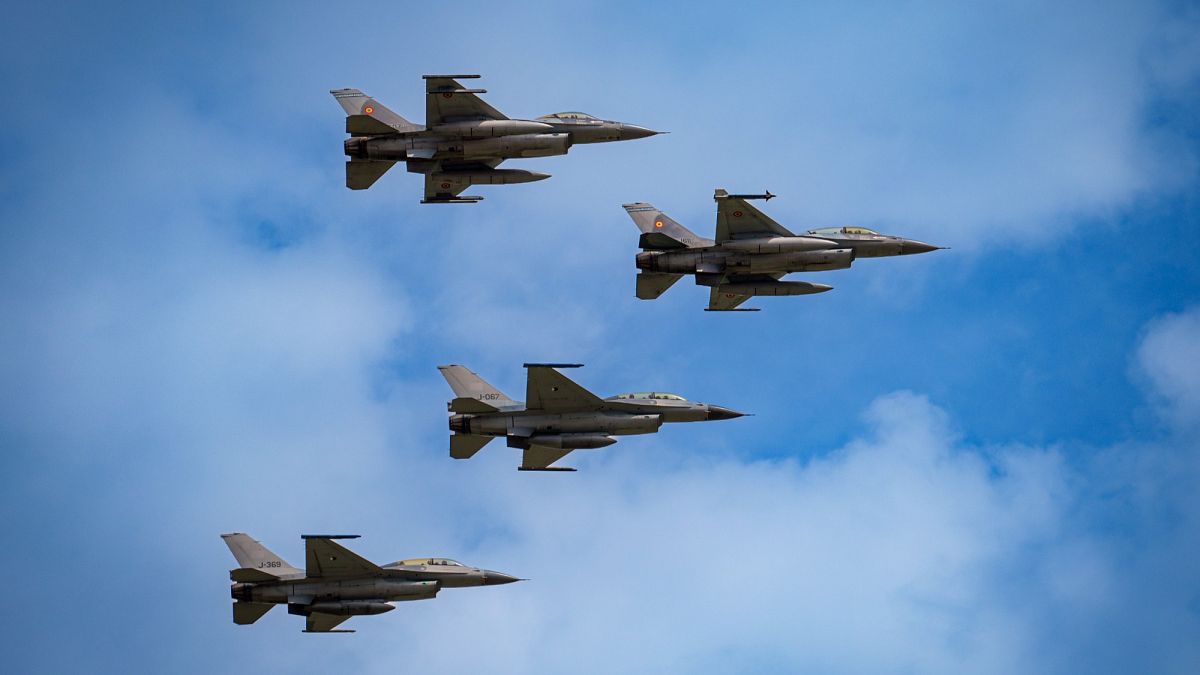
A NATO F-16 shot down what is believed to have been a stray Ukrainian drone over southern Estonia, prompting Ukraine to apologize and Russia to threaten retaliation. The episode heightens tensions across the Baltics, with Moscow also alleging Ukrainian drone operations from Latvian territory, claims denied by Latvia and Ukraine. The risk is primarily geopolitical, with potential to affect regional defense postures and broader NATO-Russia escalation dynamics.
This is less a one-off airspace mishap than a stress test for NATO’s eastern flank: every drone incursion now creates a live-fire decision point for allied air-policing and raises the probability of a broader escalation cycle driven by attribution errors. The market implication is not immediate kinetic shock, but a slow repricing of Baltic sovereign risk premia, air-defense urgency, and any defense contractor exposed to short-range interceptors, EW, and counter-UAS systems. The path dependence matters: if these incidents continue over the next 4-12 weeks, policymakers will face pressure to harden borders and expand air-defense coverage, which is fiscally supportive for defense budgets but negative for regional risk assets. The second-order risk is political fragmentation inside the Baltics. Domestic coalitions are the weak link here: repeated drone incidents can be weaponized in local politics to argue for either tougher military posture or restraint, and that can destabilize governments before it changes battlefield dynamics. The more important tail is Russian information operations using these events to justify retaliation narratives; that tends to widen the gap between headline risk and actual capability, but it still forces NATO to spend more on readiness, rules of engagement, and surveillance. Contrarianly, the near-term market reaction may be overdone if investors extrapolate this into an imminent Baltic escalation. Russia’s most credible response remains asymmetric: cyber, electronic warfare, and propaganda, not a direct move against NATO territory. That means the best expression is not a macro war hedge, but a relative-value trade on defense modernization and air-defense demand versus Baltic-region cyclicals. The key catalyst window is the next 1-3 months, when repeated drone events either normalize into a higher-deficit security environment or fade if interception and jamming procedures improve.
AI-powered research, real-time alerts, and portfolio analytics for institutional investors.
Request DemoOverall Sentiment
mildly negative
Sentiment Score
-0.35
Ticker Sentiment
