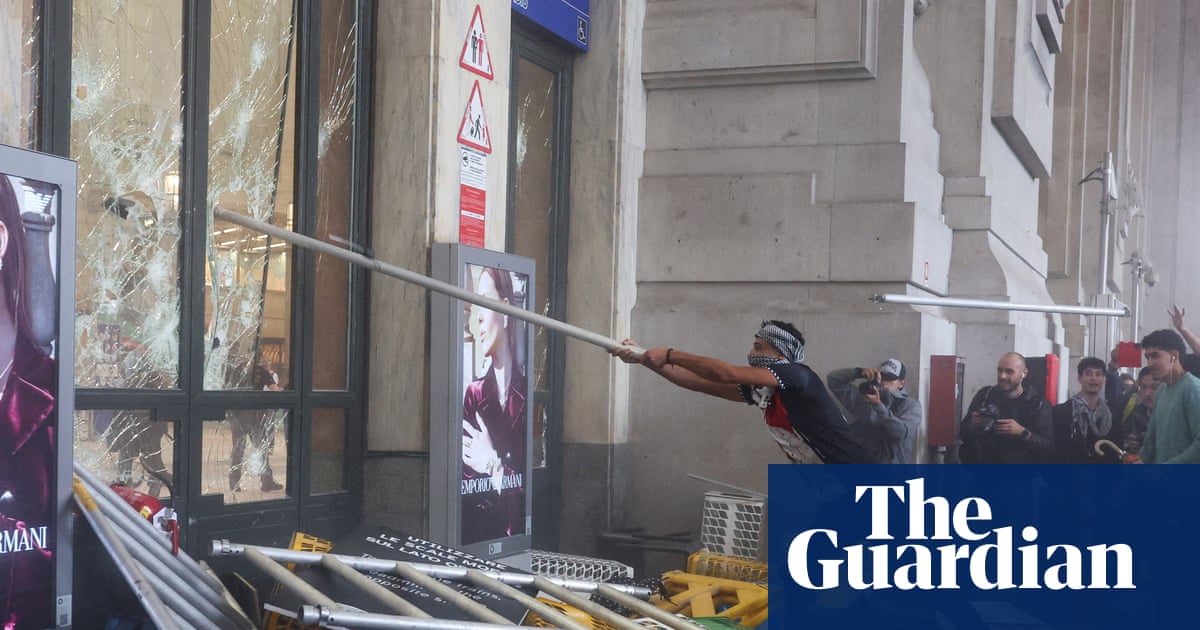
Tens of thousands of people across Italy participated in a nationwide general strike, causing significant disruptions to schools, trains, ports, and roads, to protest Israel's Gaza offensive and demand a suspension of commercial and military cooperation. This widespread civil unrest, marked by clashes in major cities, signals escalating domestic pressure on Prime Minister Giorgia Meloni's government, which maintains a cautious stance on the conflict and has diverged from some European allies on Palestinian statehood recognition. The extensive logistical disruptions, particularly at key ports, could impact Italian trade and supply chains, reflecting the economic and political ramifications of the geopolitical tensions.
Widespread civil unrest in Italy, manifesting as a 24-hour general strike across at least 75 municipalities, has created significant logistical and economic disruption. Protests have specifically targeted critical infrastructure, leading to the blockage of major ports like Genoa and Livorno and severe disruptions to the national rail network, directly impacting trade flows and supply chains. This unrest places considerable domestic pressure on Prime Minister Giorgia Meloni's government, which has maintained a 'cautious stance' on the Gaza conflict and has notably distanced itself from a coordinated move by European allies to recognize Palestinian statehood. The government's public downplaying of the events as a 'far-left' mobilization contrasts with the large-scale participation and violent clashes reported in cities like Milan and Bologna, signaling a potential for escalating social tensions that heightens Italy's country-specific political risk.
AI-powered research, real-time alerts, and portfolio analytics for institutional investors.
Overall Sentiment
Negative
Sentiment Score
-0.40
