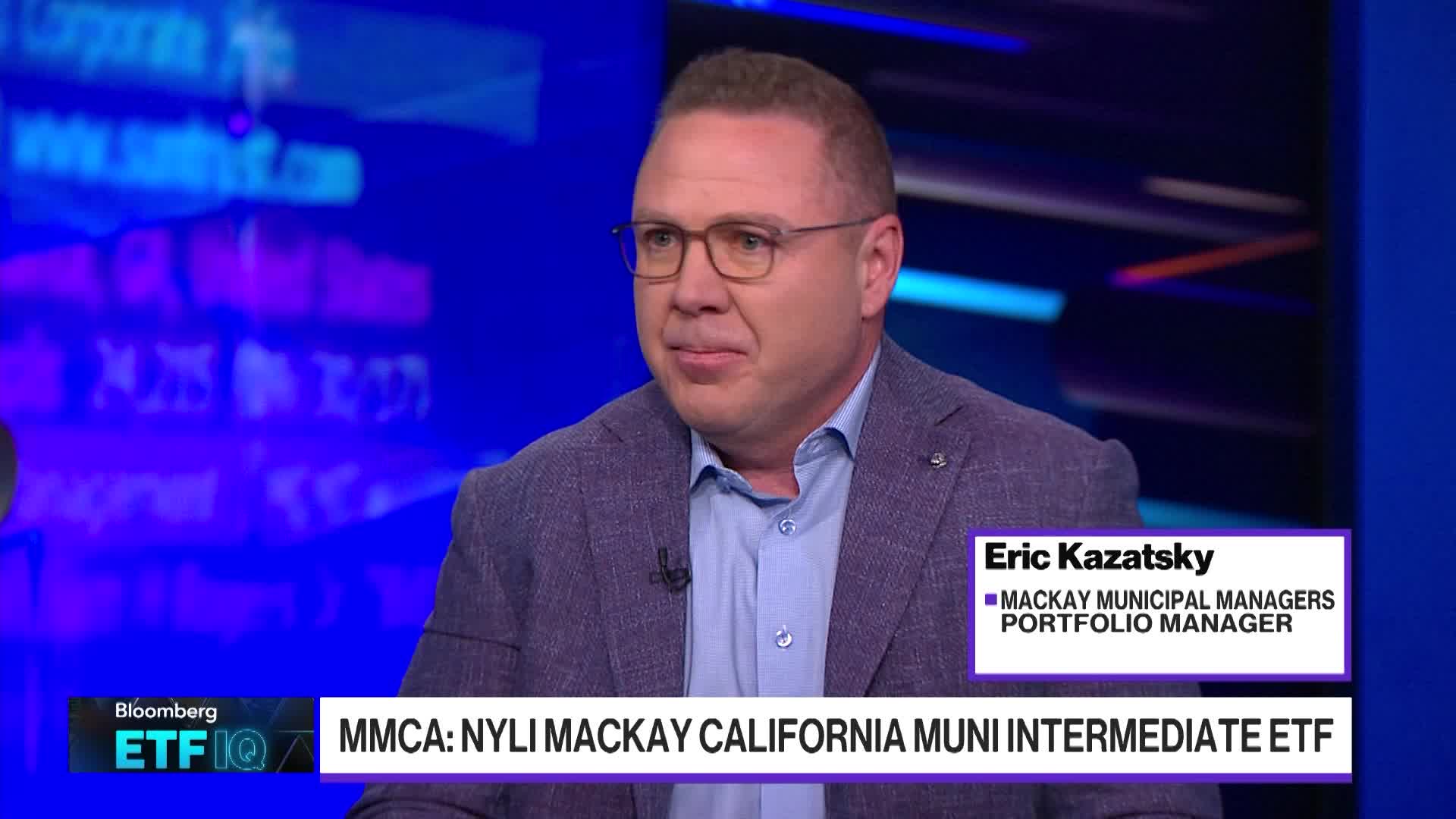
Municipal ETFs—particularly state-focused strategies such as California funds—are attracting flows as investors seek tax-efficient income (California top earners face ~13.3% state tax plus nearly 40% federal). Active muni managers are outperforming index peers (roughly 70–80% of active muni managers meeting benchmarks versus ~34% for equities), aided by the deep and diverse muni market (c. 900,000 CUSIPs and ~50,000 issuers) and opportunities in duration and credit selection. Product development is continuing, with the firm planning an allocation ETF targeting high-yield and aggregate credit exposure to leverage its credit-selection strength; after‑tax yields cited include about 5.5% in some state-specific funds.
Market structure: Active municipal strategies and single-state muni ETFs (California/New York) are winning incremental share from passive taxable bond allocations as high-tax investors chase after-tax yield; expect incremental inflows of $5–15bn into muni ETFs over the next 6–12 months if yields stay above 3.0% tax-equivalent for top-bracket CA taxpayers (assumes ~53% combined rate). Competitors focused only on liquid national paper (the 75% of market) will cede pricing power in niche segments (CA, NY, high-yield) where informational arbitrage and credit selection deliver alpha.
Risk assessment: Key tail risks are tax-policy shifts (SALT cap repeal or federal rate cuts that change tax-equivalent attractiveness) and localized muni credit stress (pension shocks, property-tax weakness) that could widen muni-high-yield spreads by 300–600bps in a stress episode. Near-term (days–weeks) volatility tied to Fed messaging; medium (3–12 months) driven by flows and state fiscal reports; long-term (1–3 years) depends on structural tax law and pension reforms. Hidden dependency: active manager outperformance relies on being able to access 25% of less-liquid issuance — liquidity shocks could force mark-to-market losses.
Trade implications: Favor tax-exempt muni exposure into year-end (2–6 weeks) to capture window dressing and tax-loss harvest flows; overweight CA-focused and high-yield muni sleeves in taxable-high-bracket client accounts while trimming equivalent-duration treasuries/corporates. Implement relative-value pair trades (muni-HY vs corporate-HY) and protect with options around Fed meetings (watch 25–75bp move thresholds).
Contrarian angles: Consensus underestimates operational liquidity risk in niche munis — outperformance may be concentrated and episodic, not broad-based. If muni yields compress 50–100bps, alpha from active credit selection will shrink; conversely, if SALT relief stalls, demand may accelerate further. Historical parallel: 2013–2014 muni rallies were reversed quickly when rates repriced; avoid levered exposure without liquidity buffers.
AI-powered research, real-time alerts, and portfolio analytics for institutional investors.
Request DemoOverall Sentiment
mildly positive
Sentiment Score
0.30
