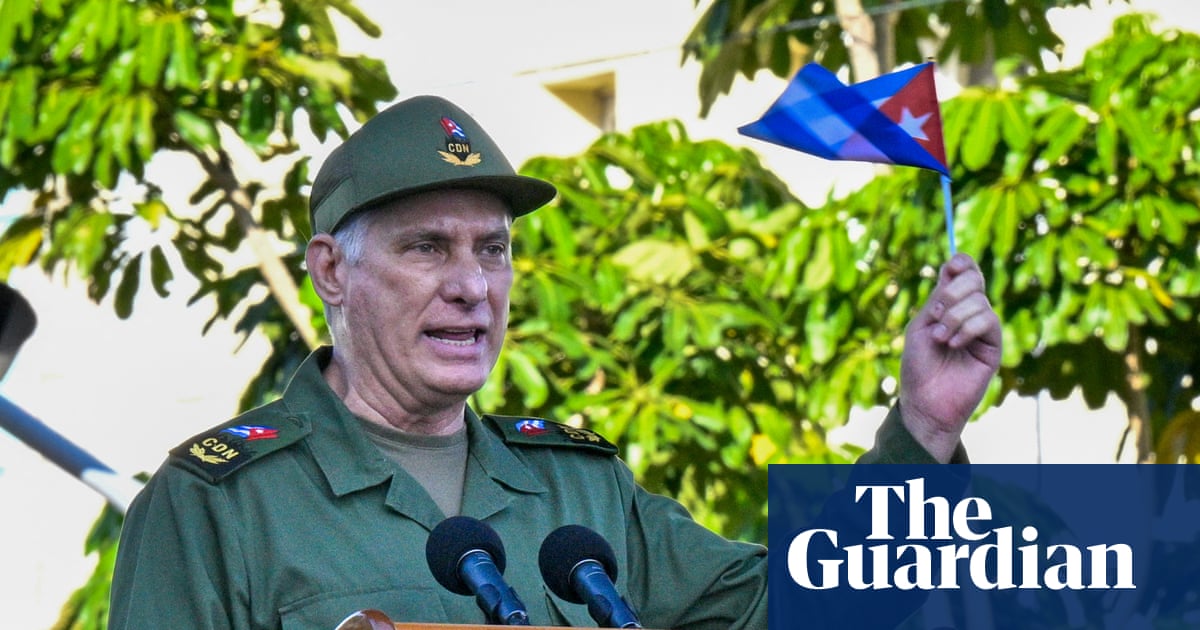
Cuba’s president warned that any US military action would trigger a "bloodbath," after reports that US intelligence alleged Cuba acquired 300+ military drones and discussed attacks on Guantánamo Bay, US vessels, and Key West. The article also highlights escalating US-Cuba tensions, including energy shortages in Cuba and reported US plans to indict former leader Raúl Castro over the 1996 Brothers to the Rescue shootdown. The rhetoric and reported intelligence raise geopolitical risk and could unsettle defense and regional risk assets.
This is less about Cuba itself and more about a rising probability of a short, noisy escalation that can still move risk assets tied to Latin America, defense procurement, and US domestic politics. The key second-order effect is not kinetic damage but policy optionality: even a low-probability military threat gives Washington cover for tighter sanctions, interdiction, and financial restrictions, which would further strain Caribbean logistics and raise insurance premia for regional shipping and aviation.
The biggest market implication is that Cuba’s internal energy collapse makes it unusually sensitive to external pressure, so the regime may respond with asymmetric signaling rather than conventional force. That increases tail risk around US naval posture, border enforcement optics, and any incident near Guantánamo or Florida waters; the window of highest volatility is days to weeks, not months. If tensions ease, it will likely be because backchannel diplomacy or a deliberate pause in US legal/political escalation reduces the regime’s need to posture.
For public markets, the cleanest beneficiaries are not obvious Cuban proxies but US defense and maritime security names, plus contractors exposed to surveillance, drones, and coastal interdiction. A less obvious loser is Caribbean tourism and regional airlines if headlines trigger even temporary route/insurance disruption; another is any EM credit or frontier fund with indirect Cuba/Venezuela-Caribbean exposure. The contrarian read is that the market may overestimate the chance of actual military action and underestimate the more durable tradeable outcome: a prolonged sanctions-and-containment regime that is bullish for defense spend but bearish for any normalization narrative.
The main catalyst to watch is whether the rhetoric is followed by legal action or asset freezes, because that would convert a headline risk into a policy path with longer duration. If no concrete move follows within 1-2 weeks, implied geopolitical premium should fade quickly, but a single maritime incident would reset the tape sharply.
AI-powered research, real-time alerts, and portfolio analytics for institutional investors.
Request DemoOverall Sentiment
strongly negative
Sentiment Score
-0.65
