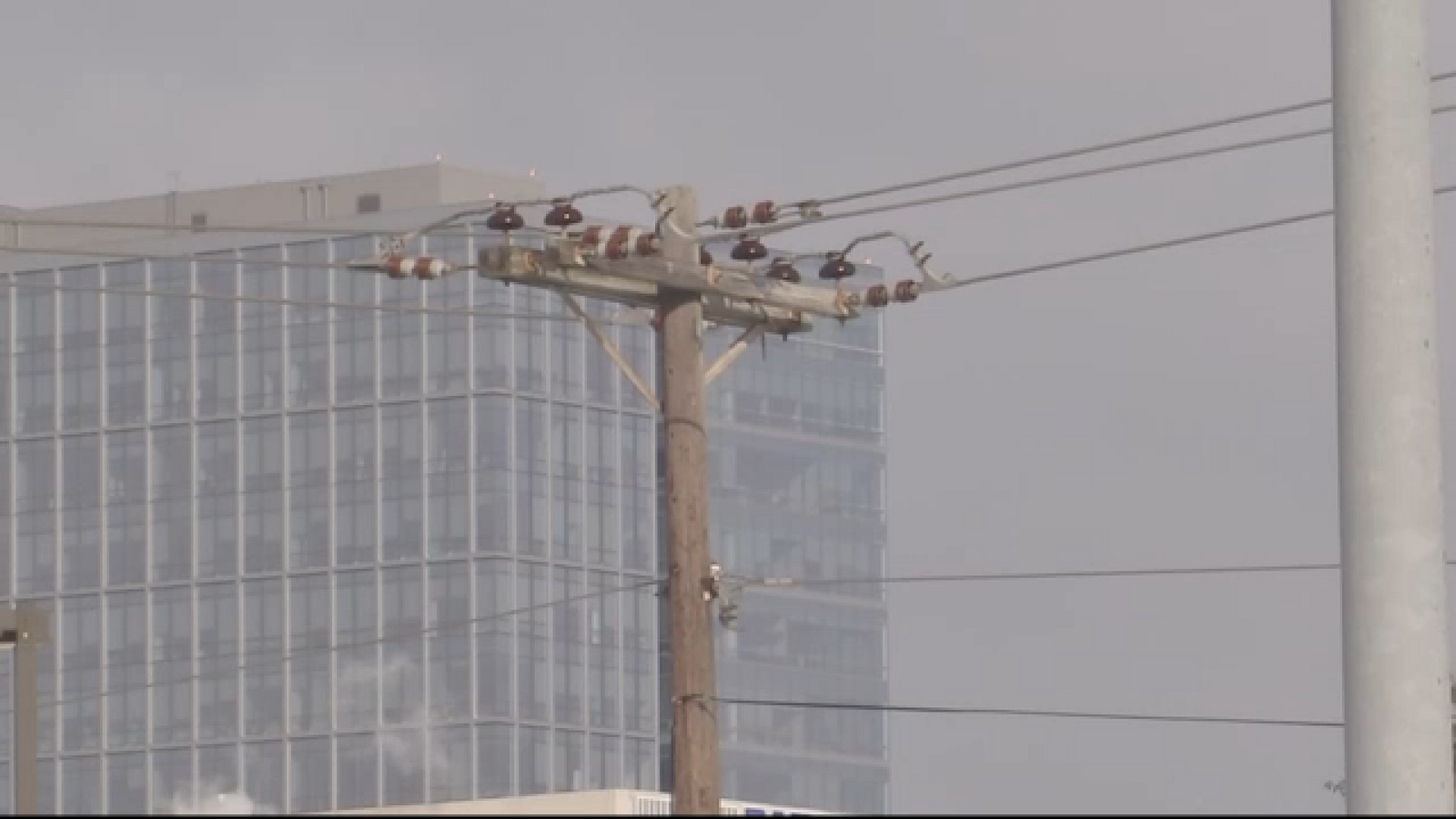
A winter storm is forecast to bring freezing rain and ice accumulation to the Houston region, with the National Weather Service projecting roughly 0.3 inches of ice in northern counties and heightened risk of power-line damage and outages in counties including Montgomery, Grimes, Burleson, Walker, Polk, Trinity, Madison and San Jacinto. Entergy Texas reports year-round preparations across its 17-county service area—vegetation trimming, pole replacement and other hardening measures—but warns that as little as a quarter-inch of ice can bring down branches and lines and an inch can topple poles; customers are advised to trim vegetation and monitor outage maps.
Market structure: Near-term winners are grid-repair contractors (Quanta Services, PWR), portable-generator makers (Generac, GNRC), big-box retailers (HD/LOW) and timber/pole suppliers (Weyerhaeuser, WY) because ice accumulation >0.25" materially raises outage/repair demand. Losers: localized retail/restaurant operators, regional distributors and utilities with concentrated exposure to Entergy Texas’ territory (Entergy, ETR) face outages and repair costs, though regulated cost-recovery can blunt permanent earnings damage. Commodities: brief uptick in residential heating demand and natural gas burn in the region should lift basis and prompt a small, short-lived move in Henry Hub gas and prompt power forwards for 1–14 days.
Risk assessment: Tail risk is a high-impact >1" ice event causing multi-day outages, federal/state probes and large claim accruals similar to 2021 Texas freeze — could force regulatory rate cases or caps within 30–180 days. Immediate window is 0–72 hours for outage/revenue spikes; repairs and supply-chain constraints (poles/transformers lead-times 3–6 months) drive medium-term (weeks–quarters) contract revenue for infrastructure vendors. Hidden dependency: vegetation-management budgets/contractor capacity; if crews are maxed, repair margins and pricing power accelerate.
Trade implications: Tactical trades favor long PWR and GNRC into a 1–3 month horizon (expect +20–40% idiosyncratic move if outages materialize); prefer call spreads to limit premium decay. Short small, hedged exposure to P&C insurers (ALL/TRV) via OTM puts for 1–3 months to capture catastrophe-risk repricing. Overweight industrial services and building-materials, underweight pure-play regional retailers for the next 30 days; scale based on outage maps and NWS ice >0.25".
Contrarian angles: Consensus will over-discount utilities long-term because regulators typically allow storm-cost recovery — avoid large utility shorts. The market may underprice multi-month revenue tail for contractors due to pole/transformer lead times; that creates a multi-quarter investment opportunity in PWR/PPE suppliers if storms recur. Watch for regulatory headlines within 30–90 days that can reverse utility vs contractor relative performance.
AI-powered research, real-time alerts, and portfolio analytics for institutional investors.
Request DemoOverall Sentiment
moderately negative
Sentiment Score
-0.30
