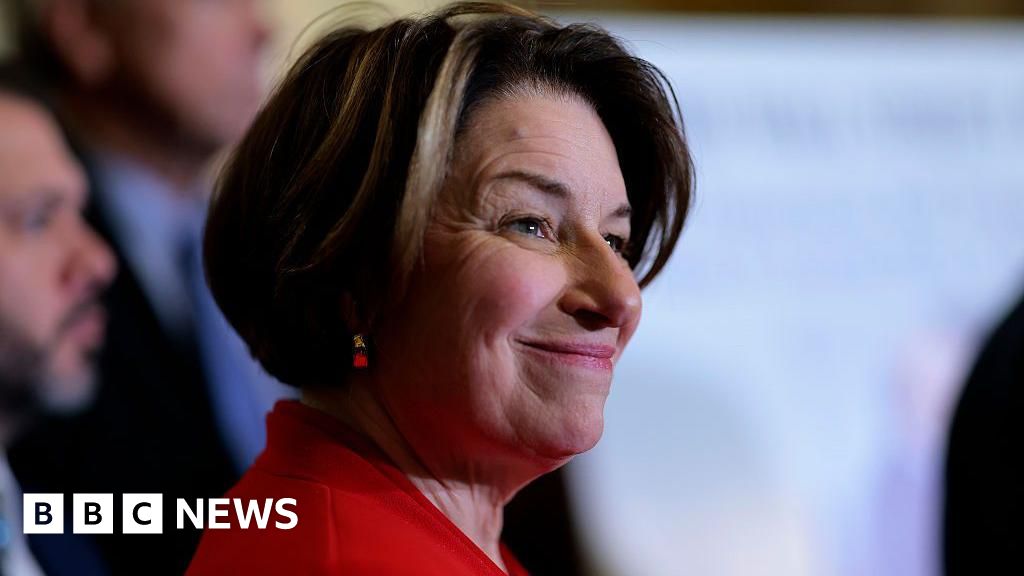
Sen. Amy Klobuchar announced a run for Minnesota governor after incumbent Tim Walz ended his re-election campaign amid criticism over a state fraud scandal, positioning herself as a centrist unifier amid controversy around federal immigration enforcement and recent fatal encounters with agents. A four-term senator and high-profile Democratic figure in the state, Klobuchar is viewed as the frontrunner for November’s contest; the development reshuffles state political dynamics and policy direction but carries limited direct market implications beyond potential state-level regulatory and governance impacts.
Market structure: Klobuchar’s entry increases probability of a centrist Democratic governor in Minnesota, which should modestly favor large Minnesota-headquartered corporations (Target TGT, 3M MMM, Ecolab ECL, Hormel HRL, Best Buy BBY) via lower political/regulatory tail risk. Expect 10–30bp compression in Minnesota-specific muni spreads vs. Treasuries if polls/stability signals coalesce over 3–6 months; state contractors tied to immigration enforcement (private security vendors) are relative losers if federal tactics are de-escalated.
Risk assessment: Tail risks include large-scale civil unrest or a widening fraud probe raising MN GO credit spreads >75bps and depressing consumer foot traffic by 2–5% in the Twin Cities over 1–3 months. Immediate window (days–weeks) is event-driven volatility around protests or federal announcements; medium-term (3–9 months) impacts center on budgetary re-prioritization and procurement changes; long-term (12–36 months) is policy-driven corporate taxation/regulatory stance under a Klobuchar administration.
Trade implications: Favor a small, conviction-weighted long basket of MN large-caps (see tickers above) sized 2–5% portfolio exposure, hedge with short-dated puts for 0.5–1% NAV. Add selective exposure to Minnesota muni paper if 10-year MN GO spread >40bps to Treasuries (target carry >2.5% tax-equivalent), and avoid/trim positions in private security and border-tech suppliers unless enforcement escalates materially.
Contrarian angles: Consensus underestimates state-level political stability effects on muni and regional retail multiples; market may underprice a 3–8% relative outperformance of MN large-caps over 6–12 months if a stable centrist win is viewed as certain. Watch for the unintended consequence that anti-fraud crackdowns could cut state contracting, creating local losers (regional construction/specialty services) even as broader credit tightens.
AI-powered research, real-time alerts, and portfolio analytics for institutional investors.
Request DemoOverall Sentiment
neutral
Sentiment Score
0.00
