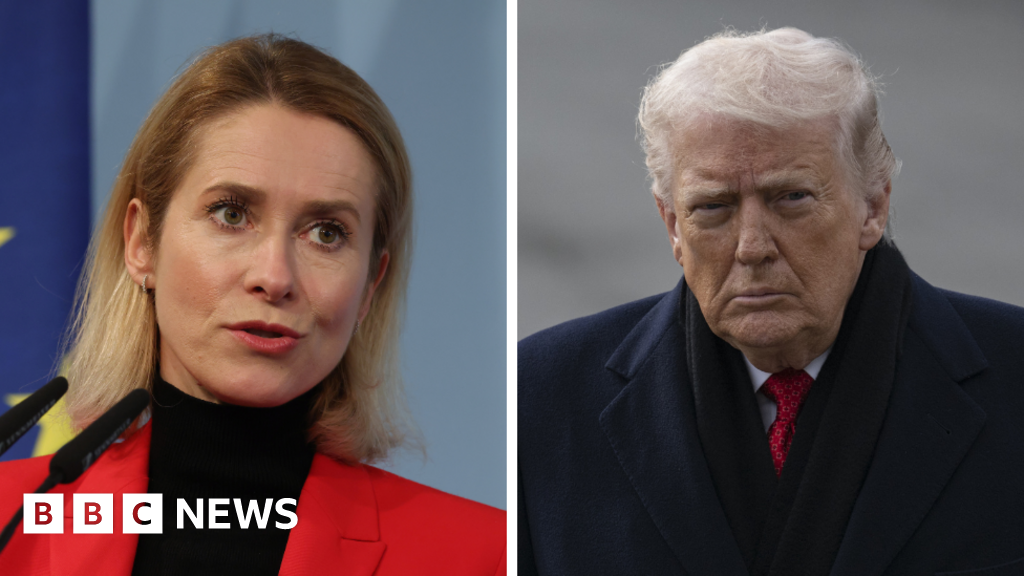
President Trump vowed to “100%” impose tariffs on eight NATO allies—Britain, Denmark, Norway, Sweden, France, Germany, the Netherlands and Finland—charging 10% on imports from Feb. 1 and raising to 25% from June 1 until a deal is reached to sell Greenland. The threat, coupled with comments that he would not rule out force, has prompted firm pushback from Denmark, EU leaders and NATO officials and triggered an emergency EU summit; escalation would raise trade-policy uncertainty and strain transatlantic defense cooperation, presenting a risk-off shock to market-sensitive trade and defense sectors if enacted.
Market structure: Direct winners are US defense contractors and Arctic resources/servicers as headline risk increases demand for security spending; expect 3–10% near-term relative outperformance for large defense names vs broad market if rhetoric persists. Direct losers are European exporters to the US (autos, machinery, pharma) who would face a 10% then 25% tariff tailwind to US reshoring; Germany/UK/Scandi export flows and supply-chain-dependent OEMs lose pricing power and face margin compression by the tariff amount. Cross-asset: immediate safe-haven flows should bid Treasuries and USD and lift gold; oil could see directional volatility (±5–10%) on Arctic/military risk and shipping-route uncertainty. Options/volatility should reprice higher on EUR/GBP/NOK pairs and European equities for 2–6 week tenors.
Risk assessment: Tail risks include NATO fragmentation, coordinated EU retaliatory tariffs, or a domestic US policy flip; assign low probability (<10%) to military action but non-trivial (~15–25%) to targeted tariffs given timing claims (Feb/June). Immediate window (days–weeks): FX and equity volatility spikes; short-term (1–3 months): rerouting of supply chains and margin pressure; long-term (quarters–years): increased defense budgets and Arctic capex. Hidden dependencies: European Tier-1 suppliers to US OEMs (electronics, ADAS) are chokepoints; a 25% tariff on finished goods may still incentivize component exports to US-based assembly, not full reshoring. Catalysts: EU emergency summit (within 7 days), formal US tariff proclamation (by Feb 1 claim) and Congressional or business pushback.
Trade implications: Implement small, asymmetric positions: positive on defense (RTX, LMT) and volatility, negative on broad Germany/UK export exposure (EWG, EWP) and NOK/SEK via FX; favor options to cap downside given policy uncertainty. Consider pair trades: long ITA or RTX/LMT vs short EWG or VWAGY-sized notional to neutralize beta. For FX, buy EURUSD put spread or long USDNOK forward for a 1-month tenor around the EU summit window; hedge cost with limited-width spreads. Use Treasury ETFs (TLT) as a tactical hedge for 1–4 week risk-off spikes.
Contrarian angle: Consensus may overestimate follow-through—political/legal/administrative friction makes full 25% sustained tariffs unlikely (probability ~30%). Therefore prefer capped-cost option structures (put spreads, long-dated cheap calls on defense) and small notional pair trades rather than outright large directional bets. Historically (trade spat precedents 2018–19) headlines caused 5–12% moves then mean-reverted within 3–6 months; position sizing should reflect similar mean reversion risk and event-driven asymmetry.
AI-powered research, real-time alerts, and portfolio analytics for institutional investors.
Request DemoOverall Sentiment
moderately negative
Sentiment Score
-0.45
