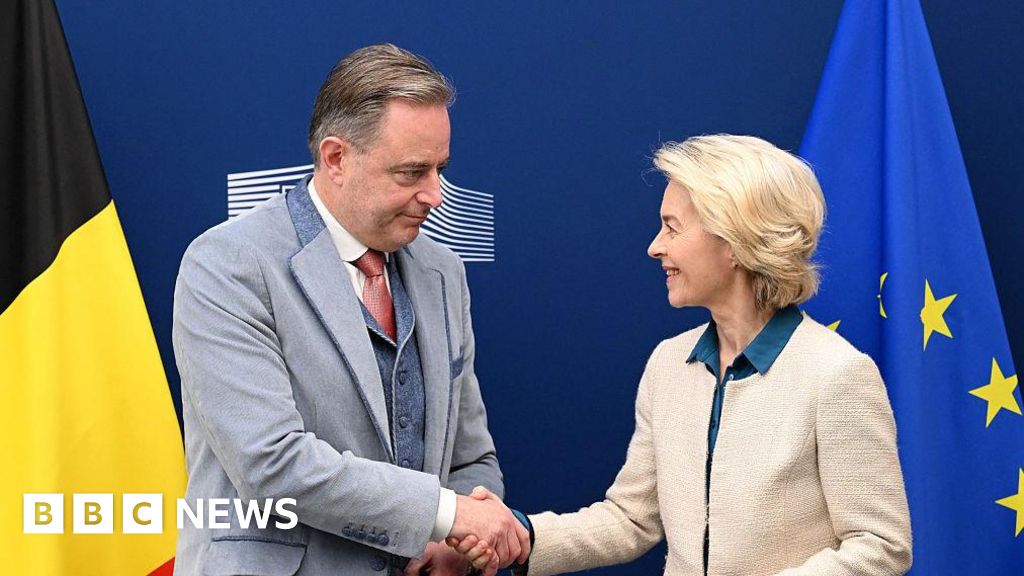
EU plans to convert frozen Russian state assets into a €140bn 'reparations loan' to fund Ukraine have been sharply opposed by Belgium, which warns that most of the €185bn of frozen assets are held at Euroclear in Brussels and that legal claims could expose Belgium to liabilities roughly equivalent to a year of its federal budget. Belgian leaders demand legally binding, on‑demand guarantees from other member states and propose an alternative €45bn loan from existing EU budget provisions, while Germany and other EU officials press to use the frozen assets ahead of winter; Russia has threatened prolonged litigation. The dispute raises legal and sovereign‑risk concerns for Euroclear and Belgian finances, threatens delays to financing for Ukraine, and could dent confidence in Europe’s handling of frozen foreign reserves.
Market structure: The reparations-loan debate crystallises a binary outcome: EU uses ~€140–€185bn of frozen reserves (benefit to Ukraine, fiscal relief to Kyiv) versus legal/fiscal shock concentrated on Belgium and custodians (Euroclear). Expect immediate risk premia to concentrate in Belgian sovereign OLOs and custodial-service providers, while German-led proponents (policy momentum) support safer-core sovereigns and defence suppliers. Commodities (natural gas/energy) may spike on Russian retaliation rhetoric; FX likely to see EUR weakness vs USD on legal/market-friction concerns.
Risk assessment: Tail risks include protracted litigation (Andrei Kostin’s 50-year threat), a forced Belgian fiscal backstop (~€200bn ≈ one year of budget) or a precedent that reduces trust in European custody — each raising periphery yields by 30–150bp over 3–12 months. Immediate catalysts: EU summit vote in coming weeks and the Commission’s legal text (expected within 30–60 days) — either will compress or explode volatility. Hidden dependency: ECB refusal to be lender-of-last-resort amplifies sovereign-contagion sensitivity and forces bilateral guarantees.
Trade implications: Short Belgian sovereigns vs long Bunds (via futures or cash) and buy 5y Belgian CDS as first-order plays; hedge via 3-month put protection on Belgian equity exposure (BEL20 futures or local ETF). Rotate 1–2% NAV into European defence primes (e.g., RHM.DE, BAE.L) on optionality of a €45bn+ EU bridge or reparations-backed funding, with 6–12 month horizon.
Contrarian angles: Consensus underestimates structural hit to Europe’s custody model — a modest legal loss could raise custody/operational premia for all non-domestic reserves for years, benefiting US Treasuries and USD liquidity. The market may be underpricing Belgian spread widening (anticipate >50bp potential) and overpricing immediacy of loan usage; a narrowly split EU vote would amplify volatility and create a 2–8 week alpha window.
AI-powered research, real-time alerts, and portfolio analytics for institutional investors.
Request DemoOverall Sentiment
moderately negative
Sentiment Score
-0.45
