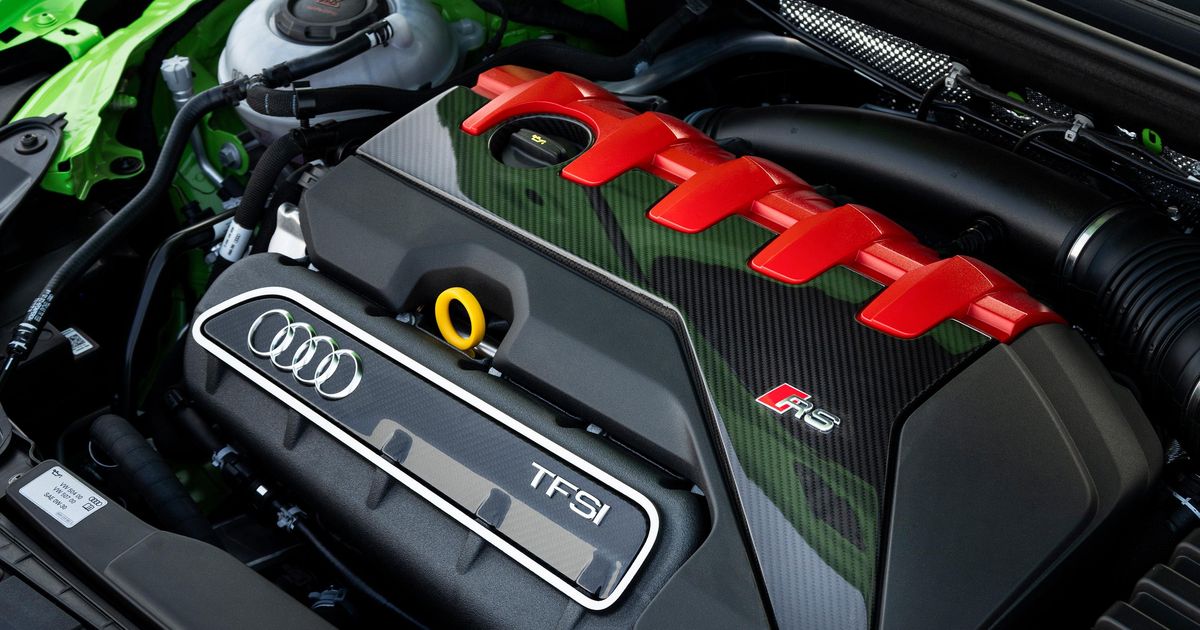
Audi will discontinue its turbocharged 2.5-litre inline five-cylinder (EA855, 2480cc) from its European lineup by mid-2027 because it cannot meet impending Euro 7 emissions rules; the unit currently produces 294 kW and 500 Nm in the RS3. Production of the hand-built engine in Győr will end with the existing RS3 in mid-2027, though the engine may remain available in markets like Australia until as late as mid-2028 due to different regulatory timing. Audi is balancing this phase-out by expanding powertrain variety — including PHEV RS models — and has committed to producing ICE powertrains into the 2030s; the new RS5 PHEV is rated at 470 kW/870 Nm and 86 g/km CO2, which should avoid Australia’s NVES penalties until 2028.
Regulatory tightening is acting as a forcing function that accelerates reallocations of OEM R&D and capex from low-volume, high-character ICE architectures into scalable hybrid/EV modular architectures over the next 12–36 months. That reallocation compresses the economic runway for niche powertrains: the fixed cost of maintaining specialized production lines and skilled labor becomes harder to justify as fleet compliance spend and battery electrification absorb marginal investment dollars.
Second-order supply effects are uneven: commodity suppliers of sensors, power electronics and high-voltage components see higher, more durable content per vehicle, while precision-machining vendors and small-batch engine specialists face a structural volume decline concentrated in the next 2 years. Expect opportunistic M&A among mid-tier suppliers as acquirers buy manufacturing know‑how and redeploy capacity into e-drive and thermal management; targets will be companies with single-digit margins today but valuable IP for small-series engines.
Driver economics at retail/dealer level will shift: fewer halo ICE models reduces dealer footfall and option attach rates, pressuring used-vehicle residuals for certain performance segments over a 24–48 month horizon as EV inventory matures. However, residuals for the remaining ICE performance stock may stay elevated short-term because collectors and enthusiasts will compete for limited supply, creating a bifurcated value curve between mainstream used cars and low-volume performance cars.
For investors the key discriminators are scale, platform modularity, and exposure to power semiconductors/battery systems versus legacy ICE content. Monitor OEM cadence of compliant powertrains and supplier backlog visibility over the next 6–18 months; those datapoints will separate winners who can monetize higher per-vehicle electronic content from losers stuck with stranded ICE assets.
AI-powered research, real-time alerts, and portfolio analytics for institutional investors.
Request DemoOverall Sentiment
neutral
Sentiment Score
0.00
