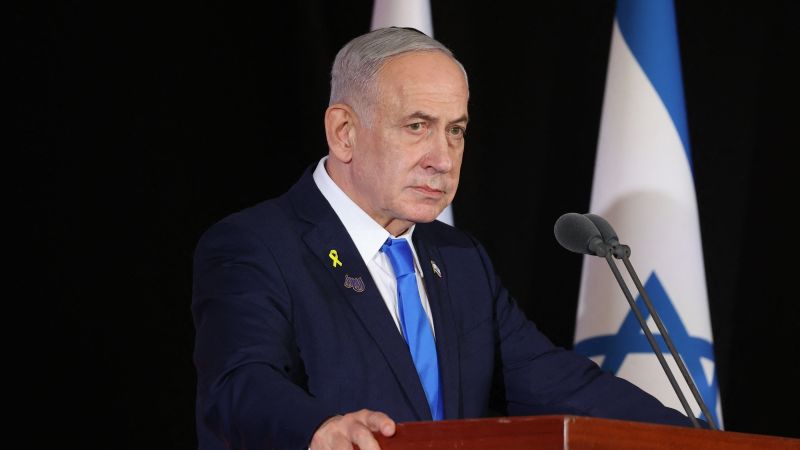
Israeli Prime Minister Benjamin Netanyahu has formally requested a pardon from President Isaac Herzog in the midst of his longstanding criminal trial on charges of bribery, fraud and breach of trust—claims tied to alleged regulatory benefits worth over $250 million to a Bezeq shareholder and favorable coverage on Walla! News. The request, a reversal of his prior insistence he would prove his innocence in court, contains no admission of guilt and has sparked sharp domestic political debate, international interventions (including a letter from former U.S. President Trump), and mixed public polling on an unconditional pardon. For investors, the development increases political and policy uncertainty in Israel—potentially affecting governance, coalition stability and geopolitical risk related to the Gaza war—while the legal process and appeals are expected to continue for years, leaving a prolonged period of elevated political risk.
Market structure: A Netanyahu pardon request raises asymmetric winners/losers — defense and security-focused names (Elbit Systems ESLT, and large globals LMT/RTX) gain relative order-book and sentiment optionality while domestic cyclicals (Israeli banks, real-estate, local consumer-facing tech) face capital flight risk. Expect a short-term rotation out of Israel beta into global defensives: implied vol on Israeli equities could rise 25–50% and USD/ILS to show 1–3% depreciation in the first 30–90 days if protests escalate.
Risk assessment: Tail scenarios include mass protests, coalition collapse or US political pressure that could widen 10Y Israeli sovereign spreads by 100–300bp and knock Israeli equity indices down 20–40% over quarters. Timeframes: immediate (days) around the president’s deliberation, short-term (0–3 months) for protests/aid signalling, long-term (6–24 months) for legal appeals and possible snap elections. Hidden dependency: Israeli tech fundraising and M&A are highly sensitive to foreign investor sentiment — a sustained political crisis curbs exit liquidity.
Trade implications: Favor long-duration defense exposure and active hedges on Israel risk; volatility trades (3–6 month puts on EIS or ESLT) are attractive if pricing is < implied stress. Cross-asset: buy USD/ILS protection or forwards to hedge currency exposure; expect bond sell-offs that make short-duration sovereigns and credit protection expensive but actionable.
Contrarian angle: Market assumes a binary concession or collapse; underappreciated is a muted market outcome if Herzog delays or conditions a pardon — that would compress vol by 30–50% and create mean-reversion in beaten-down Israeli cyclicals. A calibrated pair trade (long defense, short domestic cyclical) captures both scenarios with limited directional bet on Israeli sovereign stress.
AI-powered research, real-time alerts, and portfolio analytics for institutional investors.
Request DemoOverall Sentiment
moderately negative
Sentiment Score
-0.30
