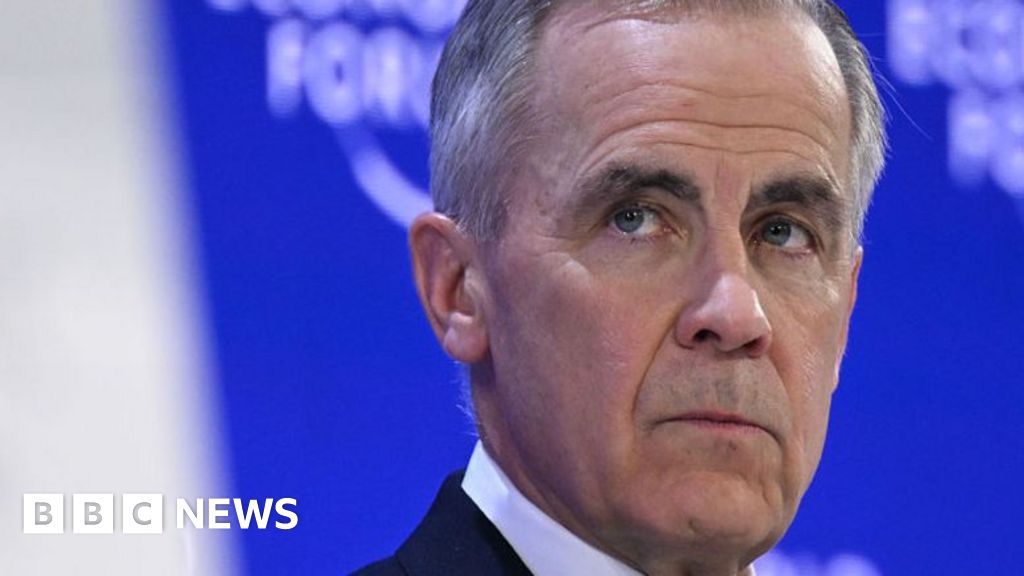
At Davos President Trump publicly chastised Canadian Prime Minister Mark Carney and emphasized U.S. leverage over Canada, noting Canada sells roughly 75% of its products to the United States and highlighting existing U.S. tariffs on metals and autos amid a mandatory USMCA review. He also reiterated tariff threats toward Switzerland — saying he had raised duties to 39% then cut them to 15% — signalling continued bilateral trade unpredictability that raises downside risk for exporters and sectors exposed to U.S. trade policy.
Market structure: Trump's Davos rhetoric raises the probability of episodic tariff escalation (15–39% seen already) that directly benefits US domestic materials and protected manufacturers while hurting export‑dependent Canada (75% of goods to US) and integrated auto supply chains. Expect pricing power to shift to US steel/aluminum producers (NUE, X) and to firms that can onshore production; importers and cross‑border assemblers face margin compression of 3–8% over 3–12 months if tariffs stick.
Risk assessment: Tail risks include rapid USMCA frictions or retaliatory Canadian non‑tariff barriers causing a sharp CAD drop and EPS shocks to TSX‑heavy exporters; low‑probability but high‑impact outcomes could drive USD/CAD +5–10% and Canadian equities down double digits within weeks. Near term (days) watch FX and 1–2 week risk reprices; medium term (3–9 months) expect corporate contract re‑routing and capex shifts; long term (1–3 years) structural nearshoring could raise domestic capex in US materials.
Trade implications: Tactical trades: favor US materials and defensive hedges — U.S. steel shorts convert to longs, short Canada exposures, and buy precious metals as insurance. Volatility on autos and materials should rise; use options to express directional views with defined risk and 4–12 week expiries around tariff announcements.
Contrarian: The market may overprice permanent de‑globalisation; political and economic costs make sustained >25% tariffs unlikely. Position sizes should be modest (1–3% each) and conditional on concrete tariff moves or USMCA milestones to avoid paying a premium for mere rhetoric.
AI-powered research, real-time alerts, and portfolio analytics for institutional investors.
Overall Sentiment
mildly negative
Sentiment Score
-0.25
