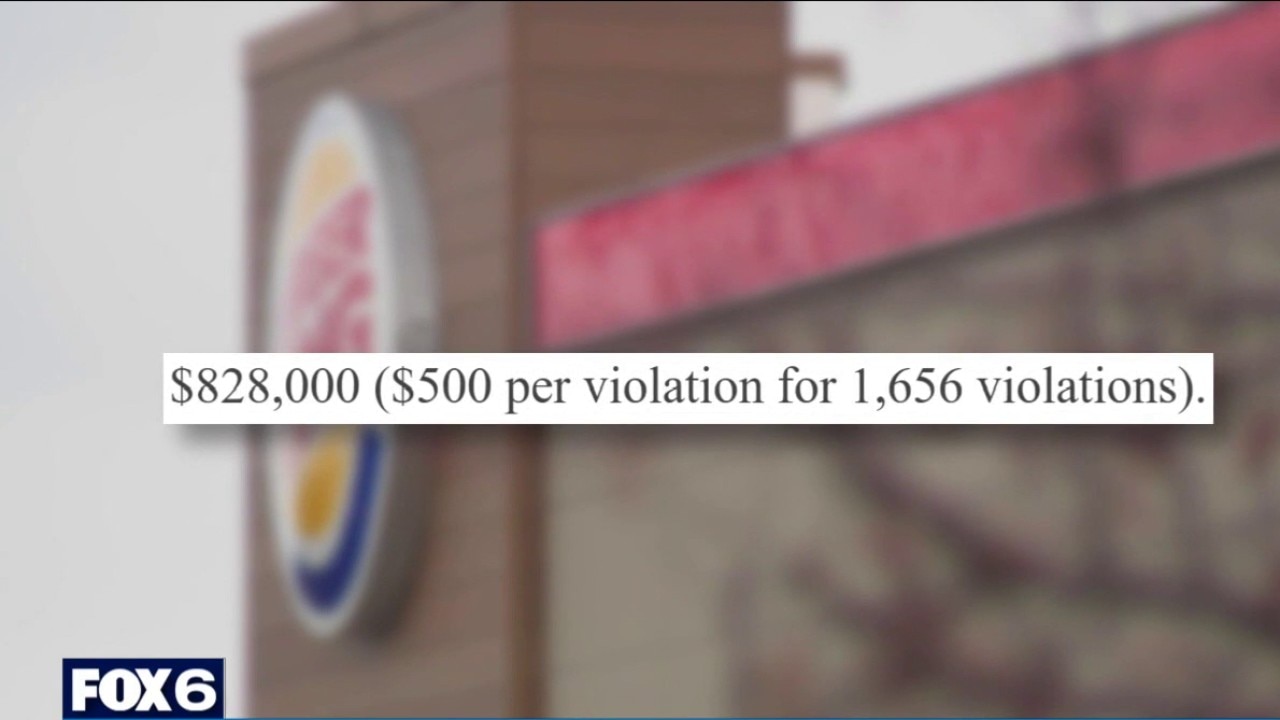
Wisconsin's Department of Workforce Development audit found more than 1,600 child labor infractions across Cave Enterprises' Burger King franchise network, with violations at 103 of 105 inspected locations involving over 600 minors. The state reported 84% (593) of employees aged 14–15 began work without permits, 45% (627) worked shifts of six-plus hours without documented breaks, 67 minors were unpaid overtime, and hundreds of hours of violations; DWD assessed $237,000 in backpay to workers and $828,000 in penalties (total > $1.06m) and has given Cave 20 days to pay or face court. The outcome poses direct legal, financial and reputational risk to the franchisee and raises ESG and compliance questions for the broader Burger King franchise footprint in the region.
Market structure: This is a localized operational/regulatory shock to a large franchisee, not the franchisor behemoth. Direct winners are national franchisors and corporate-run chains (MCD, YUM) that can claim stronger compliance controls; direct losers are multi-unit franchisees (public: TAST/Carrols) and regional operators whose margins and goodwill can be hit by fines, backpay and lost labor capacity. Expect modest brand share shifts in Q2–Q4 if enforcement expands beyond Wisconsin, with pricing power intact for scale players but margin pressure on exposed franchisee balance sheets.
Risk assessment: Tail risks include state-by-state audits that could uncover systemic violations (10–25% chance within 12 months), class-action suits from minors, or franchisee bankruptcies that force asset sales. Immediate risk window: 0–60 days (DWD 20-day payment demand, potential court filings); medium (3–9 months) for litigation and fines; long-term (12–36 months) for franchise network repricing and franchise agreements. Hidden dependency: bank covenants of franchisees and local labor rules—loan defaults could cascade into real-estate transfers.
Trade implications: Tactical trades favor long large-cap, corporate-controlled restaurants and selective shorts of franchisee-heavy operators. Specific liquid plays: overweight MCD (defensive cash flows) and underweight/short TAST (high BK franchise exposure). Options: use limited-risk put spreads on franchisee names to express downside while using calls on MCD/YUM for asymmetric upside. Reallocate credit exposure from small-cap HY restaurant bonds into IG staples and consumer staples for 3–12 months.
Contrarian angles: The market may overreact — RBI (QSR) and the BK brand face limited direct financial impact from one franchisee’s $1.06M hit; a >5% selloff in QSR would present a buy-the-dip opportunity (probable mean reversion within 3 months). Historical parallels: localized franchise scandals (food safety, labor) tend to cause short-lived brand sentiment hits but long-term share consolidates to larger, compliant operators. Unintended consequence: aggressive enforcement could accelerate franchise consolidation—good for public consolidators and REITs owning restaurant real estate over 12–24 months.
AI-powered research, real-time alerts, and portfolio analytics for institutional investors.
Request DemoOverall Sentiment
moderately negative
Sentiment Score
-0.50
